
Cold boot attack leaves Apple and Microsoft systems vulnerable to data theft
Researchers at cyber security company F-Secure have discovered a weakness in modern computers' firmware that attackers can use to steal encryption keys and other sensitive information.
Physical access to the computer is needed to exploit the weakness, but once an attacker has gained this they can successfully perform the attack in around five minutes.

Kodi add-ons used to distribute currency miners
Users of the Kodi media center may already know that the Netherlands-based repository for third-party add-ons, XvBMC, was recently shut down due to copyright violations.
Researchers at security company ESET have discovered that the repository was also part of a malicious cryptomining campaign dating back to December 2017. This is the second instance of Kodi being used for cryptojacking this year.

Malware-less email attacks on the rise -- especially on Thursdays
As email security solutions focus on detecting malware, cybercriminals are now adapting their attacks, exposing organizations to more malware-less assaults such as CEO fraud.
The report by intelligence-led security company FireEye is based on analysis of a sample set of over half-a-billion emails from the first half of 2018. It finds only 32 percent of email traffic seen was considered 'clean' and actually delivered to an inbox. The report also finds that one in every 101 emails had malicious intent.

Half of US mobile traffic will be scam calls by 2019
Unwanted and scam phone calls are an increasing problem. Analysis by call management company First Orion predicts that nearly half of all calls to mobile phones in the US will be fraudulent in 2019 unless the industry adopts and implements more effective call protection solutions.
Over the past year, First Orion's data shows a drastic increase in scam calls -- from 3.7 percent of total calls in 2017 to 29.2 percent in 2018 -- and that number is projected to reach 44.6 percent by early 2019.

Improving endpoint protection is top goal for IT security professionals
Three quarters of IT security professionals responding to a new survey have named improving endpoint security as one of their top two goals, with 48 percent saying it's most important.
The study by Ericom Software, a specialist in securing and connecting the digital workspace, finds 'Becoming compliant with mandatory regulations' is second, with 29 percent of respondents naming it as their top goal.

Personal devices are a major threat to mobile IT environments
A new survey finds that 58 percent of respondents believe access to their network from non-corporate and personally owned devices such as laptops, desktops or mobile phones is the highest risk in managing remote users.
The study from trusted access specialist Duo Security shows that while the trend to remote working has created unmatched flexibility and helped organizations attract top talent globally, it has also introduced a major predicament for IT and security teams.

Trend Micro backtracks on browser history collection after its apps are removed from mac App Store
It recently came to light that a number of apps in the mac App Store were collecting data about users' browsing histories and uploading them to a remote server. Included in this list were several apps from security firm Trend Micro.
Apple responded by kicking the offending apps out of the App Store, and Trend Micro started an investigation into the privacy concerns raised about Dr Cleaner, Dr Cleaner Pro, Dr Antivirus, Dr Unarchiver, Dr Battery and Duplicate Finder. Confirming that these apps did in fact collect and upload browser data, the company at first defended the activity, but then went on to cease data collection.
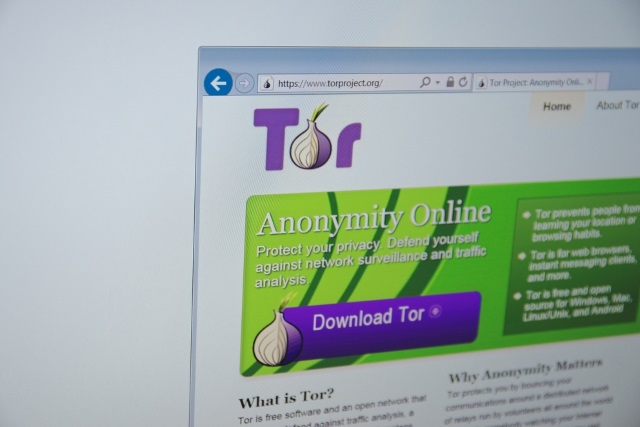
Security: Tor 0-day revealed on Twitter by vulnerability vendor
It's just two weeks since a Windows 0-day was revealed on Twitter, and now the same thing has happened for the Tor browser. Zerodium -- self-described as "the premium exploit acquisition program" -- exposed a backdoor vulnerability in Tor that makes it possible to bypass security protections.
The vulnerability affects Tor 7, and the vendor says that the problem has been addressed in the recently-released Tor 8. A proof-of-concept for the security has also been published.

Public cloud services used to boost DDoS attacks
Hackers are increasingly abusing public cloud services in order to launch DDoS attacks, according to new research.
The study from anti-DDoS company Link11 shows that a quarter of all DDoS attacks in Europe in the 12 months from July 2017 to June 2018 used public cloud server-based botnets, compared to 18.5 percent in the previous 12 months.

Microsoft publishes Security Servicing Criteria for Windows, revealing how it classifies and tackles bugs
Microsoft has published documentation that reveals how is classifies the severity of vulnerabilities in Windows, as well as detailing how it decides whether problems should be addressed with a security patch or in the next version of Windows.
The first batch of documentation shows for the first time how Microsoft defines "the criteria around security boundaries, features and mitigations in Windows". In releasing details of its severity classifications -- something known as the bug bar -- the company says that it is offering a "new level of transparency with the research community and our customers".

Football team names commonly used in passwords
Analysis by password manager company Dashlane shows that with the football season getting underway team names are frequently used as passwords.
Researchers focused on team names from the National Football League and the English Premier League, using an anonymized database provided by Gang Wang, an assistant professor in the Department of Computer Science at Virginia Tech.

41 percent of industrial control systems attacked in 2018
Industry increasingly relies on automated systems for the control of processes, but a new report from Kaspersky Lab shows that 41.2 percent of industrial control systems (ICS) computers were attacked by malicious software at least once in the first half of this year.
Based on analysis of systems protected by Kaspersky Lab solutions, the data shows that in 2017, the percentage of ICS computers attacked was 36.61 in the first half of the year and 37.75 in the second half.

British Airways hack exposes personal and financial details of 380,000 customers
British Airways has fallen victim to what it describes as a "very sophisticated" attack in which hackers stole financial data relating to hundreds of thousands of customers.
The airline revealed that hackers gained access to its systems and managed to remain undetected for two weeks. The theft of data took place between August 21 and September 5 and the attackers managed to compromise both the ba.com web site and the airline's mobile app.

New AI capability helps empower DevSecOps teams
Security teams are constantly caught between the need to keep pace with security testing and the ability to allow developer teams to operate in a rapid DevOps environment.
To address this, application security provider WhiteHat Security is adding artificial intelligence to its dynamic application security testing solution WhiteHat Sentinel Dynamic.

Security teams turn to automation to tackle avalanche of alerts
High numbers of alerts and the resources needed to deal with them are causing problems for security teams and leading them to turn to Security Orchestration, Automation and Response (SOAR) tools in order to cope.
A new report from security automation specialist Demisto finds teams are being inundated with more than 174,000 alerts every week and security teams are only able to review and respond to around 12,000 of them.