
Google's Project Zero reveals security flaw in Windows 10 S after Microsoft fails to fix it
Details of a security flaw in Windows 10 S have been revealed by Google's Project Zero after Microsoft failed to issue a patch within the 90-day disclosure deadline.
The "WLDP CLSID policy .NET COM Instantiation UMCI Bypass" vulnerability is described as being of medium severity, and it allows for the execution of arbitrary code on systems with Device Guard enabled.

Cybercrime revenues hit $1.5 trillion a year
We reported earlier this month on the ways in which cyber criminals spend their ill-gotten gains.
The company behind those findings, Bromium, has now released more details from its research, which exposes a huge cybercrime-based economy and the professionalization of cybercrime.

Cyber attacks could cause catastrophic failure say 70 percent of energy security pros
A new study looking at industrial control systems (ICS) security in the energy industry reveals a majority of respondents are worried about potentially catastrophic effects from a successful cyber attack.
The study carried out for security and compliance specialist Tripwire by Dimensional Research included 151 IT and operational technology (OT) security professionals at energy and oil and gas companies.
TaskRabbit returns after security breach and reveals 'personally identifiable information' was exposed
The CEO of TaskRabbit has informed users that "certain personally identifiable information may have been compromised" in a security incident that saw the website and app taken offline earlier in the week.
TaskRabbit -- a service that puts "taskers" in touch with people who need help with jobs around the home -- is now back online, and the company is now on a damage limitation exercise, issuing a statement in the name of "trust, openness, and transparency". Stacy Brown-Philpot says that an investigation is still underway to determine what happened, but explains that "preliminary evidence shows that an unauthorized user gained access to our systems".

Honeypot project reveals attackers are turning to automation
Most businesses are seeking to automate the more tedious aspects of their operations and some new research from security analytics platform Cybereason reveals that hackers are no exception.
The company set up a honeypot system masquerading as a financial services company and introduced security flaws in several stages.

Microsoft brings Windows Defender Browser Protection extension to Google Chrome
Recognizing that comparatively few people are using its Edge browser, Microsoft has released a new security tool for those who have opted to use Google Chrome -- the Windows Defender Browser Protection extension.
The add-on offers real-time protection against a variety of online threats such as phishing attacks and malicious websites. As these security options are already available in Chrome, it's not clear quite who the extension is aimed at.

Fake Chrome ad blockers used to create botnets
More than 20 million Chrome users have been tricked into installing fake ad blockers that could see their machines recruited into a botnet, according to a new report.
A fake AdBlock Plus extension fooled many users last year. As many Chrome users discover ad blocking by browsing available extensions, so creating cloned fakes has become a popular tactic for cyber criminals according to AdGuard.

Password manager RememBear exits beta with official launch
After around six months in beta -- and two years in the making -- the team behind the TunnelBear VPN tool has officially launched its password manager, RememBear.
Vying for attention in an already somewhat crowded marketplace, RememBear takes a leaf out of TunnelBear's book, and concentrates on offering functionality that's simple to use. There's also the same quirky use of animations throughout, but this should not distract from the fact that this is a powerful and secure place to store passwords.

Microsoft, Facebook and Symantec are among 34 companies pledging not to help governments launch cyberattacks
More than 30 technology companies have signed the Cybersecurity Tech Accord, making a number of pledges relating to cyberattacks. Microsoft, Facebook, Dell, HP and LinkedIn are just a few of the companies signing on the dotted line, promising -- among other things -- never to help a government launch cyberattacks against innocent citizens and enterprises.
The overall aim of the accord is to protect customers against malicious attacks by cybercriminal enterprises and nation-states. It is described as a "watershed agreement", and it sees a number of very big names coming together -- although there are a few notable exceptions.
Intel Accelerated Memory Scanning offloads malware scanning to GPUs to boost performance
The Spectre and Meltdown vulnerabilities really focused people's attention on the security of processors, and Intel has been at pains to convince users that it takes security seriously. With this in mind, the company has now announced a new Threat Detection Technology which introduces two new malware-fighting techniques.
Accelerated Memory Scanning offloads malware scanning to GPUs, taking the strain off CPUs and helping to improve performance. There's already interest, with Microsoft planning to add support to Windows Defender Advanced Threat Protection. Intel has also revealed Advanced Platform Telemetry which is supposed to cut down on false positives.
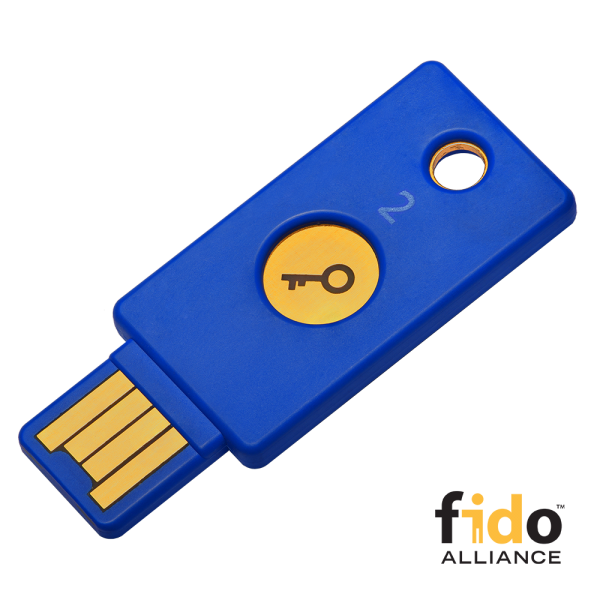
Yubico brings FIDO2 passwordless Windows 10 login to enterprises
Hardware authentication specialist Yubico is announcing a new FIDO2 compatible security key which will be supported in Windows 10 devices and Microsoft Azure Active Directory (Azure AD).
This means that organizations will have the option to enable employees and customers to sign in to an Azure AD joined device with no password, simply by using the security key to get single sign-on to all Azure AD based applications and services.
TaskRabbit app and website are down while a 'cybersecurity incident' is investigated
IKEA-owned TaskRabbit is offline while the company investigates a "cybersecurity incident". Very little information has been given about the incident, but the company says that it is working with "an outside cybersecurity firm and law enforcement to determine specifics" of what happened.
While even vague details are unavailable, the fact that the TaskRabbit website and app have been taken offline could well be indicative of the severity. The company is advising its customers to change their passwords elsewhere if they have reused their TaskRabbit credentials for other sites and services.

US and UK issue joint warning about Russian hacking of routers and ISPs
Global fears about cyberattacks by Russia are not calming down, and the US and UK have just issued a joint alert warning of state-sponsored attacks on network infrastructure devices, including residential routers.
The west is accusing Russia of an espionage-driven malicious cyberoffensive, and the Technical Alert -- which comes following a joint effort between the Department of Homeland Security (DHS), the Federal Bureau of Investigation (FBI), and the UK's National Cyber Security Centre (NCSC) -- warns that both governmental and residential hardware is being targeted to "potentially lay a foundation for future offensive operations".

US and UK blacklist China's ZTE
The US Department of Commerce has implemented a ban on American companies selling components to ZTE. The Chinese telecoms firm is being punished for violating sanctions on Iran and North Korea after pleading guilty last year.
At the same time, the UK's cyber defense watchdog, the National Cyber Security Centre (NCSC), has warned UK telecoms firms that the use of ZTE equipment or services pose a risk to national security. The action taken by the two nations is expected to have severe implications for the company.

A quarter of organizations have had data stolen from the public cloud
Public cloud services are now in use in 97 percent of organizations, but one in four have experienced data theft and cloud-first strategies are on the decline.
These are among the findings of the latest annual cloud report from McAfee. Among other highlights are that 83 percent store sensitive data in the public cloud and 69 percent trust the public cloud to keep their sensitive data secure. However, one in five organizations has experienced an advanced attack against its public cloud infrastructure.