Malware creators reuse decades-old code
Security researchers from Kaspersky Lab and Kings College London have uncovered similarities between Turla attacks from 2011 and 2017 and an ancient advanced persistent threat that was used two decades ago to launch an attack against the US government's network.
The researchers (Juan Andres Guerrero-Saade and Costin Raiu from Kaspersky Lab and Thomas Rid and Danny Moore from Kings College London) have taken logs of Moonlight Maze, an attack that happened in the late 90's, from a now retired IT admin whose server has been used as a proxy to launch the attacks.

Security researchers uncover new global cyber espionage campaign
There is a new, global cyber espionage campaign, and this one demonstrates a "new level of maturity." This is according to a new report by PwC and BAE, released after consultation with other cyber security experts, including the UK's National Cyber Security Center.
The report claims this new cyber espionage campaign targets businesses through managed services IT providers.

Criminals able to empty ATMs using remote admin attacks
Back in February of this year researchers at Kaspersky Lab uncovered a series of mysterious fileless attacks against banks where criminals were using in-memory malware to infect banking networks.
A recent investigation into a Russian bank ATM, where there was no money, no traces of physical interaction with the machine and no malware, has thrown further light on this activity.
Intel Security becomes McAfee (again)
It always seemed a little odd that, having acquired McAfee in 2010, Intel chose to drop what was a well established brand in the security field in favor of Intel Security.
Well, now things have come full circle and Intel Security will now be known as McAfee, operating as a standalone business, though still with investment from Intel.
One in three ransomware victims suffer data loss
Users are generally unaware of the dangers of ransomware attacks, and that makes them mostly clueless about how to prepare for one. This is according to a new report by Acronis.
The report is based on a survey conducted in the US, UK, Australia, Germany, France and Japan. With users being as they are, ransomware was quick to become one of the most serious malware threats out there. It is expected that $5 billion will be extorted this year, alone.
Downtime is a key cost of ransomware attacks
The cost of downtime due to lack of access to systems for customers and employees was the biggest business impact of a ransomware attack according to 59 percent of respondents to a new survey.
The study from cyber security company Imperva also shows that 32 percent of respondents say their company has been infected with ransomware with 11 percent taking longer than a week to regain access to their systems after an attack.

Ghost in the Shell: How much can it get right?
The new Hollywood sci-fi blockbuster Ghost in the Shell imagines 2029, a world where cyber terrorists hack into people’s digitally enhanced minds and where cyborgs have crises of identity. So, how much has it got right? Is this the future?
Should we be concerned that our cybernetic development, already constantly on-boarding new connected technology, will reach a point where our brains become both infected and controlled by rabid self-willed robots? Well, probably not just yet. But the question is there -- should we countenance such a dystopian scenario? Of course we should.

Small and medium enterprises are underfunding IT security
While large enterprises have the resources to tackle security issues, smaller organizations can struggle. A new survey of more than 150 IT security professionals at small to medium-sized businesses shows a significant drop in respondents' confidence in the security technologies they've deployed.
The study by security as a service specialist EiQ Networks reveals that 86 percent of respondents say their organizations have underfunded IT security initiatives.
Connected devices can easily do cyber attackers' bidding
Connected cameras, vending machines or light bulbs were the vectors of the latest cyber-attacks. It is just the beginning of a long list of Internet of Things that will be used by hackers to take down businesses or steal data. But who should be blamed for this new situation?
We heard about the promise of a better life when everything will be connected to it. We trusted it because we loved the idea of having an easier life and access to more services at the same time. Manufacturers also saw a huge opportunity in that trend for new business, so everybody was happy.

Hide files or folders inside JPEGs with FileFriend
FileFriend is a tiny portable toolkit which can split, join, encrypt or hide your target files in a JPG.
The program organizes its simple interface into four tabs: Split, Join, Encrypt and "JPK" (pack a file or folder inside a JPEG).

New SaaS platform delivers gateway security for the cloud
Organizations are increasingly faced with the need to support a more distributed environment, with employees accessing data on mobile devices and information stored both in-house and in the cloud.
Keeping these systems secure places a strain on traditional gateway security models, but cyber security company iboss is launching a new Distributed Gateway Platform is purposefully designed and packaged to offer today’s distributed organizations advanced gateway security capabilities.

New audit solution fights insider threats against core enterprise systems
Many enterprises still rely on mainframes, while these are inherently secure, audits of user activities have historically been limited to scans of disparate logs and SMF data that don’t specifically capture start-to-finish user session activity.
Mainframe software specialist Compuware is launching a new cybersecurity and compliance solution that enhances the ability of enterprises to stop insider threats by fully capturing and analyzing start-to-finish mainframe application user behavior.
Poor social network password habits put business data at risk
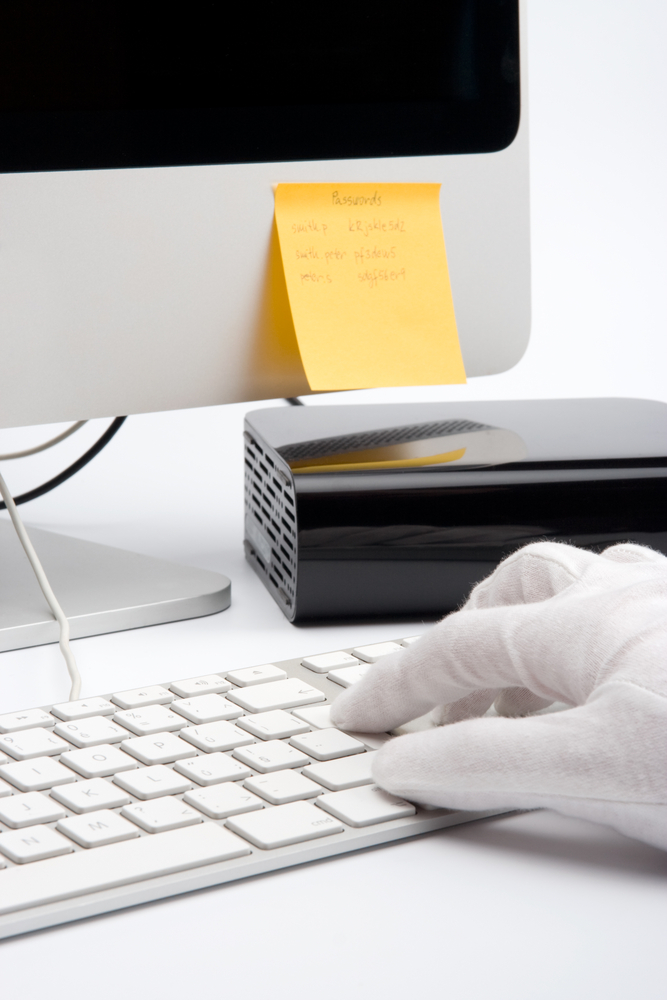
In an increasingly connected world few aspects of our lives exist in isolation. As a result, bad password habits on social networks can put work accounts at risk.
A new study by account management solutions company Thycotic reveals that 53 percent of users haven’t changed their social network passwords in more than a year -- with 20 percent having never changed their passwords at all. This not only means their social network accounts are at risk but if the same password is being used elsewhere, other accounts are vulnerable too.
Virginia Tech's DIALDroid shows Android apps steal data through secret collusion
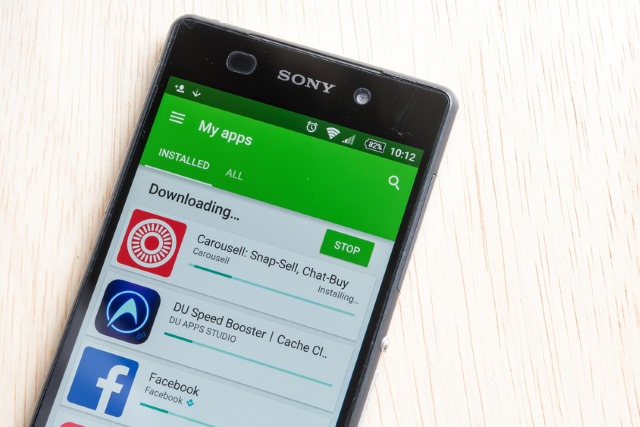
Researchers from Virginia Tech have found that Android apps can work together to mine personal information from smartphones. While users have long been aware of the need to check the privacy settings and permissions for individual apps, few people will have thought of the potential for collusion between apps that, individually, have innocuous-looking settings.
A team from the Department of Computer Science at Virginia Tech's College of Engineering developed a tool called DIALDroid (Database powered ICC AnaLysis for anDroid) and used it to monitor the exchange of data between apps. Analysis of 110,150 apps over three years found that security and privacy is put at risk as information is shared between different, independent apps that users may have installed.
Security researchers uncover phishing attack with very high success rate
A new and "very aggressive" airline phishing attack was just spotted, and it's one with such a high success rate that even security experts are baffled. It was spotted by Barracuda, and it says that this new attack has a success rate of 90 percent.
The attack combines impersonation, advanced persistent threats and phishing, giving the attackers long-term stealth access to a myriad corporate networks.