
Cyber criminals love to attack hotel chains
Hotels represent rich pickings for cyber criminals. There's the potential to steal information from large numbers of customers with consequent financial gains.
Researchers at Panda Security have issued a report showing the major attacks targeted against hotel chains in 2015.
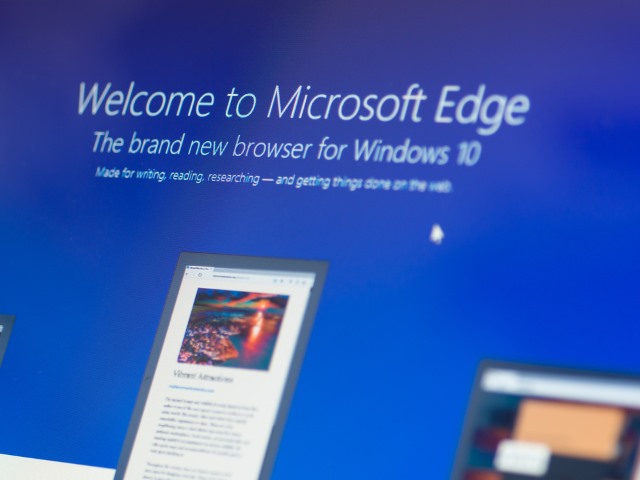
Microsoft Edge users can now install Adblock Plus or AdBlock extensions
Extensions, or the lack thereof, have been stumbling block for many would-be Microsoft Edge users. Support for add-ons has finally arrived, bringing with it the potential for something people have been asking for since Edge first appeared -- the ability to block ads.
It had previously been thought that Edge might feature native ad blocking, but this turned out to be a matter of poor communication from Microsoft. We've already shown you a slightly bodged-together way of blocking ads in Edge, but now Adblock Plus and AdBlock extensions have been officially released to the Windows Store.

Crowdsource your security knowledge: A simple guide to OWASP Top 10
Over the past two years, the Internet has seen some of the biggest, most devastating data breaches in history. With each attack, millions of personal identifiable information records are stolen, leading to the possibility of identity theft, banking fraud, and in some of the most notable cases, that's right -- divorce.
From an internet security standpoint, what’s most interesting about these data breaches isn’t the various celebrities naive enough to sign up for Ashley Madison with their real names but rather that these breaches often come from some of the most common methods hackers have for accessing data. Shouldn’t these common methods be the most widely protected against? That’s what a large portion of the internet security community believes, and that’s where the Open Web Application Security Project (OWASP) comes in. OWASP is an open-source security community that publishes the most common attacks to help developers keep their software from being the source of a critical (and possibly humiliating) breach. Keep reading to find out what OWASP’s Top 10 Project is as well as what those Top 10 actually are.
What you need to know about spear phishing
Unlike spam or phishing emails, which involve a broad and varied range of targets, spear phishing is a highly-targeted email attack against a specific group, organization, or even person.
The main aim of a spear phishing attack is either to obtain unauthorized access to sensitive data, whether this is intellectual property, financial data, trade or military intelligence, or to get the recipient of the email to act on a command, whether this is to transfer money or share confidential data.

What's the most popular ransomware?
Ransomware is something like the digital version of Kanye West -- everyone hates it, but its popularity just keeps on growing. And it takes your money for things you really don’t want to buy.
The news about the rising popularity of ransomware was confirmed by security firm Kaspersky Lab, which released its quarterly report into the state of malware.

Five ways to take your passwords to the next level
World Password Day is apparently a day for “taking our passwords to the next level”, so here are five traditions the crooks and password crackers really, really don’t want us to start.
In 2007, Dinei Florencio and Cormac Herley at Microsoft Research looked into the password habits of half a million users in their large-scale study of website password habits. They found that the average user needed about 25 distinct passwords but only had about six.

LAPD hacks iPhone 5s, but how?
The iPhone 5c belonging to San Bernadino shooter Syed Rizwan Farook is not the only iPhone that the US authorities have managed to hack this year. According to a report by Los Angeles Times, the Los Angeles Police Department has "bypassed the security features" of an iPhone 5s.
The iPhone 5s in question was used by April Jace, the wife of The Shield actor Michael Jace, who is facing murder charges, being accused of killing his partner on May 19, 2014. And, according to court documents reviewed by the publication, on March 18 the LAPD claimed to have found a "forensic cellphone expert" who could hack the device, which is believed to hold important evidence in the trial.

Malware takes advantage of Windows' God Mode hack to slip past security
The so-called God Mode hack for Windows is rather less grand than it might first sound. Rather than granting users deity-like abilities, it simply provides one-folder access to an absolute butt-load of Control Panel options and settings. But security researchers have discovered that the technique used to create this special folder can also be exploited by malware.
McAfee says that while the Easter Egg is great for power users, it is also being used by attackers for "evil ends". By placing files within the God Mode shortcut folder, malware such as Dynamer is able to run undetected on a victim's computer.

'Weak' Craig Wright backs out of Bitcoin claim
Craig Wright, the main claiming to be Bitcoin inventor Satoshi Nakamoto has started to backpedal on his claim. There has long been speculation about the identity of the person behind the cryptocurrency, and earlier this week Wright stepped up to the plate.
After doubts had been expressed about his claim to the Bitcoin crown Wright had promised to reveal "extraordinary evidence" as proof. But now he has had a change of heart. He's not saying -- yet -- that he's not Satoshi Nakamoto, but that he does "not have the courage" to publish the proof so many people are demanding to see.

Microsoft prevents Windows 10 Pro admins from blocking access to the Windows Store
Microsoft has castrated some of the capabilities of Windows 10 Pro admins looking to lock down the computers they manage. The company is removing the ability to block access to the Windows Store using Group Policy Editor.
The option will still be available to those running Education or Enterprise versions of Windows 10. It means that businesses who have come to rely on this option as part of their security regime will have to consider upgrading to a different version of Windows 10.

Attack researchers are top target of DDoS activity
We all know that the cyber security world is a constant war of attrition, but it seems that DDoS attackers are targeting those firms which represent a direct threat to their business model.
According to a new report from cyber security company Nexusguard, an attack research group, Loryka LLC, was the number one target in the first quarter of this year, with 90 DDoS attacks.

Hacker leaks millions of Hotmail, Gmail, and Yahoo Mail usernames and passwords
A number of major webmail services have suffered one of the largest security breaches in recent years. The account details of Gmail, Yahoo Mail, Hotmail, and Mail.ru are just four of the services affected.
Security firm Hold Security says that it has been contacted by a hacker in possession of 272 million unique pairs of email addresses and unencrypted passwords. This is far from an insignificant number, and the situation is made all the worse as the data is being freely shared for just about anyone to access.
Messaging apps provide a false sense of security
In the last couple of weeks we have seen consumer messaging giants WhatsApp and Viber retrospectively add end-to-end encryption technology to their communications platforms. The notion of providing users with improved security is certainly to be applauded, and seeing messaging apps adopt encryption as a necessity as opposed to simply a nice-to-have feature, is long overdue.
However, the manner in which providers are increasingly introducing encryption technology within apps as an afterthought is potentially providing a false sense of security to the billions of people that use them on a daily basis.

Wearables are likely source for security breach
The Internet of Things (IoT) opens up a sea of new opportunities for revenue and growth, but it is also a security challenge, IT pros have said.
If the new Spiceworks IoT report is to be believed, 85 percent of IT professionals in the EMEA region (Europe, Middle East, Africa) believe IoT will create new security and privacy issues in the workplace.

Just 30 percent of UK companies experienced a security breach in 2015
Almost a half (43 percent) of UK companies did not experience a security breach in 2015, a new report suggests. Released by IT management software provider SolarWinds, it includes answers from 109 IT practitioners and managers from small, medium-sized and large UK companies.
According to them, just 30 percent suffered a breach last year. Quite surprising.