
36 percent of organizations have suffered a serious cloud breach in the last year
A new survey of 300 cloud professionals finds that 36 percent of organizations have suffered a serious cloud security data leak or a breach in the past 12 months.
The study conducted by security and compliance automation firm Fugue and developer tools company Sonatype finds eight out of ten are worried that they're vulnerable to a major data breach related to cloud misconfiguration.

97 percent don't recognize the security limitations of containers
A new study finds that only three percent of respondents recognize that a container, in and of itself, is not a security boundary, suggesting that the default security capabilities of containers are overestimated.
The survey, from cloud security company Aqua Security of 150 cloud native security practitioners and executives from IT, Security and DevOps teams, across sectors and geographies, also shows that only 24 percent of respondents have plans in place to deploy the necessary building blocks for runtime security.

Over half of exploits sold on underground forums are for Microsoft products
A new study from Atlas VPN shows that 51 percent of exploits sold on underground cybercriminal forums are for Microsoft products.
Microsoft Office exploits make up 23 percent while Windows accounts for 12 percent of exploits sold on hacker forums. Remote Desktop Protocol (RDP) exploits make up 10 percent, with Internet Explorer and Share Point taking three percent each.

Researchers discover high-severity, 16-year-old flaw in drivers for millions of HP, Samsung and Xerox printers
Security researchers from SentinelOne have uncovered an ancient vulnerability in the drivers used by printers from three big manufacturers.
The high-severity security vulnerability -- which is being tracked as CVE-2021-3438 -- affects drivers for HP, Samsung and Xerox printers and has evaded detected for 16 years. In all, around 400 printer models are at risk, leaving millions of printers exposed to the danger of the serious privilege escalation vulnerability.

Sequoia: Linux kernel security flaw gives unprivileged users root access
A vulnerability has been discovered in the Linux kernel that makes it possible to gain root access on a number of popular distributions, including Ubuntu, Debian and Fedora. The flaw has been named Sequoia, and it exists in the filesystem layer.
The security issue is thought to affect all versions of the Linux kernel released since 2014, meaning that a large number of distros are vulnerable. Specifically, the flaw is a size_t-to-int type conversion vulnerability that can be exploited to elevate privileges.

Critical vulnerabilities found in cloud-based ICS management systems
There are lots of good reasons for moving industrial control systems to the cloud including better telemetry and analysis of device performance, management of logic and remote device configuration, improved diagnostics and troubleshooting, a centralized view of processes.
But as more operational technology and lCS make the move, they become increasingly vulnerable to threats. ICS security specialist Claroty has unveiled its new Team82 research arm along with a report on critical vulnerabilities found in cloud-based management platforms for ICS.

DuckDuckGo launches privacy-focused @duck.com email forwarding
DuckDuckGo is a pretty cool company that focuses heavily on privacy. Its claim to fame is its search engine that aims to compete with the likes of Google and Bing, but without tracking you. Believe it or not, its search results are pretty good comparatively, although Google still edges it out.
Over time, DuckDuckGo has launched its own web browser and browser extensions, constantly trying to keep humans safe from the eyes of "Big Tech." And now the company announces its latest creation -- @duck.com email accounts.

Companies risk data exposure as employees leave
New research from SASE company Netskope reveals the risk of critical data exfiltration linked to employees leaving their jobs.
The report finds that some departing employees present a disproportionately significant cloud security risk. In their last 30 days of employment, workers have been shown to be uploading three times more data than usual to personal cloud apps.

Organizations are losing the war on phishing
According to a new study of over 1,000 enterprise IT professionals around the world, 40 percent of organizations confirm they have fallen victim to a phishing attack in the last month, with 74 percent experiencing one in the last year.
The research from automation platform Ivanti also shows that 80 percent of respondents say they have witnessed an increase in volume of phishing attempts, with 85 percent saying those attempts are getting more sophisticated.

Personal devices could pose a risk as workers go back to the office
New research shows that 61 percent of employees intend to bring their personal devices into the office as they return to more conventional working patterns.
A study of 2,000 UK employees, conducted by Censuswide on behalf of asset visibility and security platform provider Armis, shows 61 percent of employees use their personal mobile phone and 44 percent use their own laptop for business purposes.

How real live phishing emails can help protect users [Q&A]
Phishing remains one of the most popular attack vectors for cybercriminals. But traditional defenses relying on filtering or raising user awareness via training aren't always effective.
We spoke to Lior Kohavi, chief technology officer at enterprise SaaS security specialist Cyren to discover how a new approach is using genuine attacks to help both educate users and keep phishing emails out of our inboxes.
China accused of large-scale Microsoft Exchange Server hack
The US, UK and other allied nations have accused the Chinese Ministry of State Security of engaging in a global hacking campaign. Included in this was an attack on Microsoft Exchange servers earlier in the year, and other activity that has been described as "irresponsible and destabilizing behavior in cyberspace".
China has been called on to "end this systematic cyber sabotage", and a statement issued by the White House said that "an unprecedented group of allies and partners are joining the United States in exposing and criticizing the PRC’s malicious cyber activities".
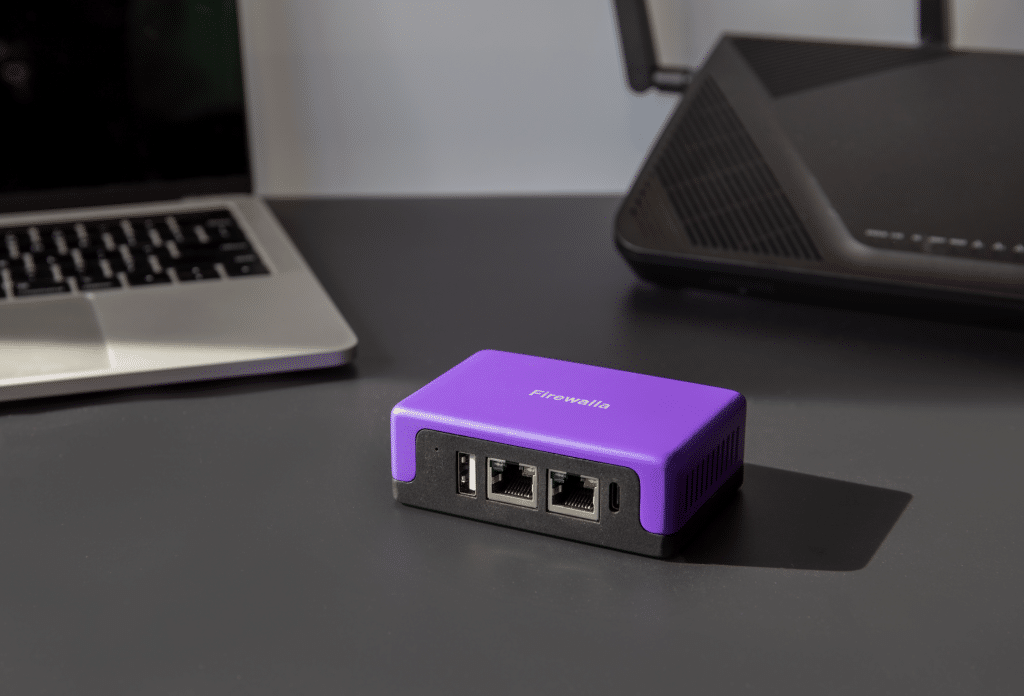
Firewalla goes Purple to protect gigabit networks
Regular readers will recall that last year we reviewed the Firewalla, a little box that provides protection for your network.
We tested the Blue version that provides protection for networks up to 500Mbps in speed. Now the company is launching a new Purple version that works at gigabit speeds and has extra features too.

Investigation uncovers global abuse of Pegasus malware to spy on journalists, activists and more
Spyware produce by the Israeli surveillance firm NSO Group has been abused by governments to target dissenting journalists, activists, lawyers and more, an investigation by human rights groups and media organizations has found.
The Pegasus spyware was produced with the intention of targeting terrorists and other criminals, but an investigation into a huge data leak shows that it has also be misused by authoritarian governments to gather text message, photos, call logs and more from iPhones and Android handsets. The malware can also be used to acti8vate the microphone of a targeted device to eavesdrop on conversations. Targets includes not only journalists and activists, but also key business figures, members of government, presidents and prime ministers.

After waking up from PrintNightmare, Microsoft has a workaround for another Windows Print Spooler vulnerability
After the PrintNightmare fiasco of recent weeks, Microsoft has shared information about another Windows Print Spooler security vulnerability.
The issue is being tracked as CVE-2021-34481, and is described as a "Windows Print Spooler Elevation of Privilege Vulnerability". For the time being, there is no patch available, but Microsoft has offered details of a workaround that mitigates against potential attack -- but it is far from being an ideal solution.