Could 2026 be the year you finally update your money habits for a digital-first world?

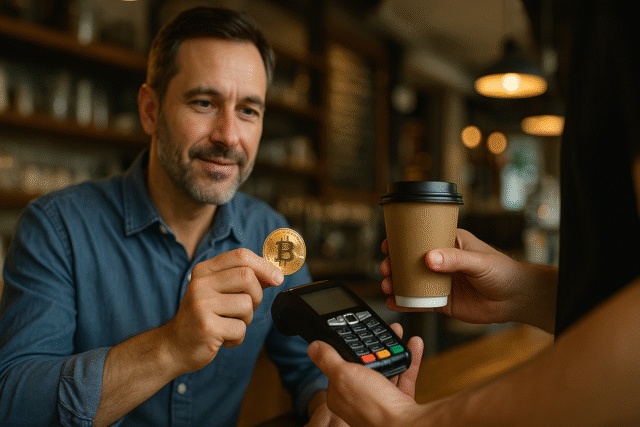
The way you move money in your daily life has likely changed faster than your old habits have. Cash used to be king, but the pandemic changed things, and accelerated the move to digital. You can now pay friends instantly, subscribe to half your world through your phone and check cryptocurrency prices live the same way you check for the weather.
As 2026 approaches, the financial world is shifting beneath your feet, whether you have adapted or not.
Your money habits are outdated
Next year could be be the first year where updating old money habits isn't optional -- it's something done because our lifestyles have already gone digital. Banking routines, spending patterns and the tools we trust are starting to fall out of sync with how modern transactions actually work. If we expect everything else to be instant, mobile and global, we surely should eventually expect the same from our money.
Your financial behavior probably mirrors what you learned growing up. Yes, you might still rely on traditional transfers, slow settlement times or outdated assumptions about what is safe or reliable, but we live in a world where it's possible to send money across borders in seconds, pay creators without friction and move cash about with the same speed you move information.
Younger consumers have embraced digital payments faster than any other generation. The habits they developed through streaming, messaging and social apps have shaped their expectations about how money should move. That said, there is still a gap between expectations and the financial tools being relied on and that gap becomes harder to ignore every year.
Digital money is no longer niche and crypto has evolved to fit into daily life, not just trading. Fast settlement coins and stablecoins now power everything from tipping to cross-border payments to in-app purchases. You may already be using these rails (the underlying payment network or system that money moves on) without calling them crypto at all.
Real-world adoption is accelerating too. Revolut integrated Polygon to cut the cost of remittances and allow users to move value more efficiently, and not so long ago, PayPal announced plans to make it easier to both send and receive money, including cryptocurrency. When mainstream platforms switch to faster and cheaper rails, everyday consumers follow.
Stablecoins are growing even faster. In August, USDe supply rose 43.5 percent to $12.2 billion. That kind of growth signals real demand for digital money that behaves predictably and moves quickly.
These shifts obviously don't mean you have to become a crypto trader. They just mean digital value transfer is becoming part of normal life.
For years, people treated crypto volatility as the main reason to avoid getting involved. But the way market swings are interpreted is changing. There's no longer a need to panic and cash out when prices fall. It's like interpreting economic weather.
Recent data shows how this mindset is changing. Bitcoin fell about 9 percent and Ether fell 11 percent during one of the most dramatic weeks of 2025, while the Fear and Greed Index dropped to 10 on November 15. That level is rare, representing roughly 1.4 percent of days since 2018.
Instead of reacting emotionally, many people now see these dips as cycles. Binance CEO Richard Teng told us, "As with any asset class, there are always different cycles and volatility. Any consolidation is actually healthy for the industry, for the industry to take a breather, find its feet."
Volatility can be viewed as information rather than a threat. It helps you understand where the market mood stands and how to adjust expectations.
AI is becoming your invisible money guardian
Security used to be something you paid attention to, but now it happens in the background. We typically expect safer systems without extra steps. This is why AI plays such a big role in modern financial tools.
According to VP of Product at Binance Jeff Li, "We have been leveraging AI in multiple areas, from assisting with customer queries and enhancing platform and market surveillance to detecting and deterring misconduct and fighting scams."
AI now supports customer safety on a level that would have been impossible a few years ago. It runs constant checks, flags suspicious activity and improves user protection quietly. People want systems that guard you without slowing you down. AI is becoming exactly that.
A growing number of people work across borders, study abroad or earn income from international platforms and traditional financial systems were never designed for this lifestyle. They can be too slow, too limited and too expensive for people who move money internationally on a regular basis.
Crypto fills this gap because it moves at the pace life moves at. You can send money across continents in seconds and don't need to wait for settlement windows or navigate surprise fees. When life is global, money needs to follow and in 2026, this will matter more than ever.
The biggest shift happening right now isn't technological -- it's psychological. We are already surrounded by digital tools that outperform traditional systems, but still fall back on old habits because they feel familiar.
Here are some habits I think are worth updating for 2026:
- Understanding what technology is doing behind the scenes: AI and secure execution environments quietly shape how your money moves. Knowing they exist helps make smarter decisions.
- Stop assuming slow means safe: Speed does not equal risk anymore. In many cases, faster digital rails offer clearer settlement, better transparency and strong security protections.
- Separate spending, saving and investing behaviors: Crypto does not have to be something to trade. It can be something you use for transactions, stable savings or simple transfers.
- Use multiple tools instead of relying on one institution: A digital-first world rewards flexibility. Financial life can be a blend of bank accounts, digital wallets and global payment apps.
- Learn how to interpret market signals instead of reacting to them: Volatility is part of any modern financial system. Knowing how to read sentiment offers more control.
Where your money mindset goes from here
2026 could well push people to rethink how they want their financial life to function. Not because someone tells you to change, but because the world around you is already changing.
Digital money is becoming easier to use, more secure and more integrated with the apps you rely on every day. Market cycles will continue, but the long-term trend is clear. Financial habits are evolving regardless of whether you adjust intentionally or not.
Will 2026 year be the year you finally bring your habits in line with the way you already live? Share your thoughts in the comments below.