
Opera Neon, Opera's experimental agentic AI browser, is now available to all

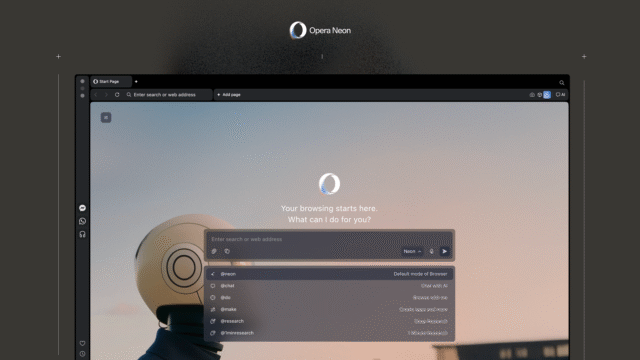
Two months after its invite-only debut, Opera’s experimental agentic browser, Opera Neon, is now available for anyone to download and try out. Neon is designed for people who want to work with emerging AI tools as soon as they become available.
The software has been in a closed "Founders phase" since early October, and the removal of the waitlist means anyone can now sign up to use it for $19.90 a month.
SEE ALSO: ChatGPT Atlas ranks as the least private browser in new study
Neon is an agentic browser rather than a standard web browser. It uses AI agents to perform tasks, create content, and even build small web apps instead of only displaying pages.
Subscribers gain access to top tier models including Gemini 3 Pro and GPT 5.1 through the single subscription. It's not really aimed at everyone, but more for users who want to test raw, in-development AI features technologies before they reach its mainstream products.
“Opera Neon is a product for people who like to be the first to the newest AI tech. It's a rapidly evolving project with significant updates released every week. We’ve been shaping it with our Founders community for a while and are now excited to share the early access to it with a larger audience,” said Krystian Kolondra, EVP Browsers.
Features available to subscribers include access to large models such as Gemini 3 Pro, GPT 5.1, Veo 3.1, and Nano Banana Pro. It also offers Neon Chat, Do, and Make, which can book trips, build websites, generate videos, edit documents, or run autonomous tasks.
ODRA (Opera Deep Research Agent) can gather and synthesize information, and its one minute research mode produces shorter results for users who want more than a basic answer.
Subscribers are invited to join a dedicated Discord community where they can test features early, speak directly with developers, and even influence Neon’s roadmap.
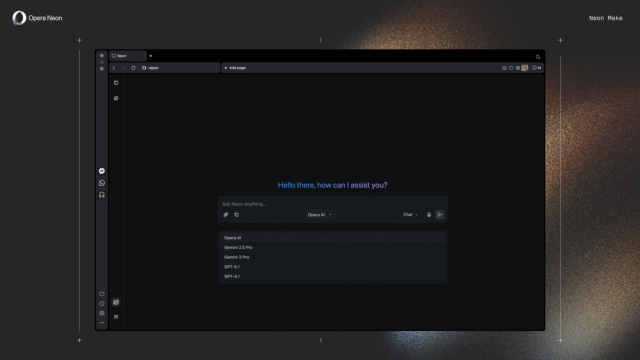
Opera Neon's history
Opera first began rolling out Neon to a limited group in October. Those early builds introduced agentic tools such as Neon Tasks, Cards, Chat, Do, and Make.
Tasks provide self contained workspaces that hold context for research and writing, while Cards act as reusable instructions that shape AI output. Neon Do can act inside browser sessions by opening tabs, gathering information, filling forms, or carrying out multi step processes. Make can generate content such as websites or reports and provide source files for editing.
In November, Opera expanded Neon with Google’s Gemini 3 Pro and Nano Banana Pro models, plus added a model selector inside Neon Chat and support for Google Docs inside Neon Do.
Opera Neon actually dates back to 2017, when it was announced as Opera's first ever "concept browser" and offered a different way of browsing and consuming the web. With the rise of AI, the browser maker dusted off the name and built a very modern browser for an AI-first world.
Opera Neon can now be downloaded from the Opera Neon site.
There’s a new video explaining how the different agents at work in Neon, which you can watch below.
What do you think about Opera Neon? Let us know in the comments.



