Twitter puts its account cull on hold... because it forgot about dead people
When Twitter announced plans to close down accounts that have not been used for a period of six months or more, reaction was mixed. While many people recognized the value in getting rid of the millions of accounts that artificially inflate follower numbers and take up usernames that could be assigned to other people, there were concerns too.
In particular, friends and relatives of deceased Twitter users expressed concern that they would no longer be able to access the old tweets of their loved ones. Now Twitter has said that it will put its plans on hold... at least until it is able to devise an account memorialization feature.
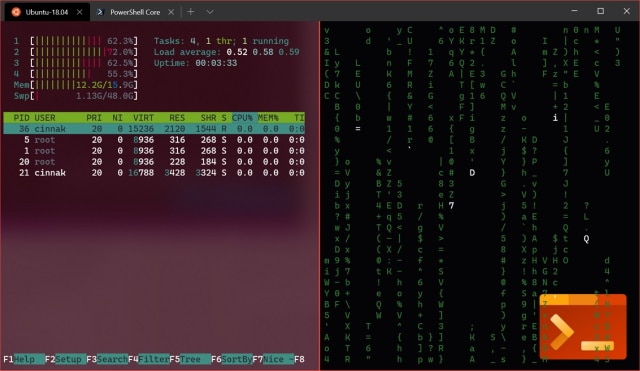
Microsoft updates Windows Terminal preview with multiple panes and tab re-ordering
With the latest release of the Linux-inspired Windows Terminal preview, Microsoft just made the app a whole lot more useful and user-friendly.
The addition of a multi-pane option to Windows Terminal v0.7 means that it is now possible to run two terminals side by side -- something that will be appreciated by many users. Other changes include the arrival of tab re-ordering, and a thinning of the border around Terminal.
Twitter is deleting unused accounts, freeing up loads of usernames
When it comes to Twitter accounts, users tend to have two aims: to grab the perfect username, and to gain a verified tick. If you had to comprise when setting up your account, opting for a less-than-ideal handle, there's some good news.
Starting in December, Twitter is closing down inactive accounts ultimately freeing up a huge number of usernames that were previously tied up, but lying unused. Username squatting is a common problem on Twitter, but the new initiative should help to alleviate things a little.
Windows 10 November 2019 Update is breaking File Explorer
Microsoft has had a pretty bad run of things recently with numerous problematic updates for Windows 10. With the November 2019 Update the spate of issues continues.
Despite the diminutive size of the Windows 10 November 2019 Update, it is still wreaking havoc for some users. The update is breaking one of the fundamental components of Windows 10, freezing File Explorer when the search box is used.

Sir Tim Berners-Lee launches 'Contract for the Web' to stop it descending into a digital dystopia
The inventor of the world wide web, Sir Tim Berners-Lee, has launched a new initiative with the bold aim of transforming the web for the better, avoiding what he sees as the very real risk of it becoming a "digital dystopia".
The Contract for the Web is the work of 80 organizations and sets out a number of key principles that will help to bring global internet access while simultaneously fighting problems such as fake news, privacy invasion and political manipulation. In all, there are just nine principles underpinning the vision; three for governments, three for companies, and three for citizens.
Microsoft is blocking Windows 10 updates for some Avast and AVG Antivirus users
If you're looking to install either Windows 10 1903 or Windows 10 1909 (the May 2019 and the November 2019 updates) and you're a user of Avast or AVG Antivirus, you may well find that Microsoft prevents you from updating.
The company has identified a compatibility issue with the antivirus software and is therefore blocking the updates. Microsoft is also advising users not to try to sidestep the block by manually installing the update.
Windows 10 November 2019 Update is seriously small, but Microsoft says not to get used to it
When you download Windows 10 November 2019 Update (Windows 10 version 1909), you might be somewhat surprised at just how small it is.
At a ridiculous 180KB (yes, you did read that correctly) this is a tiny size for a feature update -- but it doesn't signal the way things are going to be moving forward. So how on earth did Microsoft manage to make this update so small? What's going on?
Now you can enable 2FA on Twitter without a phone number
There's a lot to be said for enhancing account security with two-factor authentication (2FA) but Twitter has long-insisted that this be done by handing over your phone number -- not something everyone is happy with.
But now the company has announced a change of heart. With immediate effect, Twitter says "you can Starting today, you can enroll in 2FA without a phone number". The move comes after Jack Dorsey's account was hijacked and used to send racist tweets, and just two months after Twitter revealed that 2FA data had 'inadvertently been used for advertising purposes'.

Microsoft delays Surface Earbuds until Spring 2020
If you were hoping to get your hands (or ears) on a pair of Microsoft's Surface Earbuds for Christmas, you're going to have to wait a little longer.
Originally pencilled in to launch before the end of the year, Microsoft's $249, AirPod-baiting wireless earphones have been delayed. The worldwide launch is now destined for spring 2020 according to a tweet by Panos Panay.

OnePlus suffers data breach, exposing personal details of online store customers
OnePlus has issued a security notice to customers that have used its online store, informing them that their order information has been accessed by an unnamed third party in a security breach.
The company is giving away very little in the way of details about the incident. It is not clear when the data breach happened, who may be responsible, or how many customers are affected. OnePlus says that information such as names, phone numbers, email addresses and shipping addresses have been exposed.
Twitter tests new scheduled tweets option
Many demands have been made of Twitter: longer tweets, tweet editing and an end to trolling and abuse. The company has implemented a number of changes, but the most recent is the ability to schedule tweets.
Until now, this is something that has only been available to people using Twitter clients such as TweetDeck, but finally -- for some people, at least -- it is an option that's available via the Twitter website.

PayPal buys deal-finding service Honey for $4 billion
PayPal has agreed to pay $4 billion to acquire Honey Science Corporation, which is best-known for its reward and deal-finding service and browser add-on.
The acquisition still needs the usual regulatory approval, but the transaction is expected to be completed in the first quarter of 2020. The company says that the purchase "will transform the shopping experience for PayPal's consumers while increasing sales and customer engagement for its merchants".
Intel publishes letter apologizing for CPU supply issues
Intel has published a letter in which it apologizes to customers and partners for on-going problems with CPU supplies. The company says that while it is "working hard to regain supply-demand balance", it "remains a challenge".
In spite of the company's best effort, supplies are still "extremely tight" and the letter appears to be part of an appeasement campaign to calm the frustrations of those hit by shipment delays.
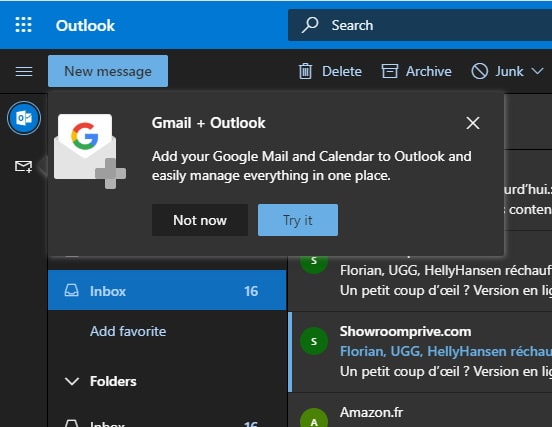
Microsoft rolls out Gmail, Google Drive and Google Calendar integrations to Outlook.com
Microsoft seems to have started rolling out new integration options to Outlook.com, making life easier for anyone who uses both Microsoft and Google services.
As well as offering Gmail integration to allow people to read emails from their Google accounts within Outlook online, Microsoft is also in the process of adding support for Google Calendar and Google Drive.
Microsoft lends its support to DNS over HTTPS to boost user privacy
Joining the likes of Mozilla and Google, Microsoft has announced that it will support DNS over HTTPS (DoH).
The company says that the adoption of encrypted DNS is important for the overall health of the internet ecosystem. It goes on to set out a number of principles that will be at the heart of adopting DoH in the Windows DNS client.