Hackers use Jack Dorsey's Twitter account to send racist tweets
Jack Dorsey's Twitter account was hacked yesterday, and the hackers -- going by the name of the Chuckle Gang -- proceeded to send racist tweets and made reference to a bomb at Twitter headquarters.
The account of the Twitter CEO was back under control relatively quickly, and the tweets sent out by the hackers were deleted. Twitter has said that its security systems were not compromised in the attack, instead blaming the account hijacking on a "security oversight" by a mobile provider which enabled hackers to take control of a mobile number associated with Dorsey's account.

Foxit Software reveals data breach that exposed users' email addresses, passwords and more
Foxit Software has revealed that it "recently" suffered a security breach in which private user data was exposed to unnamed third parties. Those whose account have been affected are being contacted and "encouraged to change their passwords".
The company -- famed for PDF applications such as Foxit Reader and PhantomPDF -- does not say when the incident took place, nor how many users are affected, but it explains that "My Account" section of user accounts was exposed. This includes data such as email addresses, passwords, users' names, phone numbers, company names and IP addresses, but not payment information.
Google's bug bounty program now covers any big Android app
Bug bounty programs have become a popular way for developers to track down security issues in software, but big pay-outs are not something that every company can afford.
In a bid to keep its Android platform secure, Google has announced that its own bug bounty program is being expanded to include all big Android apps, regardless of who develops them. The company will reward security researchers who find bugs in any app in the Google Play Store with 100 million or more installs.
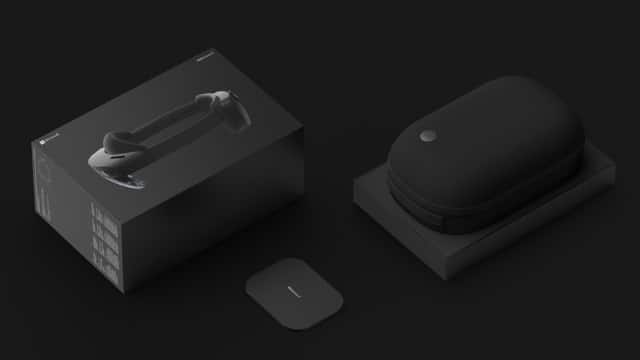
Microsoft will release HoloLens 2 in September
Microsoft is due to launch the second edition of its augmented reality headset next month. HoloLens 2 will go on sale in September, according to the executive vice president of the company's artificial intelligence and research group, Harry Shum.
Shum was speaking at the World Artificial Intelligence Conference in Shanghai when he made the revelation, finally bringing to an end speculation about when the device will see the light of day.
Google security researcher warns that hackers are using malicious websites to exploit iOS flaws and monitor iPhone users
Hackers are using compromised websites to install "monitoring implants" on iPhones, warns a security researcher from Google's Project Zero.
Taking advantage of vulnerabilities in iOS and Safari, hackers are able to target devices running everything from iOS 10 to iOS 12, accessing contacts, images and other data. It is claimed that the practice has been going on for years, and that "simply visiting the hacked site [is] enough for the exploit server to attack your device".
See also:
Apple apologizes for having contractors listen to Siri recordings and announces privacy changes
Following outcry over human "grading" of Siri recordings, Apple has issued an apology and promised that it will no longer retain recordings of interaction with the digital assistant unless given explicit permission.
The company says that "we haven't been fully living up to our high ideals, and for that we apologize". Having suspended the human grading of Siri requests, Apple is now making fundamental changes to its privacy policy saying that only Apple employees will be able to listen to recordings, as opposed to contractors, and users will have to opt in for this to happen.
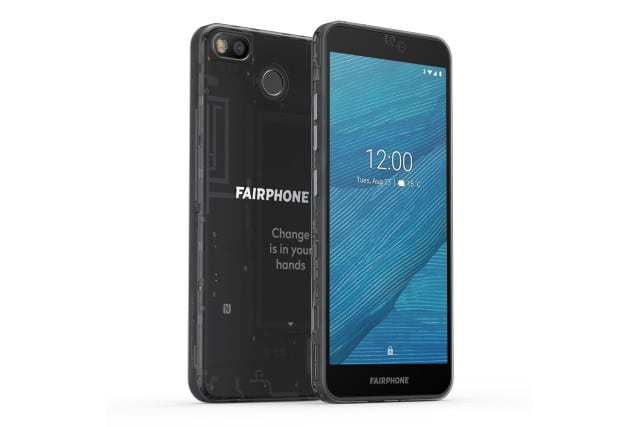
Fairphone 3: the ethical, environmentally friendly, modular phone 'that cares'
Fairphone is not a new name in the smartphone market, but it's not one that everyone is aware of. The company has a strong ethical and environmental stance, producing handsets that are gentle on the environment, the people producing them, and are easily repaired.
Now the company has announced the Fairphone 3. Due for release next month, the Android handset is a decent mid-ranger which is likely to attract more interest than its two predecessors. So what's all the fuss about?

Libra Bug Bounty Program seeks to strengthen the security of Facebook's blockchain
Facebook's plans to venture into the world of cryptocurrencies has proved highly controversial, but the social media giant is plowing on regardless. The company and the partners it is working with on Libra have launched a public bug bounty program, offering pay-outs of up to $10,000 per bug.
Announced by the Libra Association, the aim of the Libra Bug Bounty Program is to "strengthen the security of the blockchain". The association wants to track down " security and privacy issues and vulnerabilities".
Microsoft faces another European investigation over Windows 10 privacy concerns
Worries about privacy in Windows 10 show no signs of abating, with Europe expressing ongoing concerns about Microsoft's data gathering and telemetry.
Having already asked Microsoft to make modifications to Windows, the Dutch data protection agency (DPA) has since looked into what changes the company has implemented. Having found "new, potentially unlawful, instances of personal data processing", the agency is calling for an investigation by the Irish Data Protection Commission (DPC), Microsoft's lead EU privacy regulator.
Just ask auntie: BBC to launch its own digital assistant called Beeb
The BBC is working on a digital assistant to rival the likes of Siri and Alexa. Due to launch in 2020, the system goes by the name Beeb, and is being developed to handle regional accents better than current assistants.
The corporation has no plans -- for now at least -- to release a physical product along the lines of Google Home, as Beeb is destined to be used to allow people to use their voices to interact with online services and search for shows.
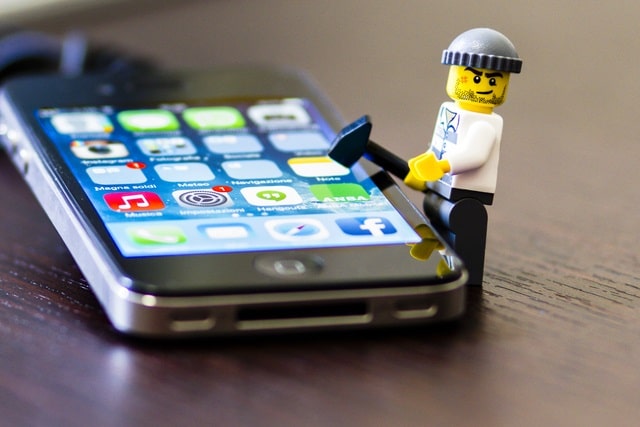
Apple puts the kibosh on vulnerability that let iPhone users jailbreak iOS 12.4
Apple has released an update to iOS 12.4, plugging a vulnerability that had been reintroduced which allowed for jailbreaking.
iOS 12.4.1 repatches a security flaw which Apple previously fixed and then, inexplicably or accidentally, unpatched. iPhone owners now face a dilemma: upgrade to iOS 12.4.1 and have the most up-to-date, secure operating system, or stick with iOS 12.4 and retain jailbreak.
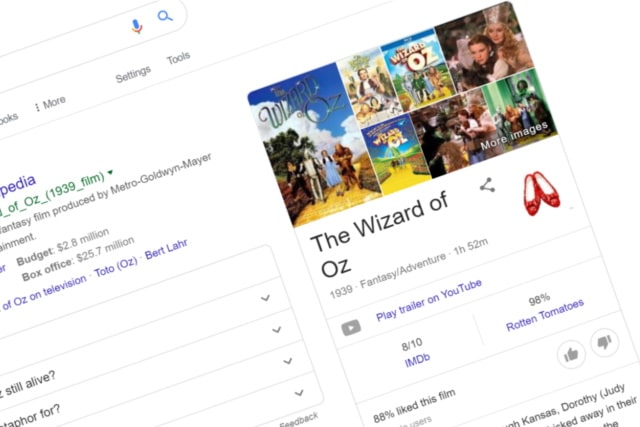
How to access Google's secret Wizard of Oz Easter egg
Yesterday was the 80th anniversary of the theatrical debut of the seminal movie The Wizard of Oz. To celebrate the release of the 1939 classic, Google has hidden a movie-related secret in its search engine.
Whether you're a friend of Dorothy, a lover of the cowardly lion, or just a hater of the Wicked Witch of the West, it's a cool little Easter egg that's well worth checking out. Repeat after me: "There's no place like home!"

Google Calendar spam is a thing; here's how to protect yourself
Spam is something we've become used to in our email inboxes as well as via SMS, but it's certainly not the only way we can be pestered, harangued and irritated. Even Google Calendar can be used to spam you with ads.
The phenomenon is not entirely new, but it has been in the spotlight recently. Google Calendar spam takes advantage of a default setting that Google puts in place. By disabling this, you can protect yourself against unwanted intrusions... but there are side-effects to consider.

Web host Hostinger resets 14 million customer passwords following data breach
Hosting company Hostinger has reset passwords for all of its customers after a data breach in which a database containing information about 14 million users was accessed "by an unauthorized third party".
Hostinger says that the password reset is a "precautionary measure" and explains that the security incident occurred when hackers used an authorization token found on one of the company's servers to access an internal system API. While no financial data is thought to have been accessed, hackers were able to access "client usernames, emails, hashed passwords, first names and IP addresses".
Got Bluetooth problems in Windows 10? KB4505903 update could be to blame
We are frequently advised to ensure that all of the latest Windows updates are installed in the name of security, as well as to ensure that we have access to all of the latest features. But sometimes things go wrong, as the KB4505903 update for Windows 10 illustrates.
This cumulative update was released a little while back -- July 26, to be precise -- but over the intervening weeks, problems have emerged with Bluetooth. You may find that you're not able to connect your Bluetooth speaker, or that audio quality is terrible. Microsoft has a workaround.