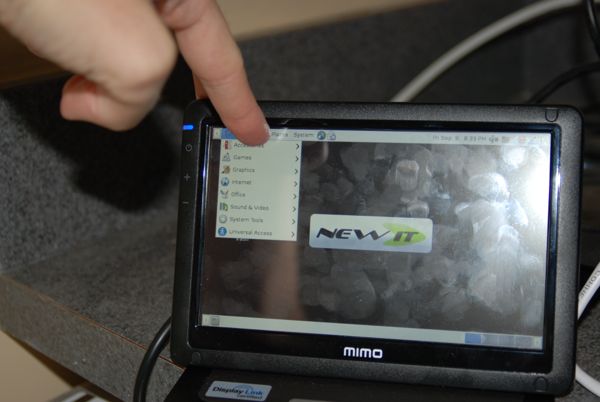
MimoPlug: The touchscreen is a feature, not the main driver
REVIEW: To me, plug computers are exciting because they can perform low-to-mid-level computational functions at an extremely low overall energy cost. They are sort of like fanless PC's of the smallest order...General purpose computers that have the small physical and ecological footprints of embedded systems without the usage case limitations.
A couple of months ago, the people at Mimo Monitors released a bundle called MimoPlug that combined a touchscreen version of their famous USB mini-monitor with an equally miniature plug computer based upon Marvell's SheevaPlug platform that booted Debian off of an included SD card.
Imitate Windows 8 with Mosaic Desktop
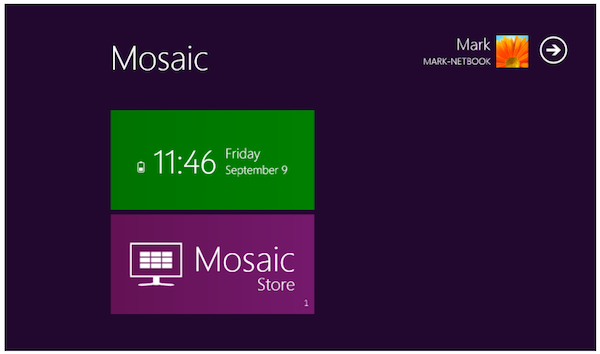
As the launch of Windows 8 draws closer and closer, and increasingly tantalising details creep out about the operating system, the number of tools that enable you to mimic the look or copy the features of the next version of Windows also increases. One such tool is Mosaic Desktop. which enables you to bring the look of the redesign to your Windows 7 computer.
The tiled interface can be used to display a range of information -- from the date and time to the state of your inbox. There are a number of tiles that can be added to the interface, some of which show information about your computer, while other pull in information from the Internet. In order to add new tiles to the basic set that is included by default, you need to pay a visit to the Mosaic ‘store’.

German ban on Samsung Galaxy Tab 10.1 sticks
Two weeks ago, German courts awarded Apple with a preliminary injunction on Samsung's Galaxy Tab 10.1, saying the tablet looked too much like the Community Design for handheld computers Apple registered with the European Union (shown above, Design Number 000181607-0001). Friday, that preliminary injunction was upheld in Düsseldorf regional court by Judge Johanna Brueckner-Hofmann.
The ban does not even consider the software or technology behind the two devices, and really only pertains to the design of the chassis, which Brueckner-Hofmann reportedly described as "minimalist" and "modern."

Sprint offers the best mobile data value, study says
If you’re a data-heavy smartphone user, you belong on Sprint. That’s the findings of Validas, a company that specializes in tools to analyze cellular plan usage and spending. The average Sprint user spends about eight cents per megabyte, Validays says, which equals 12.5 megabytes for every $1 of data.
Sprint's numbers may be skewed though: its customers enjoy unlimited data plans, and a larger number are on its 4G network. Both factors likely contribute to higher data usage overall.
A year later, Bing+Yahoo still treading water against Google
It has been a year since Bing began powering search results for Yahoo. That pairing has done little to increase the overall market share of Microsoft's search engine entrant, increasing only four percent during the period.
In an even starker example of Bing's troubles, it still lags behind Yahoo in terms of searches launched directly from bing.com. A larger portion of Bing's overall share still comes from Yahoo, Experian Hitwise has found.

I survived the great San Diego power outage
What happens when there's no Internet?
Yesterday, afternoon I feverishly worked on a commentary about Florian Mueller's ridiculous commentary (it doesn't qualify as analysis) on Google actions in relationship to Android OEMs, based on documents from a lawsuit with Oracle. I had real writing flow, likening Mueller to Santa Claus bringing Apple Fanclubbers and their anti-Google kin a heap load of presents. They've been blogging, tweeting and sharing about how evil is Google; they're giddy as can be. But I explained the bag contained nothing but coal, and that Mueller had cast a spell over them, as they were trying to do to others. I never finished that missive, and won't now. At 3:38 p.m. PDT, the electricity went out. The outage was massive -- parts of Arizona, New Mexico, Northern Mexico, all of San Diego County and sections of Orange County, which is just south of Los Angeles.

Mozilla raises specter of death sentence on insecure CAs
The security requirements for certificate authorities have, so far been, well, there haven't been any. Mozilla is attempting now to impose some and giving CAs precious-little time to come up to standard. Could the Mozilla "death sentence" be imposed?
Moailla's letter to certificate authorities demands some significant information by September 16, 2011, the end of next week. While it shows nothing about breaches, we know from the EFF's SSL Observatory project that many certificate authorities aren't sticklers for detail when it comes to security issues.

Mozilla issues ultimatum to Internet certificate authorities
Mozilla has decided that once broken trust isn't easily restored. Today, the open-source developer of Firefox issued an ultimatum to certificate authorities, in wake of the spreading damage caused by the DigiNor hack. Certificates like those DigiNor and other CAs issue are the backbone of Internet trust. That lock you see in the browser represents security and trust in the website where transactions occur. But third-parties issue the certificates, presumably being more trustworthy than your local bank or other online service.
The hacker claiming to have broken into DigiNor, who goes by handle COMODOHACKER, also claims to have breached four other CAs and issued at least 531 rogue certificates. Major browser developers -- Microsoft among them have banned DigiNor and dispatched updates to block rogue certificates.

'Star Trek' aired 45 years ago today [videos]
I know we're all supposed to be working, but you deserve a YouTube break. I took one preparing this post; so should you.
Star Trek is 45 years old. The series was sold as "wagon train to the stars" at a time when Westerns dominated US network TV. I've pulled together some video spoofs and others for your viewing pleasure and some trivia -- all accurate from memory; I was a Trekkie in my youth. They're called Trekkers now, I believe.
Google buys esteemed restaurant review guide Zagat
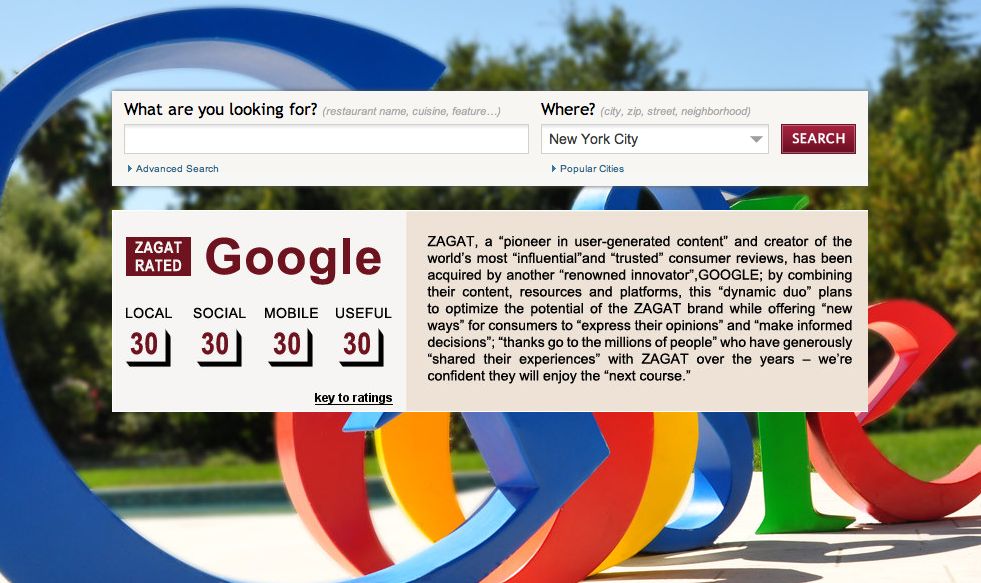
Google today announced it has purchased Zagat, the 32 year-old ratings guide considered to be a definitive standard of quality for restaurants, hotels, transportation services, and public attractions.
Marissa Mayer, Vice President of, Google Local, Maps and Location Services, said Zagat will become the cornerstone of Google's local offerings.

Colossal change to U.S. Patent system nears with today's 'America Invents' vote
The United States Senate is scheduled to vote on House Resolution 1249 at 4:00pm today; the bill also known as the "America Invents Act," which will begin a major overhaul to the US Patent System.
In a Senatorial debate last night, a bipartisan majority voted to invoke cloture on the motion to proceed, or in other words, to summarily end the debate and move along to the voting stage.
Wi-Fi Finder for Android and iOS hunts down hotspots
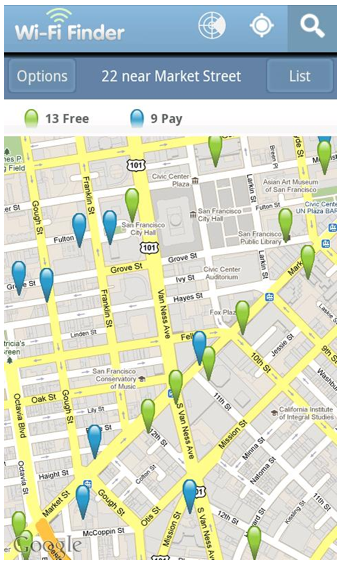
If you have an iPhone or an Android phone, the chances are that you frequently connect to the internet using a 3G connection. The same is true for some iPad users, although there are more WiFi-only Apple tablets in circulation. Whether you are working with a device that only offer WiFi connectivity, you are out of range of a 3G signal or you just need faster Internet access, there are numerous reasons you might want to find a wireless Internet connection when you are out and about, and this is something that Wi-Fi Finder can help with.
The app is available for iPhone, iPad and Android, and native versions have been released for each type of device. If you do have a 3G connection, you can use the app online and check in the area for the availability of wireless networks. The database of hotspots includes both free and paid-for networks and you can use filtering to track down particular types of establishment offering WiFi -- you might want to avoid hotels, for instance.
AVG Internet Security 2012 in-depth review
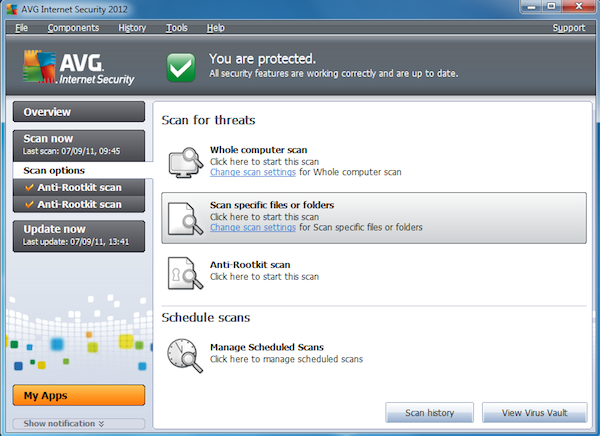
Some security companies appear to think that enhancing their software is just about adding new functionality. But while this can make for an enticing feature list, there’s usually a price to pay, in terms of extra complexity and layers of overweight code that slows down the rest of your PC.
So it’s good to see AVG take a different approach with their latest Internet Security 2012 release.
Is IcoFX 2 worth the price?
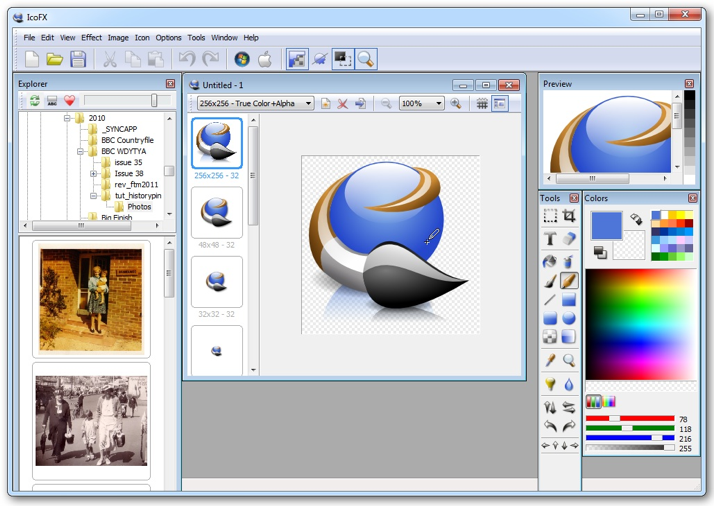
For the past few years, IcoFX has lain apparently dormant, despite noises from the developer that a new version was in development. This powerful icon editor has suddenly resurfaced, however, with a major new version number, IcoFX 2.0, and a shock for those who’ve been using the previous build: IcoFX is no longer freeware.
IcoFX 2.0 is now available to download as a trial version, and the full version will set you back the princely sum of $59. The question is, what’s exactly changed to justify the new price tag?

iOS Calendar shoot-out: Calvetica vs Weave
The simple fact that iPhone, iPod and iPads have been designed specifically with portability in mind, they are perfectly suited for use as task management tools. As you are likely to have your iOS device with you at all times, it makes sense to store details of upcoming appointments, information about the projects you are working on, and to keep track of everyday data such as income and expenditure. Two of the most well received iOS apps in this category are Weave and Calvetica. We decided to put them head to head to see which comes out on top.
From the offset Weave is at a major advantage by virtue of being free. This gives the app instant appeal, and the fact that trial versions of iOS app do not exist, save for so-called ‘lite’ versions of apps, it is more likely to be installed by someone browsing the App Store.