Was former AMD CEO Dirk Meyer collateral damage in a money grab?
A few short hours after the Consumer Electronics Show finished setting the stage for the industry's year, AMD added a new wrinkle to the outlook when it revealed that CEO Dirk Meyer was leaving. Effective immediately.
Meyer likely was a casualty of an increasingly fierce debate at AMD over what the tablet market means to the company and how it should respond. Meyer laid his cards on the table, both publicly and privately, asserting that tablets are companion devices that would not have a major detrimental impact on the PC market. Intel CEO Paul Otellini says much the same, by the way.

Asia's Influence rises over global PC market
As the balance of power in many domains shifts from the United States to China, computer makers are also refocusing their strategies to include a larger China component. China is key both as a market and a supply base. And Asian vendors, from both mainland China and Taiwan, have become contenders rivaling the top US firms.
For years, the large PC brands were American and the big makers were Taiwanese. China was at best a low-cost production site. Now, several of the former Taiwanese makers have become international brands, and mainland China has risen to become a full player as both a market and a supplier. The Chinese national champion, Lenovo, is the fourth largest PC vendor in the world. The third largest is the Taiwanese firm Acer.
Intel's Sandy Bridge issue could affect Apple the most
A design flaw within the chipset supporting its new line of Sandy Bridge processors may delay the launch of next-generation computers, and Apple could find itself affected the most.
Intel's latest chip is the first from the company to include integrated graphics silicon on the chip, while also using the company's advanced 32-nanometer manufacturing. This is said to allow PC manufacturers to offer systems that have much better graphics capabilities and much greater power efficiency than its predecessors.

Stop Internet Explorer from bleeding Windows memory
If you abandoned Internet Explorer long ago then the news that it can waste a great deal of RAM probably won't come as much of a surprise. But if you still use the browser, even only occasionally, then it's worth checking your current configuration, because it could be using three times as much memory as is actually necessary.
To be fair, this isn't entirely the fault of Internet Explorer itself. The problem lies more with its add-ons. You may only have installed one or two yourself, but other applications may have added more, sometimes without telling you, and these can have a significant effect on your PC.

How to get Al Jazeera on your TV by going 'over the top'
For United States citizens interested in getting continuous news coverage of the Egyptian revolution, the options are limited to one: the live Al Jazeera feed on its website. Even though United States cable companies don't carry the station, it is easy to pipe that streaming news feed to your HDTV with a variety of Web-connected devices.
Set-top box maker Roku today announced that users of its popular set-top streamer can now push Al Jazeera's live and on-demand streams to their HDTVs with just a few steps.

Microsoft pitches 'PACT' for managing family gaming
With its combined efforts in PC, console, and mobile gaming, as well as video and television, Microsoft has a serious presence in the entertainment business. And as Peter Parker's Uncle Ben said, with great power also comes great responsibility. So, Monday evening, Microsoft released a document called PACT that seeks to help parents and kids work out guidelines for entertainment consumption.
PACT is an acronym that stands for Parental Involvement, Access, Content, and Time, and parents and kids are supposed to go through the PACT document and sign off the family guidelines for conduct online and on gaming consoles. The document is meant to be a companion to Microsoft's Get Game Smart initiative for 2011, which encourages parents and kids to work together and have an open dialogue about the family's media choices.
AT&T sued over iPhone data overbilling
A California man has sued AT&T for over billing him on data charges for his iPhone, a move that could raise new questions on the carrier's billing practices. Patrick Hendricks claims that the carrier was charging him for usage even when he wasn't using any.
Hendricks uses the $15 monthly 200MB plan, and apparently became suspicious after he was charged overage fees for using 223MB worth of data across 259 data connections. His lawyers say that their research showed that AT&T was regularly over billing customers between 7 and 14 percent over actual data usage, and in some cases as much as 300 percent.
It's a photo finish: Android, BlackBerry and iOS are tied in US smartphone share
Which smartphone operating system truly leads the US market. According to Nielsen, none of them. Says Don Kellogg, Nielsen's Telecom Practice Research and Insights senior manager, it's a "three-way tie" between Apple's iOS, Google Android and Research in Motion's BlackBerry OS. Oh, man, it is going to be a bad day for fanboy jockeying for position.
Nielsen strips back any potential contention about unit shipments and focuses on install base. By that measure, among US smartphone owners, 28 percent have devices with iOS and 27 percent each for Android and BlackBerry OS (data is from December 2010). But as the chart above shows, the long-term trend is revealing. Since February 2010, iOS has remained largely flat, with sine-wave like fluctuations between 26 percent and 29 percent install base share, that despite the June 2010 launch of iPhone 4. During the same time period, Android's install base steadily rose from 8 percent share. Meanwhile, BlackBerry OS has steadily declined -- from 39 percent share measured by install base.
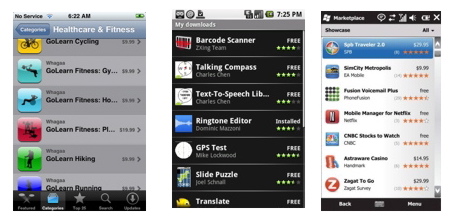
Network operators eye HTML5 for getting into the app store business
Smartphone operating systems and their related app stores effectively cut the mobile network operator out of the value chain, but mobile browsers are giving carriers a foot in the door.
Mobile carriers continue to attempt their own branded app stores to break into the app store goldrush. Just today, Japanese network operator NEC Biglobe launched Andronavi in the United States, saying that it's a better app store than Google's Android Market because it provides reviews and detailed information specifically from the Japanese audience.

Tip: Take Windows back in time without System Restore
System Restore is good when you're in a tight spot, allowing you to roll back your computer's key programs and system files to earlier versions in an attempt to fix a problem. But it's not foolproof, and because it doesn't roll back everything, it can't be relied on to always solve your problems.
Comodo Time Machine offers a free, all-encompassing alternative: instead of just rolling back certain files, it allows you to roll back all the files on your Windows drive, sending you almost literally back in time to the point where your chosen snapshot was taken. It's not just good for fixing problems (and we include virus infections in that), it's also great for those who have to install lots of software on their PC for testing purposes, helping keep the PC running without the need for a regular Windows reinstall every six months or so.
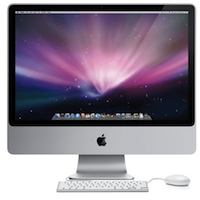
How long before Apple stops selling desktop Macintosh?
It's a reasonable question to ask, now that, after today, Apple will no longer sell Xserve rack-mount servers. Apple is a far different company in 2011 than it was when Xserve launched about nine years ago. Xserve's ending foreshadows another: The sun setting on immobile Macintosh. Desktop be gone.
During Apple's fiscal 2011 first quarter, iOS devices accounted for about two-thirds of revenue. In the same quarter six years earlier Macs accounted for 45 percent of Apple revenue. In Q1 2007: 34 percent. A year ago: 28 percent. Q1 2011: 20 percent. The Macintosh isn't as important to Apple's bottom line as it once was.
Apple's server biz relegated to 'prosumer' status with Xserve's end
Today is the last day for Xserve, Apple's nine-year old line of rackmount servers designed for enterprise use.
As the company announced last November, no orders for the server hardware will be accepted beyond January 31.
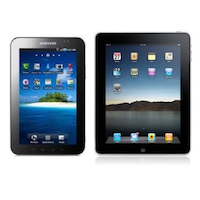
Strategy Analytics' Apple and Samsung market share analysis is fair
Must everything be partisan? In the US Congress, Democrats and Republicans spilt over nearly every issue. Today's strangest debate isn't political, but analytical -- sides supporting or opposing Apple and bloggers and journalists parlaying games of oneupmanship. It's all about how much tablet market share Samsung snatched from Apple during calendar fourth quarter, if any. The debate is simply pointless.
Earlier today, Bloomberg reported on data from Strategy Analytics stating that Android tablets captured 22 percent market share in Q4, based on 2.1 million shipments, essentially punching market leader iPad smack in the touchscreen. By Strategy Analytics' reckoning, iPad's market share dropped from 95 percent to 75 percent in a single quarter.
Splashtop Remote Desktop for iPad offers basic control of your PC
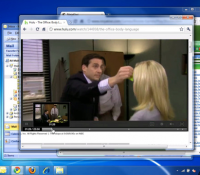
Last week, we looked at LogMeIn Ignition, just one of an increasing number of remote access tools available for iOS. Another remote access app that has received a great deal of attention recently is Splashtop Remote Desktop for iPad; we thought we would take a look at the app to see how the two compare. Just as with LogMeIn Ignition, Splashtop Remote Desktop for iPad can be used to control your PC or Mac from your iPad once the necessary desktop software has been installed.
From a functionality point of view, there is little difference between the two apps. Configuration is kept to a minimum thanks to the fact that computers that are on the same network as an iPad running Splashtop Remote Desktop are automatically detected. Providing the desktop software is installed, you need simply enter the password that was configured during the initial setup and a connection can be immediately established.

Jalbum 9.0 gets low-key release
An application's move to a whole new version number is normally accompanied by much publicity, as the authors boast about the many exciting new features they've included. Popular photo sharing package Jalbum 9.0 appears to be a rare exception, though, with the release slipping out so quietly that it didn't even rate a mention on the company blog.
That's a pity, because while this isn't as nearly as revolutionary an update as the move to Jalbum 8.0, the latest version does include some useful enhancements that will make a real difference to anyone who uses the program.