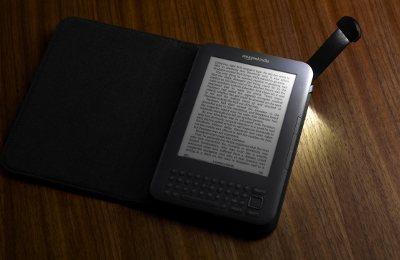
Amazon's third-gen Kindle becomes its best selling product ever
Internet retail giant Amazon may sell a lot of stuff, but nothing has sold like the Kindle. The company said Tuesday that the third generation of the book reader has become its best selling product of all time, surpassing 2007 bestseller Harry Potter and the Deathly Hallows.
As has been the case with the Kindle since its initial release, Amazon still has refused to give an exact number of devices sold. An educated guess on sales can be made, however: Harry Potter sold about 2.5 million copies during the first quarter following its release.

The not-so-obvious top 15 Android apps for 2010
2010 was a big year for Google's Android mobile operating system, as it moved at a lightning pace from a minority position into the position of most popular operating system in the United States. Still, when retrospectives are put together for "best apps of the year" lists, editors often make choices that seem obvious. We've put one together for 2010 that hopefully avoids the more self-explanatory choices.
Moodagent-- Even though it's frequently chided for being weak in the gaming department when compared to iOS, Android has far more ground to gain against it in the MP3 player category. With the many OEM-skinned media players, the built-in one sometimes looks unremarkable. That's why third party media management apps on Android is a category worth paying attention to. Moodagent is a playlist-creation app that takes the music stored on your Android device and categorizes each song by its "feel." The user then sets sliders labeled "Sensual," "Tender," "Happy," "Angry" and "Tempo," and playlists appropriate to the mood are built according to its settings.

I don't need 10 reasons why Google TV will succeed
Three are enough: Search, advertising and Android. But if you need seven more: Google, Google, Google, Google, Google, Google, Google.
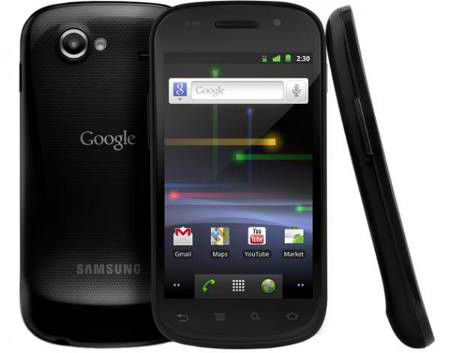
Last night, while reading news on my Nexus S, I came across this little ditty: "Google TV Is Failing: 10 Reasons Why," by freelancer Don Reisinger, writing for eWeek. Judging from Reisinger's eWeek profile, he seemingly only writes top-10 lists. His reasons appear to be sensible but lack depth regarding the consumer electronics industry, Google or television networks. Google is as committed to television as it is to mobile -- and look how well Chrome and Android are doing two years out of the gate.

Scanning books into e-books gets cheaper, but accessing them remains the problem
Google's efforts with the six-year old Google Books project have yielded 15 million scanned books, a new cross-platform e-bookstore, and a temporary copyright shield that lets Google sell "orphaned" works*; but the task of scanning every book cannot be left solely up to Google and its partners.
Earlier this year, Google estimated that 129,864,880 books were in existence. At Google's current pace of 1,000 pages per hour per scanner in use, it could take over 40 years to scan that many books. What's more, Google is only counting the media it defines as a "book," and not the countless other paper media that makes a library such a valuable resource.

2010 Technology of the year: Synchronization
Apple's iPad surely doesn't deserve the designation, although some other news sites or blogs are giving it. Instead, sync is my choice as technology of 2010. Sync by far is the year's most useful and widely beneficial technology. Sync wasn't invented this year, but the technology reached a crescendo of usefulness -- anytime, anywhere and on anything.
I first started writing about the importance of content synchronization in 2003, arguing that the utility belonged in the operating system. In January 2004, I blogged for JupiterResearch: "Controlling synchronization at the platform level would help Microsoft protect its Windows monopoly." Microsoft planned to integrate sync into Windows Longhorn, but later pulled the plug. Apple brought sync into Mac OS X with limited utility and later to iOS, where it is much more useful. Google trumped both companies, by taking sync somewhere even more useful: To the cloud. Android and the Chrome browser sync to Google datacenters and back to software, quite marvelously. But sync's reach and utility go much farther than these three companies-- from Amazon Kindle to Facebook and beyond.
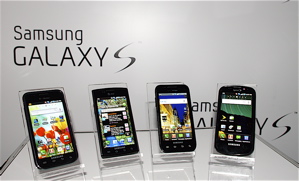
Samsung to release iPod touch competitor at CES 2011
Attempting to more completely take on Apple, Samsung on Monday said that it planned to release the Galaxy Player. The touch screen device would essentially be like its Galaxy S smartphone without the cellular capability: just like the difference between the iPhone and the iPod touch.
8, 16, and 32GB versions of the device would be made available, which would run on Android 2.2 "Froyo." The form factor would follow one similar to the iPod touch, and include a 4-inch LCD screen, Bluetooth capability, and front and rear facing cameras.

2011: Time for tech enthusiasts to act more charitably
I wish technology enthusiasts could focus more on the good that can be done for people and communities and less on whether their phone matches their shoes or who uses what product. Fanboyism is out of control and detracts from things that are more important.
Microsoft doesn't suck, and neither does Apple, Google or any other company with high revenue and long-term success. If someone writes an even slightly pro-Apple article, the Microsoft fanboys go crazy, and vice versa. These companies are all successful, and their products sell well. Shouldn't we all focus on something else?

Why 2011 isn't 1995 for Apple
In 1995 I remember waiting in lines to buy Windows 95. It effectively ended the design lead Apple had for 11 years in personal computers. From then on Microsoft had both the thought leadership and the market share. Apple ended up with less than 10 percent market share. Microsoft had most of the rest.
Lots of people think that Apple could repeat 1995 in 2011. This time with iOS instead of Macintosh OS and with Google in the place of Microsoft.

10 for 2010: Microsoft stories that mattered
It's that time of year when everybody who is anybody or nobody writes retrospectives. I start with Microsoft, by highlighting 10 of my stories you should have read in 2010. You've got time now during the end-of-year lull or even a week off before the New Year. They're organized by importance, from least to most -- that is 10 to 1.
I didn't easily choose just 10. I weighed importance based on relevance of the analysis to Microsoft in 2010 and even in coming years. Not all readers will agree on which is more or less important, or perhaps not at all.
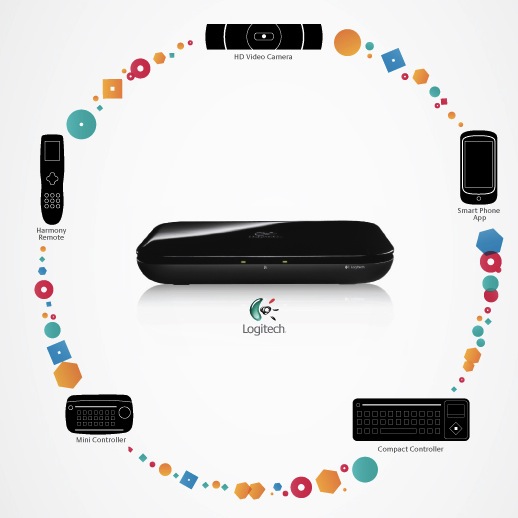
First impressions: Google TV delights
I simply don't understand all the fuss about Google TV delays. I set up the Logitech Revue on Christmas Eve and the family is absolutely loving it. Revue/Google TV delivers one of the best non-cable-provider set-top box experiences I've ever had testing these devices. In fact, setup and benefits make up for all the pain encountered with similar class products running other operating systems.
First the news that gets stranger: Following rumors that Google TV asked partners to pull their products from next month's Consumer Electronics Show, there's now buzz that Logitech has either suspended Revue production or shipments until Google releases a software update.
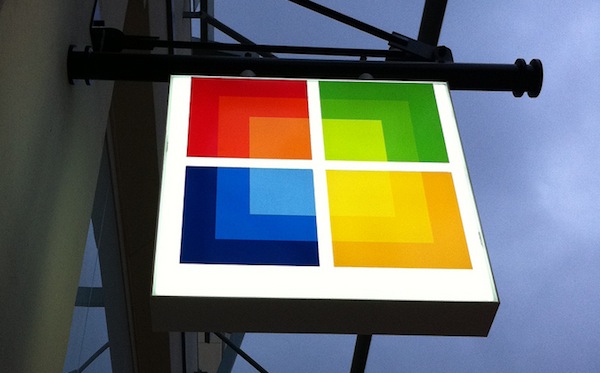
Talking about Microsoft Store
Last night, while walking around Fashion Valley Mall here in San Diego, I spent some time sizing up the Apple and Microsoft stores, which are just four shops apart. The Apple Store was busier, but I found the Microsoft Store to be more charming. More than any other time viewing the stores, I saw in Christmas shoppers dramatic differences in clientele.
Microsoft Store attracted a crowd, inside and outside the glass windows, as two teens frenetically danced using Xbox and the hands-free Kinect controller. Everyone was having fun. It was raucous with some cheering, a gravity well pulling passersby; I among them.
As NFC enters the mass market, so too should NFC security
All the stars are in line, and tech industry experts now expect an explosion in the close-range wireless communications technology known generally as Near Field Communicaitons (NFC.) But is it as secure a method of sharing as it could be? According to one company the answer is yes, but cost has been a prohibitive factor up to now.
This week, market research firm iSuppli predicted that the market for NFC chips will grow by a factor of four over the next three years, and NFC chipmaker NXP Semiconductor recently made a prediction that 50 million NFC-enabled consumer devices will enter the market in 2011 alone.

Please be our Ghost of Christmas Past or Future
It's two days to Christmas, and I'm mulling Christmas Past and Christmas Future (You are familiar with the Charles Dickens' classic tale, yes?) I request your participation. Like most other journalists or bloggers, I will post year-end retrospectives and year-ahead prognostications next week. I ask you to contribute. Choose your ghost and your Scrooge. What do you think were the most important events affecting the technology industry in 2010 -- and why? They don't have to be industry shaking, but merely important to you. What would you like to see next year from the tech companies that matter most to you?
I often crowdsource material for posts, but this request is different from others. Typically I ask readers to respond in comments and by e-mail (joewilcox at gmail dot com). The e-mail responses tend to be long and thoughtful, and I often feel guilty about not being able to use all the contents. I will ask some responders to this question for permission to post their entire response (or a good chunk of it) as a guest contributor. I'll edit your writing, and we can banter back and forth to get it just right. Other e-mail responses and those in comments to this post will go into stories I write about the year past and year ahead.

FCC declares Comcast-NBCU joint venture to be broadly acceptable, issues order
Senior FCC officials Thursday morning said the commission has determined the transaction between Comcast and NBC Universal that will result in a new joint Venture handling the two companies' content to be acceptably within the public's interest, and an order about the transaction will be circulated later today.
This is not outright approval of the deal, which was first announced in late 2009, and has been under intense scrutiny since. With a transaction of this size, there's still a great deal of time before it can be decisively approved by both the FCC and the Department of Justice.

Skype experiences global outage
Popular voice chat and IM client Skype has been down for a large portion of Wednesday morning, leaving users unable to connect to their peers.
At about 1pm EST, Skype's official Twitter account said, "Our engineers and site operations team are working non-stop to get things back to normal -- thanks for your continued patience."