
Dell grows enterprise storage business with $1.15B 3PAR acquisition
Dell on Monday announced it will be acquiring virtualized storage company 3PAR for $1.5 billion to grow its storage portfolio and complement its PowerVault, EqualLogic, and EMC-licensed solutions.
3PAR's claim to fame is its unique approach to storage architecture. The company provides what it claims is the hypervisor of storage utilization, or "the only virtualized storage platform built to overcome the limitations of traditional monolithic and modular arrays." 3PAR's technology will round out Dell's offerings for enterprise storage to include directly attached storage or clustered storage area network solutions.
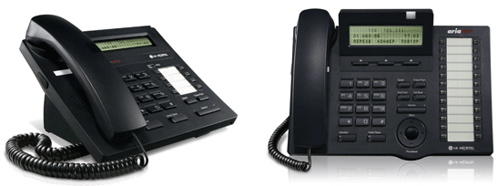
LG-Ericsson joint venture launches in the U.S.
The enterprise telecommunications joint venture formerly known as Edgecore Networks today officially launched in the United States under the new name, LG-Ericsson USA. The joint venture is made up of South Korean electronics maker LG, Swedish telecommunications company Ericsson, and Taiwanese networking solutions provider Accton Technology Corp.
The rebranding is a part of Ericsson's increased stake in its joint ventures with LG, after it bought Nortel's portion of LG-Nortel for $242 million in cash less than two months ago. Nortel agreed to sell its CDMA business to Ericsson the year before in a massive restructuring effort by the Canadian telecommunications company.

This is big: Oracle claims Android violates its Java patents, sues Google
Enterprise computer company Oracle has filed a lawsuit against Google for patent and copyright infringement related to Java and Android.
"In developing Android, Google knowingly, directly and repeatedly infringed Oracle's Java-related intellectual property. This lawsuit seeks appropriate remedies for their infringement," Oracle spokesperson Karen Tillman said in a brief statement Thursday evening.
Apple can still win the mobile platform wars, but it won't be easy
The InterWeb is buzzing about Android's sudden second quarter smartphone OS market share surge against Apple's iOS and Research in Motion's BlackBerry OS. Windows Mobile was a goner last quarter. But behind the numbers is a bigger question: Which mobile platform will be more successful? Smartphones are but one small measure of success.
Android's smartphone surge -- to No. 3 worldwide and No. 1 in the United States during second quarter, according to Gartner -- doesn't surprise me. I laid out the scenario in October 2009 post "Apple cannot win the smartphone wars" and again in May with "Like I said, Apple cannot win the smartphone wars."

Google: Net Neutrality proposal 'represents real progress' in debate
After almost a week of criticism surrounding its announcement Monday that it had come to an agreement with Verizon over net neutrality, Google on Thursday attempted to defend itself. The Mountain View, Calif. company characterized the deal as progress on the issue, and done in the 'spirit of compromise.'
Since the announcement Monday, several companies have weighed in on the move. AT&T called the deal a 'positive step,' while Facebook criticized it over the fact that it excludes wireless traffic. Google took opponents to task for mischaracterizing some portions of the agreement, although it admitted that it didn't expect everyone to agree on the issue.
Google officially launches Chrome-to-Phone extension, broadens Android voice search.
Google today announced the availability of two features exclusive to Android 2.2 (FroYo): Voice Actions and Chrome-to-Phone.
Voice Actions is an app that vastly expands Android's speech-to-text functionality, and Chrome to Phone is a Chrome extension and Android app pairing that lets the user forward content in Chrome to his Android device. This was first shown off at Google I/O last May as a part of the 10 improvements in Android 2.2 and has been available on Google Code since July.
Report: Sony Ericsson prepping 'PlayStation phone'
Technology blog Engadget said Thursday that sources have confirmed mobile device manufacturer Sony Ericsson is working on an Android-based phone that would serve as the platform's first gaming-centric device.
Described as a cross between the PSP Go and the Samsung Captivate, the phone runs Android 3.0, otherwise known as "Gingerbread." It looks much like a slider phone, however instead of a keyboard the slider would pull out to reveal the gaming controls, the blog reported.
Confessions of a Windows 7 to Ubuntu switcher
The other night, I got quite the shock. A good friend, who is a Windows enthusiast and IT administrator/consultant, informed me that he had dumped Windows 7 for Ubuntu. I didn't see that coming. For one, he's a Windows fan. For another, I would rate Windows 7 as nearly Microsoft's best operating system ever (sorry, even with the driver problems, Windows NT 4 still ranks as my fav; for its time -- 1996ish). My buddy contacted me by Skype, and I kept the transcript which I offer here with his permission.
Many of my questions were deliberately pointed, for three reasons. 1) As with all interviews, I strive for impartiality. 2) This friend, whom I'll call IT Guy for this post, is a good buddy. I know his personality enough to press hard about certain things. 3) I don't want to give some of Betanews' more rabid commenters cause to accuse of bias against Microsoft or Windows (I have none, but they accuse anyway). Hey, I'm just as surprised as you about my buddy's Ubuntu conversion. He had tried Linux years ago and didn't really like the experience, particularly because of driver problems and deficient or missing applications.
Viacom appeals YouTube ruling, called decision 'flawed'
Still stinging from a court decision in June which threw out its $1 billion suit against video site YouTube, entertainment company Viacom filed an appeal Wednesday in the U.S. Circuit Court of Appeals for the Second Circuit in New York.
The original suit was filed in 2007, and accused YouTube of being a willing participant in the piracy of Viacom's work on the site. The company is behind such networks as Comedy Central, MTV, and VH1. YouTube had made an effort to remove Viacom's content, as well as negotiate with the company, however those talks failed.
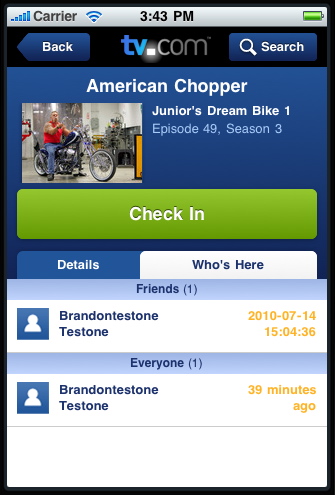
CBS Interactive launches the Foursquare of TV viewing, TV.com Relay
Thursday, CBS interactive launched a mobile Web app called TV.com Relay, which lets users "check in" to the TV shows they happen to be watching and earn badges for their activities just like popular location-based games Foursquare and Gowalla.
Unlike those location based services, though, you don't actually have to go anywhere to use Relay.

Mozilla Firefox 4 beta 3 released, adds multi-touch enhancements in Windows 7
Mozilla has made the third beta of Firefox 4 available for download and testing this week, and the popular browser has received two major updates: one is very visible, one is not.
The less outwardly visible improvement in Firefox 4 beta 3 is the improved JavaScript engine, which now supports 64-bit "Fat Values." This promises more efficient code execution for complex graphical and animated content, among other things.
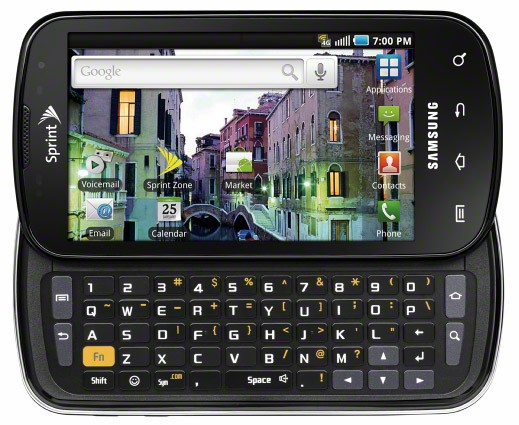
Sprint prices and dates Samsung Epic 4G, decides to offer reservations
Sprint's second WiMAX phone, the Samsung Epic 4G will be available on August 31 in Sprint, Radio Shack, Best Buy and Wal-Mart stores for $249.99, the wireless operator announced Thursday.
Beginning August 13, customers will be able to reserve an Epic 4G on a special page on Sprint's website to guarantee they will receive one on launch day. Sprint's first 4G phone, the HTC EVO 4G, was sold out for weeks after the device launched, and according to Sprint, this will be the first time it has ever done this sort of reservation proccess.
Apple closes PDF flaw in iOS updates for iPhone, iPad
Apple released iOS 4.0.2 for the iPhone and iPod touch, and iOS 3.2.2 for the iPad on Wednesday, effectively closing the PDF flaw which allowed hackers access to the internal code of those devices. The exploit was central to the jailbreakme.com hack released earlier this month. According to release notes with the updates, the PDF fix is the only change made to the code of the OS.
The jailbreak also made it possible for the iPhone Dev Team to release a version of its ultrasn0w carrier unlock for the iPhone 4 for the first time, which it did two days after the release of jailbreakme.com.

The Google-Verizon proposal is worse than evil
They say that the devil is in the details. But some things are so evil, the horned harbinger of deceit and doom is an obvious and menacing presence. The Google-Verizon proposal for an "open Internet" is the worst kind of evil, because Google so ardently asserts that "you can make money without doing evil" and the companies convincingly con with a deceitful sleight of hand. Their proposal for an open Internet is nothing of the kind. Google and Verizon offer to grant something people already have (unfettered, wired broadband) while exempting something Internet users want more of (unfettered, mobile wireless).
But the proposal's deceit goes further. Google and Verizon have put before the US government a huge carrot, while hiding behind their backs an even bigger stick. The two companies want the US Congress to pass their proposal into law, thus empowering the Federal Communications Commission to exert more control over the wired Internet. There are plenty of folks on Capitol Hill who want more Net control, and Google and Verizon have wrapped it up with ribbon and bow. The government's authority would be under the guise of keeping the Internet free and open for everyone -- ensuring Net neutrality. For lawmakers, the proposal is a seeming goldmine of goodwill during a tough election year.
Google launches Chrome 6 Beta
Wednesday, Google officially announced the release of Chrome 6 beta, the most recent of the search company's popular desktop browser.
The user interface has been tweaked and simplified even further in this version. All of the options are under a single menu, and the navigation buttons aren't so much buttons any more as icons in the browser's navigation bar. These changes were revealed in the June developer preview of Chrome 6.