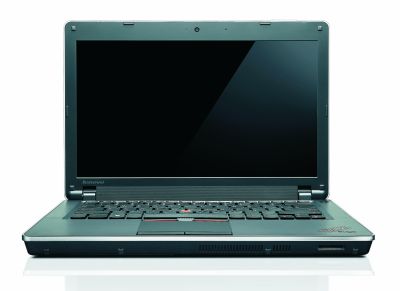
Lenovo launches new Edge 14- and 15-inch Edge laptops, with frosting on top
Literally on the wheels of a gourmet cupcake truck, Lenovo this week rolled out the 14- and 15-inch editions of its emerging ThinkPad Edge laptop line-up.
Priced starting at $499, and slated for availability in April, Lenovo's latest notebooks offer the same capabilities as the 13-inch Edge released in January, while adding wider screens and an illuminated keyboard, said Jay McBain, Lenovo's director of small and medium business. McBain gave Betanews a briefing aboard what can easily be described as the most unique setting we've ever experienced for a product demo: a concessions truck operated by an early user, a New York City-based mobile cupcake company named Cupcake Stop.
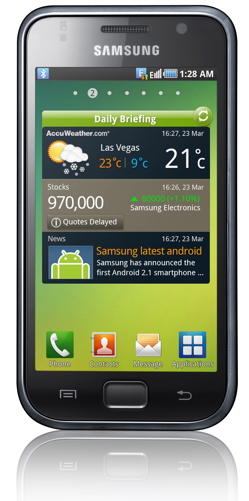
CTIA's 'other' Android superphone: Samsung Galaxy S
HTC and Sprint's EVO may have stolen the show at CTIA today, but Samsung showed off its own Android 2.1 superphone called the Galaxy S. It's just as impressive as the EVO, just without the 4G muscle.
And while it may look like the fraternal twin of Apple's iPhone, especially with the TouchWIZ UI, Samsung's Galaxy S is no iClone.
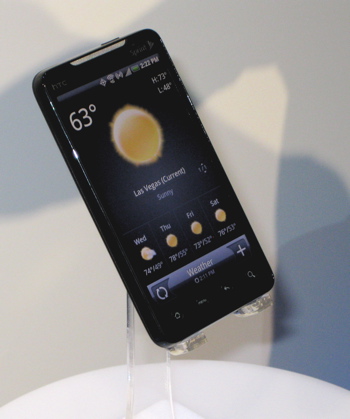
Sprint has the game changer: The first 4G smartphone
Sprint and HTC this afternoon finally took the wraps off of the "Supersonic" 4G smartphone, the HTC EVO 4G, and everything about this device is killer.
HTC and Sprint have spared nothing in this top-of-the-line device. It has a 1 GHz Qualcomm Snapdragon (QSD8650) processor, a 4.3" (800x480) capacitive touchscreen, an 8 megapixel dual flash camera, and a 1.3 megapixel forward-facing camera. Add Android 2.1, 4G WiMAX/3G EV-DO Rev. A, the ability to act as an 8-device 4G hotspot, an FM radio, Bluetooth 2.1, digital compass, proximity, velocity, and light sensors, GPS and 3.5mm headphone and HDMI output. In short, pretty much everything you could want.

Adobe to launch Creative Suite 5 April 12
A spokesperson for Adobe told Betanews this afternoon that on the morning of April 12 at 11:00 a.m. EDT, the company will hold a global online launch event for all of the components of its Creative Suite 5.
Among the most anticipated new components -- or as Adobe tends to present them in its periodic table, "elements" -- is a vastly improved HD video rendering engine called Mercury. Unlike other manufacturers, Adobe tends to retain the cool names for its products and platforms even after public release. Mercury will utilize the graphics processing power of video cards to expedite the decoding and playback of HD-encoded formats, especially for the Premiere Pro editor.

Google.cn redirection sets the stage for long-term standoff with China
Searching for a defining principle in the war of words between Google and the Chinese government, even after Google's move yesterday to redirect search traffic from the .CN domain to its uncensored .HK address, may be about as fruitless as filtering high prose from a cable TV political pundit show. In a bizarre demonstration of what's being called "openness," China's state-run news service responded to Google's move yesterday first with a "nudity" slide show (news photos over the years with naughty bits included), cushioning some op-eds designed to characterize Google as out-of-step not only with China's progress, but with America's.
Conforming with state laws governing expression, argues a Xinhua op-ed late yesterday, is just one of the globalization trends that many enterprises and business ventures must embrace when entering new territories. Why can't Google, Xinhua asks, be more like KFC?

Nintendo wants to try its hand at 3D again
Today, a very dodgy looking PDF file appeared on Nintendo's Japanese investor relations site with the title "Launch of New Portable Game Machine" (PDF available here).
In the document, Nintendo quietly announced that it will be launching "Nintendo 3Ds" during the fiscal year ending in March 2011. The new handheld gaming console will support 3D effects without the need for special viewing glasses, and Nintendo will talk more about it at the E3 conference in June.

Without native apps for Windows Phone 7, Mozilla cancels Fennec for WM6 also
Microsoft's choice not to provide a migration path for mobile apps developers to move their native code from Windows Mobile 6.5 to Windows Phone 7 (with one notable exception), has claimed its biggest casualty to date: Mozilla, whose Firefox Mobile project, codenamed "Fennec," appeared to be the most promising alternative browser to IE Mobile, will discontinue development for all Microsoft handset platforms including Windows Mobile 6.5. This announcement was made yesterday by Mozilla mobile project leader Stuart Parmenter.
It wasn't so much a decision on Mozilla's part, Parmenter noted yesterday, as a reluctant acceptance of the fact that it can't be done.

Palm's not dead, so why write its epitaph?
Wall Street's vultures are circling over Palm, screeching for its death. Tech pundits are joining the death watch, in one of the more morbid displays of graveyard tech journalism ever. As I've asserted repeatedly, in business perception is everything. The Palm death watch creates negative perceptions about the company and its future that will drive away customers and investors. Palm doesn't have to die, but death may be its future as pundits' self-fulfilling prophecies.
Tech blogs simply exploded with Palm is dead predictions over the weekend following a news story that two Wall Street analysts had cut Palm's target price to $0. Zero? ArsTechnica asserted that "RIP Palm: it's over, and here's why." All Things Digital: "Exercise in Futility? Palm Pre Plus, Pixi Plus Headed to AT&T." OS News: "Is Palm dying?" Monday Note: "Who will buy Palm?" That's a simple sampling.

Facebook jumps the shark
When news broke last week that Facebook users were on the receiving end of a large-scale phishing attack -- the first one to use external e-mail and not just the service's own messaging system -- I started to wonder whether the service had jumped the shark. If this sort of thing continues to escalate, you should start wondering, too.
Hardly a week goes by that Facebook doesn't get hit with another spam, malware, or phishing attack. Last week's screaming headline, that spammers are using conventional e-mail to spread virus-stealing malicious code to Facebook's 400 million users, is the latest chapter of a book that doesn't have an end in sight.

Can Google get away with this? Redirects .CN users to uncensored .HK domain
Chinese citizens and government ministers expecting for Google to take a stand today on the continued censorship of its search results, may have been surprised by the company's decision to split the difference: This afternoon, it began redirecting Google.cn traffic to Google.com.hk, rather than pull out its business interests from China. Hong Kong is a special administrative district of China.
In a blog post this afternoon, Google's Chief Legal Officer David Drummond defended the twist -- not exactly a "move" per se -- as perfectly legal, if potentially unacceptable by China's government. "We want as many people in the world as possible to have access to our services, including users in mainland China," Drummond wrote, "yet the Chinese government has been crystal clear throughout our discussions that self-censorship is a non-negotiable legal requirement. We believe this new approach of providing uncensored search in simplified Chinese from Google.com.hk is a sensible solution to the challenges we've faced -- it's entirely legal and will meaningfully increase access to information for people in China. We very much hope that the Chinese government respects our decision, though we are well aware that it could at any time block access to our services."
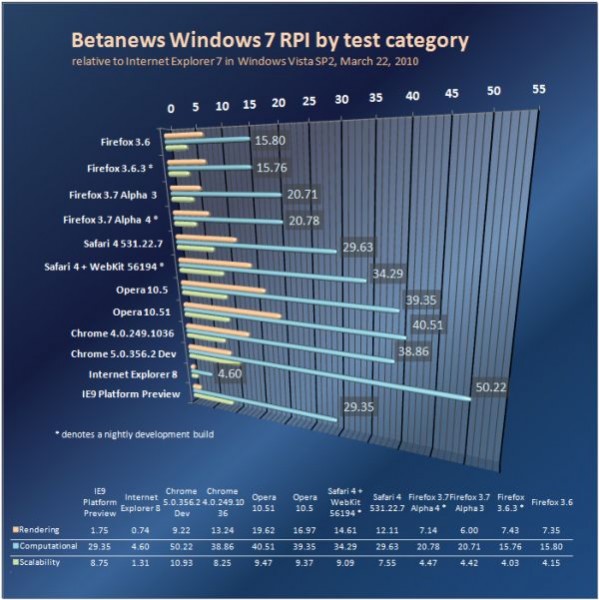
IE9 Tech Preview beats latest Firefox alpha, as Chrome 5 clobbers King Opera
How long ago would you have thought it absolutely impossible for the slowest Windows Web browser currently under development to be coming...from Mozilla? Granted, the Internet Explorer 9 Tech Preview isn't a real browser (typically, these things need their own address bars and Back buttons). But unless Mozilla gets its JaegerMonkeys in a row in time for Microsoft to debut IE9 with real features like buttons, the number two reason users cite for switching from Internet Explorer...will be wiped off the map.
In the most sophisticated system of browser tests ever developed -- reconstructed by Betanews in anticipation of the IE9 preview last week -- IE9 in Windows 7 registered a comprehensive index score of 13.17, representing over 13 times the performance of IE7 in Vista SP2. By comparison, IE8 in Windows 7 scored a mere 2.20, representing about six times the performance of Microsoft's current production browser. That's down from our preliminary estimate from last week, but still a very commendable performance gain. Typically, when developers add real features to their browser projects, that tends to slow down overall JavaScript performance. But that doesn't mean Microsoft won't continue to compensate as they improve their own new JavaScript engine, code-named "Chakra."
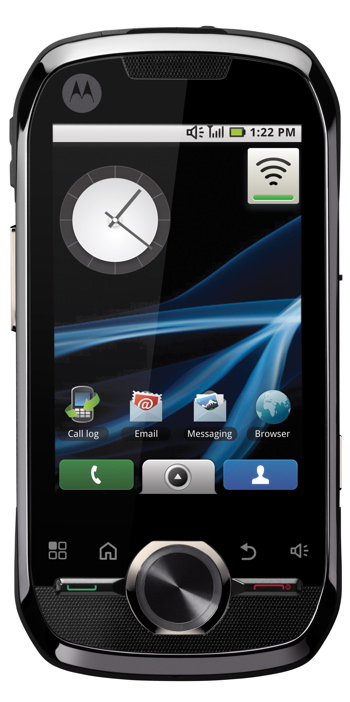
Motorola launches the first rugged push-to-talk Android phone
Today, Motorola and regional US carrier SouthernLINC Wireless announced the launch of the iDEN-compatible i1, the first Android device to support the wireless protocol with Push-to-Talk walkie-talkie communications.
The i1, which is believed to have been called the "Opus One" internally, has been rumored since late last year.
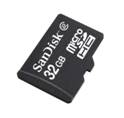
SanDisk releases its first 32 GB microSD card
Flash memory giant SanDisk today announced that its highest capacity microSDHC card will be available for purchase tomorrow on US and European Web retail sites. The 32 GB microSDHC will cost $199.99 and is expected to ship immediately.
Worldwide availability of the new memory card is expected next month.
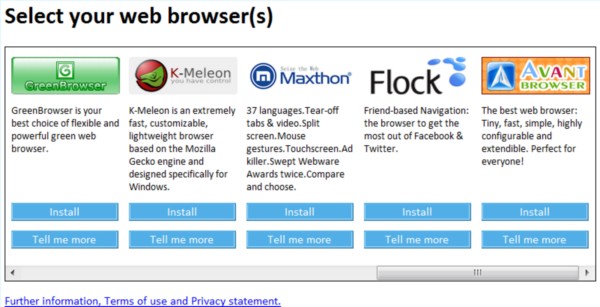
It's not flat if you tilt it 45 degrees: IE usage share in EU remains steady
Source: StatCounter Global Stats - Browser Market Share
Amid reports that Internet Explorer's usage share in Europe is "falling faster than a team of skydiving elephants," an examination of the source of the data being cited reveals the possibility of a separate universe with weightless elephants and an IP address. The latest live statistics from global Web analytics firm StatCounter shows the continuing "weekend dip," where IE usage drops and Firefox usage peaks, as solely responsible for the latest round of victory claims from at least one supporter of Europe's browser choice screen for Windows users.
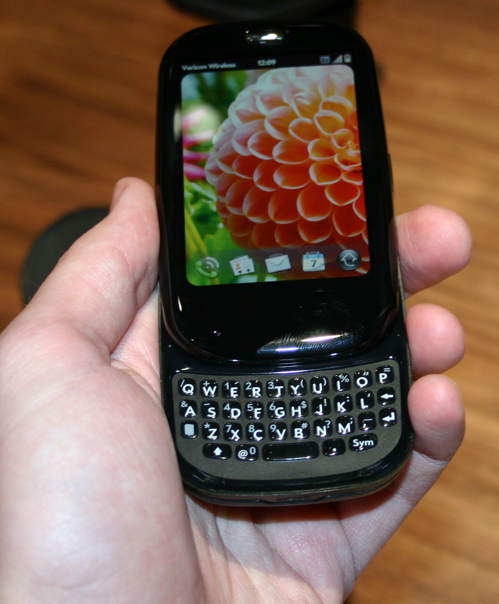
Don't count Palm out yet: Pre Plus and Pixi Plus to launch with AT&T
Palm had big shipments of its new Pre Plus and Pixi Plus last quarter, the
sellthrough was nowhere near what the mobile device company had expected. As a result, Palm posted another losing quarter, and the stock value dropped even further. As usual, the media took the opportunity to write Palm off as a lost cause.
But it's not time to quit on the company just yet.