Microsoft's antitrust retort: Just what is it accusing Google of doing?
There may not be a real investigation of Google's business practices from the European Commission, at least not yet. But judging from the waves of hyperbole emanating from the usual suspects, along with a few new entrants, in the wake of the EC's admission that it forwarded Google some negative mail earlier this month, there may as well have been one. It appears that if enough people on the Internet share a topic with one another, it must be true.
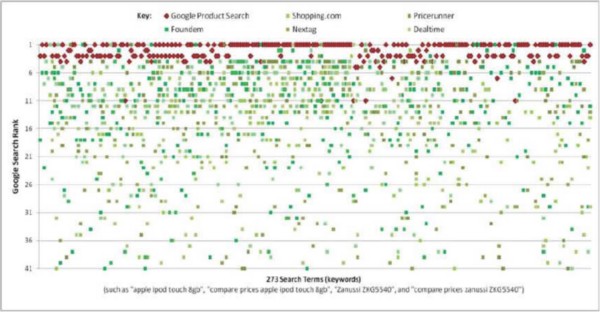
The complaint among three of Google's competitors is that it leverages its hugely popular, all-purpose search engine as a platform for promoting its own exclusive shopping services. In a way, there's almost no contesting the complaint -- that's exactly what Google does. The question is whether that's wrong. As Betanews noted yesterday, the answers may differ depending on the continent they apply to. Depending on the country, the legal standards (and the suppositions behind them) vary.

Is Opera 10.5 ready for the March 1 'choice screen?'
Download Opera 10.5 Beta 2 for Windows from Fileforum now.
One of the more brilliant coups in the history of Web browsers, were it feasible, would be for Opera Software to seize Google's key argument -- that the best Web browser that European Windows users should switch to next month, is the fastest one -- and make it its own. Those users will get that opportunity starting March 1, when Microsoft's rollout of its browser "choice screen" through Windows Update, begins in earnest.

Developers, save us from the Microsoft undead
More software developers should follow the lead of Adobe and Skype, which have abandoned Windows Mobile -- what Microsoft now calls Windows Phone Classic. The mobile operating system already was brain dead, even with, according to Gartner, 15 million unit sales in 2009. The heart pumped out licenses, but there was no brain activity to keep the platform going. Windows Mobile flatlined, and it's about time that some Microsoft developers admit it. Others should get over the denial and do the same. Microsoft doesn't have the courage to pull the plug. But smart developers can.
Skype's move was quite audacious -- pulling the Windows Mobile version of the telephony software from download. Those WinMo users with Skype can continue using it. Adobe is doing something different. It's shifting Flash 10.1 development to Windows Phone 7 Series, sidelining any Windows Phone Classic version. Both developers acted wisely. Microsoft may have kept Windows Mobile on life support by the Classic renaming, but the operating system has no real future. There's little reason for hardware manufacturers to release new Windows Phone Classic handsets or for anyone to buy them -- with Windows Phone 7 Series phones coming late in the second half of the year.

Possible delay of Casio, Hitachi, and NEC merger in mobile space
In September, Japanese joint venture Casio Hitachi Mobile Communications (CHMC) announced it would be merging with NEC's mobile division into an even bigger joint venture that will be called NEC Casio Mobile Communications Ltd.
The merger was to be completed in April 2010, but today the companies announced that getting regulatory approval is taking longer than anticipated (PDF available here). They hope the merger will only be delayed by about one month, but it remains in the hands of international antitrust regulators.

Google's big Italian adventure
That sound you heard coming from the general direction of Italy earlier this week was the sound the Internet makes when it becomes just a little bit less free.
When an Italian court convicted three senior Google executives for breach of privacy, sentencing them yesterday to a six-month suspended sentence, it set a dangerous precedent. Unless the case is turned over on appeal, such a precedent could force every Web services provider on the planet -- including Google, Yahoo, and Microsoft -- to be completely accountable for every piece of text, audio, and video that any Average Joe decides to upload to his servers.

TSMC deal with Intel on hold, Atom on smartphones may have to wait
Last year, Intel agreed to share its Atom microprocessor design with Taiwan Semiconductor Manufacturing Company (TSMC), so that third parties wishing to create their own systems-on-a-chip under TSMC's Technology Platform could integrate Intel Atom processors into the design without additional steps.
The partnership came on the same day that Intel announced the embedded edition of its Z5xx series of Atom processors for multimedia smartphones, and other such applications.

Apple should ban freebees from the iPad App Store
Apple shouldn't treat iPad like iPhone or iPod touch. The iPad App Store should be stocked full of premium content, meaning no freebees. It's the right way to help establish iPad as a premium product, as something special like the Macintosh. Unfortunately, Apple has little incentive to take this right approach benefiting its developers (because they make more money), customers (because they get better quality apps) and the iPad brand (because it comes be to viewed as a more premium product).
Apple's business is about selling hardware, using software and services as differentiators. Sure, Apple sold its 10 billionth song at iTunes yesterday, but the company's business isn't about selling content. The content is a means to selling more high-margin hardware. From that perspective, paid apps only marginally benefit Apple. Free is better, because there can be more applications, which is good for building out the App Store/iPhone OS device platform.

Baidu: Register.com replaced its DNS credentials for some guy in a chat room
Last month, Baidu, the leading search engine in China, filed suit against US-based Internet registrar Register.com, in a legal event that took place at the height of the debate over Google's continued business dealings with China. Baidu accused the registrar of changing its DNS records, so that customers were redirected to a completely different site purporting to represent the "Iranian Cyber Army."
But that original suit was heavily redacted, so we didn't know the specifics of the alleged defacement. This week, US District Court in New York released the unredacted version of Baidu's complaint, and now, as the man once said, we know the rest of the story.
The basis for Baidu's allegation that Register.com knowingly and willfully damaged Baidu's property, and thereby its reputation, is that one of its customer support agents changed Baidu's DNS records literally on the request of a guy who showed up in Register.com's support chat room. Supposedly, he pretended to be Baidu ("Mr. Baidu," perhaps?). And although records show the support personnel asked him to verify his identity by sending back the security code that was just sent to the e-mail address on record as Baidu's authoritative address, the fellow instead responded with a made-up bunch of numbers...which the agent then accepted as valid.
Define 'monopoly:' Foundem's argument against Google linking to Google
Yesterday, after the European Commission announced it had sent Google earlier in the month copies of complaints it had received from three search providers that Google refused to rank their search results highly in its index, the company Google had the least to say about was Foundem. That's a British shopping site that aggregates the results from UK online retailers' catalogs. As the EC said yesterday, the inquiry has not yet triggered an investigation.
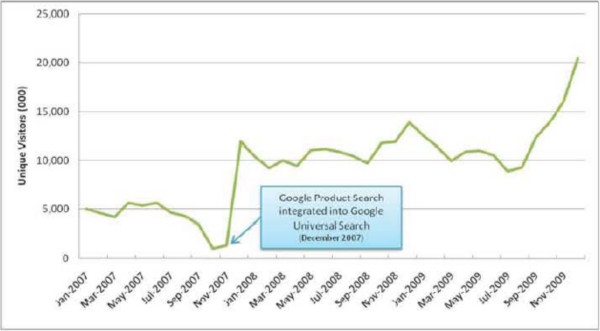
Although the EC keeps private the contents of complaints it forwards on to the subjects of inquiries, there's a very good chance that Foundem's complaint may echo the public comment it filed with the US Federal Communications Commission, ostensibly with respect to its request for ideas for "Preserving the Open Internet." In that document (PDF available here), Foundem alleges that Google threatens the desired state of the Internet -- something commissioners have referred to as "search neutrality" -- by giving prominent placement to Google services in search results, under the label, "Universal Search."

Skype gives up on Microsoft, will work with operators on Windows Mobile
Popular instant messaging, voice chat, and video conferencing client Skype and Skype Lite are no longer available on Windows Mobile devices.
The company says, "We've chosen to withdraw Skype Lite and Skype for Windows Mobile because we want to offer our new customers an improved mobile experience -- much like the version that has proved so popular on the iPhone, and which is now available on Symbian phones. Our focus is on providing a rich user experience that allows you to enjoy free Skype-to-Skype and low cost calls as easily on the move as you do at your desktop. We felt that Skype Lite and Skype for Windows Mobile were not offering the best possible Skype experience."

Demand for Palm devices is weaker than anticipated, fanboys wanted
Despite the critical acclaim Palm has won for its webOS devices (Pre, Pixi, Pre Plus and Pixi Plus), the public hasn't been snatching them up by the armload like Palm was expecting. In a financial guidance announcement this morning, the company said its revenues for the full year are going to be "well below its previously forecasted range of $1.6 billion to $1.8 billion," because of slower-than-expected consumer adoption.
That isn't to say Palm's devices haven't been selling, it's just that the company was expecting a quicker turnaround.

Google's bad news deluge: Execs held responsible for posting of hate video
There's precedent throughout the European Union protecting the rights of ISPs when Web sites they host end up streaming defamatory, libelous, or injurious content. Despite that, a Milan judge today sentenced three of four Google executives convicted last November of violating the privacy of a boy victimized in a briefly-posted YouTube video, to six months' suspension.
The sentencing came even though the original plaintiff in the lawsuit -- representatives of a boy with Down's Syndrome, who unwillingly appeared in a YouTube video showing classmates tormenting him -- reportedly withdrew from the case last week, as first reported by IDG's Philip Willan last Sunday. In an American court, this would normally lead to a dismissal; but Judge Oscar Magi took the not-unprecedented step of assuming the role of the plaintiff, effectively trying the case on behalf of state prosecutors.

Global Foundries gets its second major partnership for 28 nm chips: ARM
In late 2008, AMD spun off a major portion of its chip fabrication business into a new company called GlobalFoundries, a joint venture with Abu Dhabi investment firm ATIC. At the time, AMD said the new venture would "join the IBM joint development alliance for both silicon-on-insulator (SOI) and bulk silicon through the 22 nanometer generation. The alliance consists of a group of leading semiconductor companies collaborating on next generation silicon technologies."
So as the chips have worked their way from 45 nm in size down to 28, Global Foundries has teamed up with ARM Holdings and is working on a new System-on-a-Chip based on the ARM Cortex A9 processor and GlobalFoundries' High-K Metal Gate 28 nm fabrication process.

Google's bad news deluge: Xerox sues, claims it borrowed query methods
For any other company besides Google, a week like this would be interpreted by some in the press as the beginning of the end, and it's only Wednesday. However, an individual breakdown of every bad story, element by element, reveals the company may not be deluged so much by a hailstorm of controversy as a cavalcade of unfortunately simultaneous snowballs, none of which may end up leaving any lasting damage.
Last Friday, Xerox filed suit in US District Court in Delaware, claiming two counts of patent infringement against Google and Yahoo, and one count against Google's YouTube division. A scan of the complaint reveals an almost "boilerplate" document, making no arguments other than that its two patents cover types of functionality that the three named defendants willfully employed without negotiating with Xerox first.

New analytics software specifically targets software developers, beta testers
Download Concerity Analytics Free 1.0 Beta from Fileforum now.
Web developers have access to all sorts of information about the visitors to their sites: IP address, operating system, browser type, and so forth. With solutions like Omniture's SiteCatalyst, for example, developers have access to an even greater depth of information about visitor behavior that they can use to improve their product.