
Encryption, zero trust and the quantum threat -- security predictions for 2021
We've already looked at the possible cybercrime landscape for 2021, but what about the other side of the coin? How are businesses going to set about ensuring they are properly protected next year?
Josh Bregman, COO of CyGlass thinks security needs to put people first, "2020 has been incredibly stressful. Organizations should therefore look to put people first in 2021. Cybersecurity teams are especially stressed. They've been tasked with securing a changing environment where more people than ever before are working remotely. They've also faced new threats as cyber criminals have looked to take advantage of the pandemic: whether through phishing attacks or exploiting weaknesses in corporate infrastructure. Being proactive, encouraging good cyber hygiene and executing a well thought out cyber program will go a long way towards promoting a peaceful and productive 2021, not least because it will build resiliency."
IBM helps businesses prepare for next generation encryption
IBM Security is launching a new service that allows companies to experiment with fully homomorphic encryption (FHE) -- an emerging technology that allows data to remain encrypted while being processed or analyzed in cloud or third-party environments.
IBM Security Homomorphic Encryption Services provide companies with education, expert support, and a testing environment to develop prototype applications that can take advantage of FHE.

Zoom relents and agrees to give free users end-to-end encryption
When video conferencing company Zoom acquired Keybase, there was a great deal of excitement about the impending arrival of the much-needed end-to-end encryption. But then there was disappointment when it was announced that only paying customers would be granted access to the extra security feature.
Zoom CEO Eric S Yuan said at the time that free customers were not getting end-to-end encryption "in case some people use Zoom for a bad purpose" -- something many users found insulting. But now the company has backtracked, announcing that users of free accounts will in fact get end-to-end encryption... but there is a slight catch.

Zoom isn't giving non-paying users end-to-end encryption because they could be criminals
Zoom's meteoric rise in popularity due to COVID-19 forcing more people to work from home led to a great deal of interest in the video conferencing tool's security and privacy. The lack of end-to-end encryption was a major concern for many users, but following the recent acquisition of Keybase, Zoom CEO Eric S Yuan said it would "help us build end-to-end encryption that can reach current Zoom scalability".
Well, end-to-end encryption is here. But only if you're a paying Zoom customer. Anyone using a free account is being left out in the cold. Why? Because, Yuan explains, "we also want to work together with FBI, with local law enforcement in case some people use Zoom for a bad purpose". Yuan is apparently of the impression that paying customers could not possibly be potential criminals.
GlobalSign reveals new platform to ease PKI management
Public Key Infrastructure (PKI) is essential to handling the issuing of digital certificates and managing public-key encryption, but it can prove a burden for businesses.
To make the process easier, certificate authority GlobalSign is launching a new automated PKI platform called Atlas.

Free service simplifies encrypting and sharing confidential data
Distributed cloud service company Volterra is launching a new service to encrypt and share public data without the need for passwords and public keys.
VoltShare is available as downloadable software (or an API and SDK) that operates locally on a PC or mobile device to easily encrypt sensitive data for sharing with target recipients through email or via existing collaboration platforms such as Slack, Teams and Dropbox.

How to use DNS over HTTPS in Windows 10
While preview builds of Windows 10 do have a tendency to be a little on the buggy side, they offer an opportunity to try out new features and options way before the official release. For anyone concerned about privacy and security an exciting addition to the latest Insider build is DNS over HTTPS (DoH).
The feature keeps web traffic more private by performing DNS lookups over an encrypted HTTPS connection so they are far less susceptible to interception. If you've been keen to try this out, now you can. Here's what you need to do.

Zoom is gaining end-to-end encryption following acquisition of Keybase
As part of its 90-day security focus, Zoom has announced that it has acquired Keybase, an app that features end-to-end encryption to secure chats and file sharing. The Keybase team will help to bring the same security to Zoom.
The lack of end-to-end encryption has been one of the many criticisms of Zoom in recent months, and the company is keen to address this. However, Zoom says that it will only be bringing an end-to-end encrypted meeting mode to paid accounts and points out that this "privacy over compatibility" option will mean missing out on some features.

Zoom claims to offer end-to-end encryption -- even though that's not strictly true
Security is a serious concern for anyone using the internet, but it most certainly is for businesses. In seeking a video conferencing tool to see them through the home-working coronavirus has forced many people into, Zoom has proved to be an incredibly popular choice, and its proclamation of offering end-to-end encryption very probably swayed a few decisions.
An investigation carried out by the Intercept found that, despite Zoom's claims, the service does not really support end-to-end encryption for video and audio content. In reality, all it offers is TLS, but Zoom has chosen to refer to this as being end-to-end encryption.
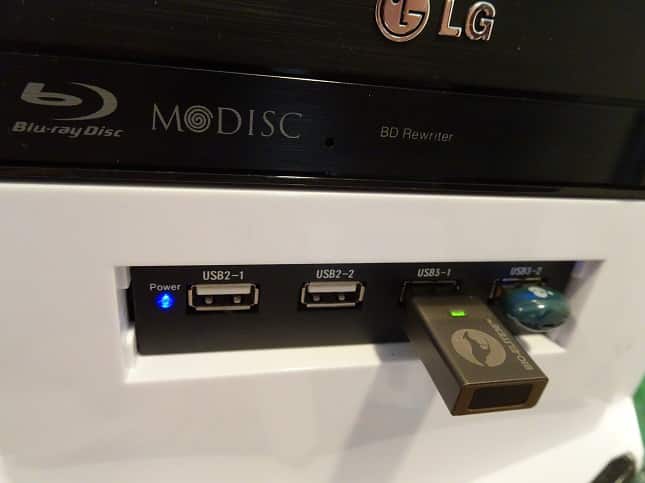
Kanguru Defender Bio-Elite30 fingerprint-encrypted USB flash drive -- great for storage, perfect for Tails Linux [Review]
When I first saw the Kanguru Defender Bio-Elite30 flash drive, I was immediately intrigued. Having the ability to decrypt an encrypted flash drive with the touch of a finger was immensely convenient. And yes, convenience matters, as making encryption easy increases the likelihood that the user will actually use it. If encrypting files becomes too cumbersome, the user may not bother, leading to poor security practices.
Also cool was Kanguru's promise that it was operating system agnostic, meaning it would work with any OS, such as Windows, macOS, and desktop Linux distributions. I'd later find out that was only partially true, but more on that in a moment. It is even well-built -- the housing is a solid piece of aluminum that not only looks beautiful, but should lend to increased durability.

The $600 quantum computer that could spell the end for conventional encryption
Concerns that quantum computing could place current encryption techniques at risk have been around for some time.
But now cybersecurity startup Active Cypher has built a password-hacking quantum computer to demonstrate that the dangers are very real.
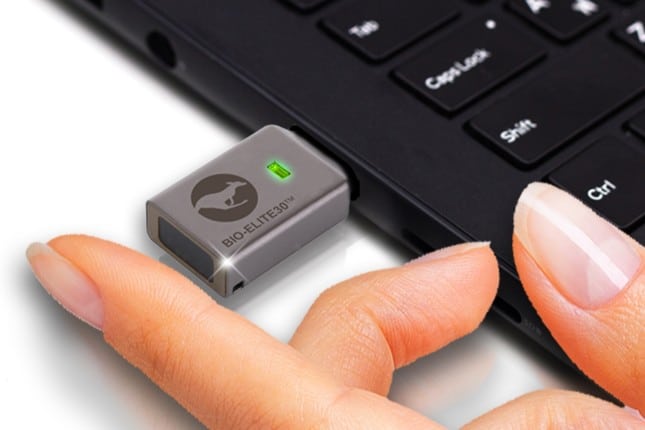
Kanguru Defender Bio-Elite30 is a fingerprint hardware encrypted USB flash drive for Windows, Mac, and Linux
Hardware encrypted USB flash drives are fairly common, but usually, they leverage keypads for unlocking. Biometrics -- such as a fingerprint reader -- are far more convenient, however. Today, Kanguru launches a new hardware encrypted flash drive that uses your finger to decrypt it.
Called "Defender Bio-Elite30," the company claims the drive will work on any operating system, meaning those on Windows, Mac, or Linux can take advantage of the biometric unlocking. The drive will even work with devices such as Smart televisions. The Defender Bio-Elite30 is bus-powered too, so you won't have to be concerned about an internal battery failing. Believe it or not, despite the cool technology, it is rather affordable.

Google and Fortanix deliver external key management for public cloud
Migrating sensitive data to the cloud inevitably raises concerns surrounding compliance and security. Most turn to encryption as a solution, but that in itself raises issues over key management.
While many cloud service providers have allowed customers to bring their own keys (BYOK), Google Cloud Platform is linking up with the Fortanix Self-Defending Key Management Service (SDKMS) to become the first public cloud provider to enable customers to bring their own key management system (BYOKMS).
ESET launches Full Disk Encryption for businesses
Although businesses go to great lengths to protect their networks, physical loss of devices and the consequent risk to corporate data remains a major concern.
Cyber security company ESET is addressing this with the launch of Full Disk Encryption, allowing IT administrators to remotely deploy, activate, and encrypt connected devices using a one-click action, thus preventing attackers from profiting from lost or stolen computers.

Insecure file transfers leave organizations at risk
According to a new survey, 78 percent of respondents are still using unencrypted protocols to transfer some of their files, and only 44 percent are using two-factor authentication when connecting to their file transfer server.
The study for VanDyke Software, conducted by Amplitude Research, interviewed 450 professionals involved in data protection and file transfers and finds that 48 percent of companies are transferring files at least multiple times per day and sometimes 'continuously'.