Former MI5 chief says UK government should not weaken encryption
The UK government has made no secret of its desire to exert greater control over the internet, and home secretary Amber Rudd has gone as far as suggesting that encryption should be weakened -- and backdoors should be included in software -- to make it easier to carry out surveillance on terrorists.
Lord Jonathan Evans, the former chief of MI5 in the UK, acknowledged that encryption had got in the way of monitoring communication between extremists, but said this should not be used as an excuse to weaken security.
UK Home Secretary supports back doors while claiming 'real people' don't need end-to-end encryption
Amber Rudd, the UK Home Secretary, has claimed that "real people often prefer ease of use and a multitude of features to perfect, unbreakable security." Rudd holds the Conservative government's belief that it should be able to access encrypted messages, even when end-to-end encryption is used, such as with WhatsApp.
Using terrorism as a justification for wanting to gain access to encrypted messages, she goes on make extraordinary and misguided claims about what she and the government want. Her bizarre and misinformed rant in the Daily Telegraph is deeply concerning, not only because of the implications her suggestions have on privacy, but also the lack of technical knowledge she demonstrates while making her claims and demands.
Two-thirds of consumers suspect governments abuse their powers to access data
According to a new study 51 percent of people don’t believe their government can protect their personal data, and nearly two-thirds (65 percent) suspect their government already abuses its powers to access the data of citizens.
Identity protection company Venafi surveyed 3,000 consumers in the US, UK and Germany about initiatives that would grant governments more access to private, encrypted data.

Following NSA endorsement, the US government can buy secure messaging tools from BlackBerry
BlackBerry has announced that it is now able to sell its secure messaging solutions to the US and Canadian governments. The news comes after the company received endorsement from the NSA's National Information Assurance Partnership for SecuSUITE for Government.
BlackBerry points out that governments have long had to contend with wiretapping and other forms of surveillance, and says that SecuSUITE for Government offers effective end-to-end encryption for voice calls and text messages.

IBM announces breakthrough in encryption and data protection for enterprises
With data breaches a problem that shows no signs of going away, businesses are increasingly seeking to protect their information with encryption.
But with large volumes of information this can be time consuming and costly. To address the problem, IBM is announcing a breakthrough encryption engine that, for the first time, makes it possible to encrypt all data associated with any application, cloud service or database all the time.

Unencrypted USB drives putting UK businesses at risk
UK businesses are putting almost no effort into securing the data they keep on USB drives, which is not in line with what GDPR demands, potentially putting them at risk of being hit with huge fines.
That's according to data storage firm Kingston, which concluded after polling 480 employees from companies in various industries.
OneLogin suffers serious security breach -- attackers access data and decryption keys
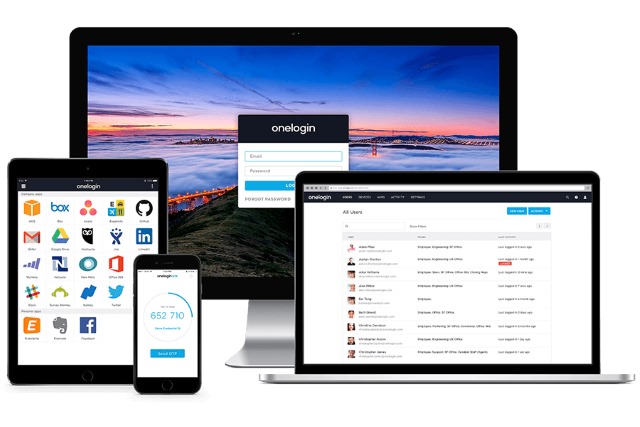
Password management service OneLogin has fallen victim to a serious attack. The company says that it "detected unauthorized access to OneLogin data in our US data region" -- this was blocked, but not before the attacker gained access to AWS keys and the ability to decrypt data.
The company warns that "all customers served by our US data center are affected; customer data was compromised, including the ability to decrypt encrypted data." OneLogin has provided a guide for securing data, but it's possible that it may be too late for some people.

Do cloud providers want a 'lock and key' security mechanism?
Public cloud providers have ultimate control over our data, applications, and data flows on their platforms. This capability is the main cause of anxiety and a top reason for many companies to shy away from public cloud.
One of the possible solutions to the problem is to implement a "lock and key" mechanism for public clouds. This would allow re-balancing of data control. The question is whether cloud providers want that.
Cloud adoption and increasing threats drive enterprise encryption usage
Enterprises are accelerating their use of encryption and the strategy is being driven by business units rather than IT teams.
This is among the findings of a study into encryption habits by cyber security company Thales, based on research carried out by the Ponemon Institute. It finds that 41 percent of enterprises now have an encryption strategy in place.
Hackers release password to encrypted cache of NSA tools
Last year, hacking group TheShadowBrokers released a number of NSA exploits into the wild, showing how the agency was able to exploit big-name firewalls. At the same time it also released a second cache of documents, encrypted and password protected. Now, in protest against Donald Trump, the group has released the password for the encrypted data.
TheShadowBrokers used a Medium post over the weekend to express their disgust at Trump's presidency. The documents and tools released allegedly demonstrate that the US government, through the NSA, has been actively hacking foreign government networks, and reveal an exploit for the Unix-based Solaris operating system.
Top tips: How to protect your privacy against ISP snooping
We live in an age where privacy is valued incredibly highly, but at the same time there are more and more ways for our privacy to be encroached upon. One of the most recent concerns came after the US Senate voted last week to allow ISPs to sell customers' browsing histories without consent.
Things were turned up a notch a couple of days ago when the House agreed and voted to repeal FCC-approved privacy rules. Since the result of the vote was known, there have been reports of a huge surge in interest in VPN tools, private search engines and the like, and now VPN review site The Best VPN has come up with a series of tips to help internet users maintain their privacy, and stop ISPs from getting their hands on potentially sensitive information about browsing habits.
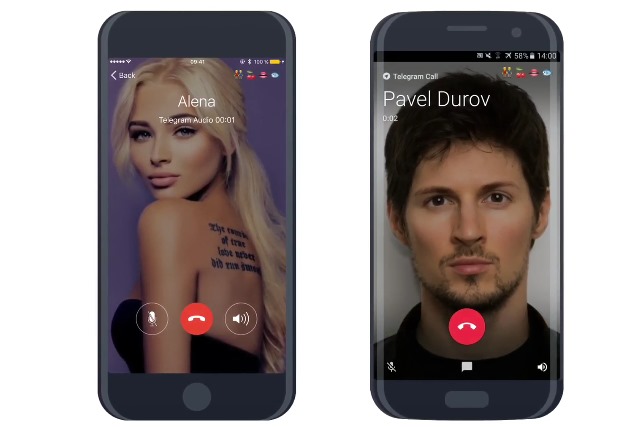
Secure messaging app Telegram gains end-to-end encrypted voice calls
In an age of constant surveillance and eroding privacy, there is increasing interest in secure messaging platforms such as WhatsApp and Telegram. While Telegram has gained quite a following, there is one feature that users have been begging for: voice calls.
Now users' prayers have been answered. The latest update to Telegram finally heralds the arrival of secure voice calling, and it features an interesting key exchange mechanism: users need just compare four emoji. If the emoji match, the connection is secure!
Calls for transparency as UK government meets technology firms to discuss encryption and privacy
The UK Home Secretary Amber Rudd is today meeting with technology firms to discuss how they can help to combat terrorism. The meeting comes just days after Rudd said that encrypted messaging services such as WhatsApp should not be a "secret place to hide."
Calls for backdoors to be built into encrypted apps and services have been met with shock, derision and incredulity, but some have pointed out that the controversial Investigatory Powers Act (aka the snooper's charter) already grants the government the right to force the removal of encryption. Ahead of the Rudd's meeting, civil liberty organizations have written a letter demanding transparency.
Encrypted messaging service WhatsApp criticized as 'a secret place to hide' for terrorists
WhatsApp has been criticized for failing to help police following the revelation that Khalid Masood used the encrypted messaging service shortly before running down numerous people and stabbing a policeman to death in London last week.
The UK home secretary Amber Rudd spoke out over the weekend, saying that police and other agencies should be granted access to encrypted messages with a view to countering future terrorist attacks. Later this week, Rudd is due to meet with technology leaders to talk about how the government should be able to access messages protected by end-to-end encryption -- something already dropped from the controversial snooper's charter.
End-to-end encryption exploit left WhatsApp and Telegram vulnerable to hackers
When WikiLeaks' Vault 7 revelations about the spying capabilities and techniques were unleashed, there was concern about a number of popular apps and services that -- the documents suggested -- had been compromised. Included in this list are popular, secure chat apps WhatsApp and Telegram, and Check Point software has just released details of a vulnerability that left millions of user accounts exposed to hackers.
Google was recently criticized for releasing details of a security hole in Windows (and, subsequently another one in Internet Explorer and Microsoft Edge) before Microsoft had patched it. In fact, it was a third party who jumped to the rescue, issuing patches before Microsoft. This time around, however, after notification of the problems from security firm Check Point, WhatsApp and Telegram both patched the security holes within a week.