
Security commentator Brian Krebs hit with the biggest DDoS attack ever
Attacks on websites are a daily occurrence so to get any real attention an attack needs to be something special. Starting on Tuesday, Brian Krebs' security blog, KrebsOnSecurity.com, was hit with what is being described as "the largest DDoS the internet has ever seen".
Despite being clobbered with a colossal 665 Gbps of traffic, Krebs' site remained online thanks to the anti-DDoS efforts of security firm Akamai. It is thought that Krebs was targeted for his exposés of hackers, and the attack was delivered via a huge number of hacked IoT devices.

Ads drive most Internet traffic in Europe
With all the buzz and fuss over ad blockers and how they hurt the internet we know today, it's interesting to see just how much traffic these ads actually drive. As it turns out, more than you'd expect. According to a new report by Adobe Digital Insights, more than two thirds (68 percent) of all European traffic is driven by ads. General traffic is also growing. In Europe, more than half (54 percent) of sites grew their traffic in the last three years.
Also, mobile advertising is catching up. Personal advertising, an ads strategy which seems to be working quite nicely, is not as popular in Europe as it is in the States, the same report says. Personalized ads, such as direct emails or social advertising, accounted for 36 percent of new traffic for growing U.S. websites. In Europe, that percentage is at eight.
Google redesigns Gmail for Android and the web
Gmail was designed to be a cross-platform email tool, but even Google recognizes the fact that it is far from perfect. With this in mind, Gmail -- and Inbox by Google -- are undergoing a redesign to improve things.
With the redesign, Google says that it is focusing on adjusting the formatting and general look so that it better suits the device emails are being viewed on. You may well have thought that this should have been the case from the beginning, but it seems that an update is in order.
Microsoft re-runs Google tests and shows that Chrome has worse battery life than Edge
The bitch-fest that has been rumbling on between Microsoft and Google is showing no signs of abating. We’re all used to the concept of companies engaging in games of one-upmanship, and this has certainly been the case when these two stalwarts have been slugging it out with their respective web browsers.
The most recent battles have been fought over which browser is the most battery efficient. It’s only very recently that Google claimed that Chrome trounced Edge in battery tests -- Microsoft disagrees. The company has re-run Google’s tests and says that it produced very different results. Rather than showing that Chrome offers the best performance when it comes to playing video, this second batch of tests shows -- unsurprisingly -- that Edge is the best by quite some distance.

Adblock Plus introduces new platform to increase Acceptable Ads’ transparency
It has been difficult to ignore the issue of online ads recently. Facebook’s approach to ads has been in the news in particular, but the battle between advertisers and ad blockers is one that has rumbled on for some time -- and looks set to continue to do so. At the forefront of ad blocking is Adblock Plus, and the company has just announced a new ad platform that aims to deliver ads that will not irritate internet users too much.
Acceptable Ads is an idea that has been bounced around for a while now, but today it has been relaunched as a completely new platform -- the Acceptable Ads Platform, funnily enough. It has two primary directives: to increase the transparency of Acceptable Ads, and to provide website creators with easy access to a database of pre-whitelisted ads that they can use to monetize their sites.
Broadband customers need accurate speed comparison sites
There are calls for ISPs to provide more accurate broadband speed information to customers to allow them to make better comparisons between companies. The current method of providing theoretical maximum figures is just not acceptable, says the UK's Local Government Association.
The LGA points out that ISPs' current provision of estimated speeds are not necessarily a true reflection of the reality. Just as consumers can use price comparison sites to check out the best deals for electricity and other utilities, so the LGA believes a similar service should be available to allow for more accurate speed comparison.

In less than a week Twitter will allow longer tweets
Twitter 140-character tweet limit has been one of its defining features for a number of years now. Originally introduced because of the limitation of SMS, the restriction has frustrated many users who find it too much of a constraint.
On 19 September it all changes. Unlike what it has done with Direct Messages, Twitter is not dramatically increasing the maximum length of a tweet, but it is changing what counts towards that limit. Images and other attachments, for example, no longer use up characters, leaving more for messages.
YouTube does not pay musicians enough, says report
YouTube was criticized recently for preventing content-makers from monetizing videos that covered certain topics. But this is far from being the only complaint levelled at the video site. British music industry body UK Music says that artists are not receiving enough in the way of royalty payment from YouTube.
UK Music's 2016 report, Measuring Music shows that YouTube remains the most popular way for people to consume music in the UK. Despite this, the report says that the effective 'per-stream' payment rate fell from $0.0020 to $0.0010.
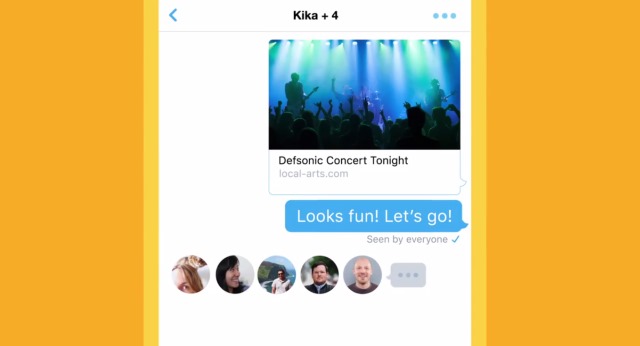
New features for Twitter Direct Messages transform it into a chat platform
The market for chat and messaging tools is a busy one, with the likes of WhatsApp, Facebook Messenger and countless others all vying for attention. Keen as ever to appeal to as many users as possible, Twitter is constantly trying to reinvent itself, and it's currently doing this by revamping its Direct Messages feature.
Having already dropped the 140-character limit some time ago, Twitter has now introduced even more features that make it more chat-friendly. Among the changes is a typing indicator which lets chat participants know when others are responding to messages.

Chrome to warn users of insecure HTTP sites that transmit passwords or credit card info
With Chrome, Google is on a mission. A mission to make the internet a safer place. Its ultimate goal is to display a warning that HTTP sites (rather than HTTPS) are insecure, but this is a long-term plan and there are many stages to go.
Starting at the beginning of next year in Chrome 56, the plan moves to its next stage. As of January 2017, any HTTP sites that transmit passwords or credit card details will be flagged up as being insecure.

Three will continue with ad-blocking plan in 2017
UK carrier Three is committed to its plan to offer ad-blocking for customers using its network at some point in 2017, despite opposition from the EU.
In May, the carrrier first revealed its plan to block mobile ads for its customers for the entirety of one day in June. Three is of the belief that its users should not be forced to use their mobile data to display ads which are irrelevant to them and often invade their privacy.

EE rolls out 4G LTE Cat 9 in UK
UK carrier EE has launched a new layer of extra capacity for its 4G network to help high-end smartphones use their full potential, which will make smartphones "faster on EE than any other UK network".
EE has also said that it will make Cat 9 devices faster. Cat 9, or Category 9 4G, is capable of supporting 450Mbps download speeds, and devices such as HTC M10 or the Samsung Galaxy S7 are capable of achieving these speeds.

YouTube tells Philip DeFranco it hasn't changed its policy on demonetizing videos
There has been much wailing and gnashing of teeth from YouTubers in recent days as rumors started to circulate that YouTube was demonetizing videos deemed not "advertiser friendly". Seasoned 'Tuber Philip DeFranco was one of the more high-profile to speak out, likening YouTube's actions to "censoring" people by hitting them in the wallet.
But YouTube has responded to these claims by saying that its policy on video monetization has not changed at all. While YouTubers have just started to complain that video about depression, videos with swearing, videos with controversial subject matter, and so on are being denied the opportunity to make money from ads, YouTube says the only thing that has changed is the way users are notified. DeFranco says this is "very concerning" and reveals that YouTube has clearly been secretly demonetizing videos for a while.
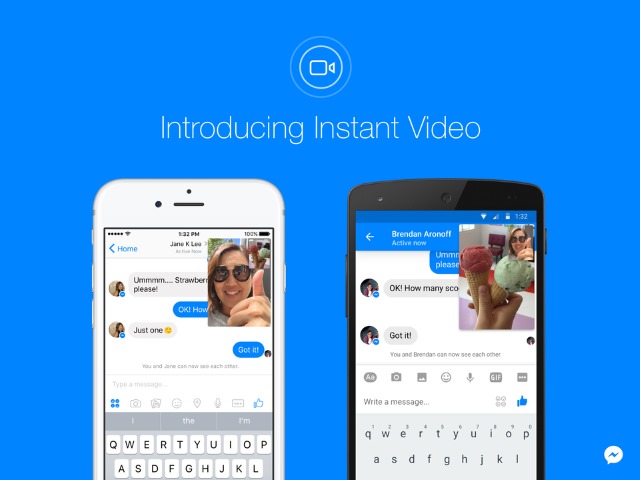
Facebook Messenger gains Instant Video live broadcasting
Facebook, like Twitter, is going all in on video. The social network's latest move is to bring video to its second greatest love -- Facebook Messenger. You'd be forgiven for thinking that this is not exactly new, and you'd be right.
Facebook Messenger has included a video calling option, but Facebook is concerned that this is being reserved for 'special occasions'. Instant Video is an extra new feature that is designed to make it easier to show things that can't be properly described in words, or even static pictures.
Now you need to buy a TV licence to watch BBC iPlayer, and privacy advocates are concerned
As of today, Thursday 1 September, if you stream any content from BBC iPlayer without owning a TV licence, you are breaking the law. But as with licences for televisions, it's not clear how -- or, indeed, if -- the BBC will be checking to see whether watchers have paid up or not.
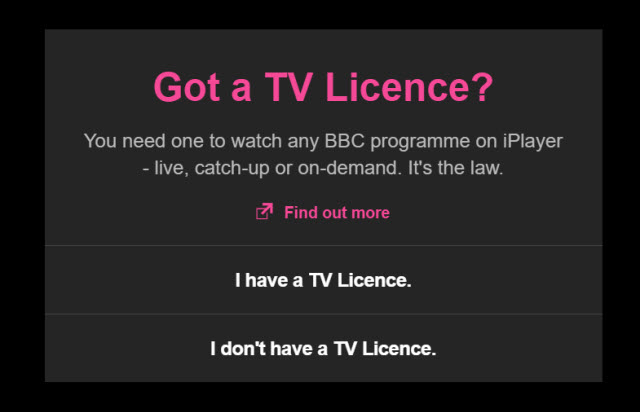
If you fire up BBC iPlayer now, you'll be greeted by a nag screen that asks: "Got a TV licence? You need one to watch any BBC programme on iPlayer -- live, catch-up or on-demand. It's the law". Viewers need to click to indicate whether or not they have a licence, and of course there is nothing to stop people from lying. What is not known, though, is whether privacy-invading snooping will be used to perform licence checks.