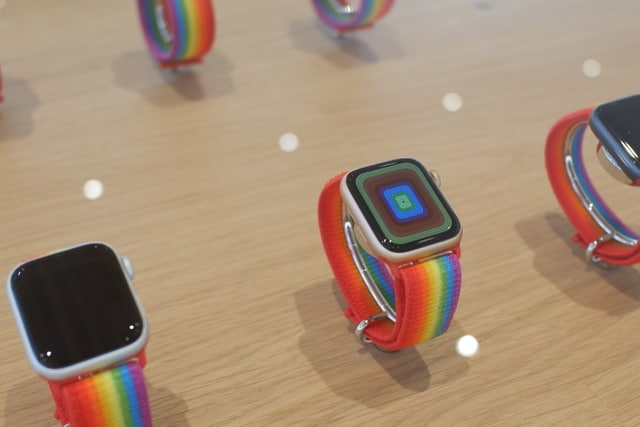
Apple Watch eavesdropping vulnerability forces Apple to disable Walkie-Talkie app
Apple has disabled the Walkie-Talkie app for Apple Watch after a vulnerability that potentially allows for eavesdropping on iPhone conversations emerged.
The company says that it is not aware of any incidents of the vulnerability being exploited, and it has not shared any details of the security issue. Apple's short-term solution is to simply disable the app while it works on a fix.
It's 2029, you're paying more to read this page at peak time (and we're paying your ISP to stop you visiting other tech sites)
What would a world be like where ISPs and businesses are in control of everything you see and do online? A world, in other words, without net neutrality.
VPN comparison site TheBestVPN.com has been considering this and has created an interactive simulator looking at what the web without net neutrality could look like in 2029.
Seven out of 10 Brits want tougher penalties for breaching privacy rules
According to a new survey carried out by YouGov for data privacy company myGaru 71 percent of of UK adults want to see tougher action in penalizing companies that abuse data privacy by misusing third party data.
Around a third of the public (34 percent) have already made changes to the privacy settings of one or more of their social media accounts since the Cambridge Analytica Facebook scandal and 19 percent say they would make more or new changes in the future.
Major vulnerability found in EA's Origin gaming client
Researchers at Check Point working with CyberInt have uncovered a chain of vulnerabilities in the Origin gaming client developed by Electronic Arts (EA). If exploited, the vulnerabilities could have led to player account takeover and identity theft.
Researchers have responsibly disclosed the vulnerabilities to EA, in accordance with coordinated vulnerability disclosure practices, to fix the vulnerabilities and roll out an update before threat actors could exploit the flaw.

Consumers less willing to share information following privacy scandals
In the wake of privacy scandals like that involving Cambridge Analytica consumers are changing their online behavior and sharing less information.
This is among the findings of new research from privacy app FigLeaf which shows 82 percent of online users in the US and 75 percent in the UK are choosing to change the way they behave online. Of these respondents, 74 percent say they are sharing less information.
ProtonMail criticizes Gmail's confidential mode for being neither secure nor private
Privacy-focused ProtonMail has lashed out at Google, saying the "confidential mode" available in Gmail is "misleading" and "little more than a marketing strategy". It says that people "don't need to settle for fake privacy"
Pointing out that Gmail's confidential mode lack end-to-end encryption, ProtonMail says that the email service is "not secure or private". The company says that Gmail can still read your emails, and that expiring emails are not as secure as Google would have users believe.

Epic privacy fail: WeTransfer shared its users' files with the wrong people
Sharing files using the cloud is very convenient, but understandably, some people are hesitant to do so with sensitive or private information. These privacy-conscious folks may be looked at as "paranoid" by some, but you know what? As more and more breaches occur, it is becoming harder to trust the cloud with files. And so, the "tinfoil hat" wearers start to look quite sensible.
As an example, popular cloud-based file-sharing service WeTransfer has failed in epic fashion. You see, the company not only shared files with the intended recipients, but with random strangers too! Yes, that private information you didn't want seen by anyone other than your intended audience may have been viewed by the wrong person. Good lord.
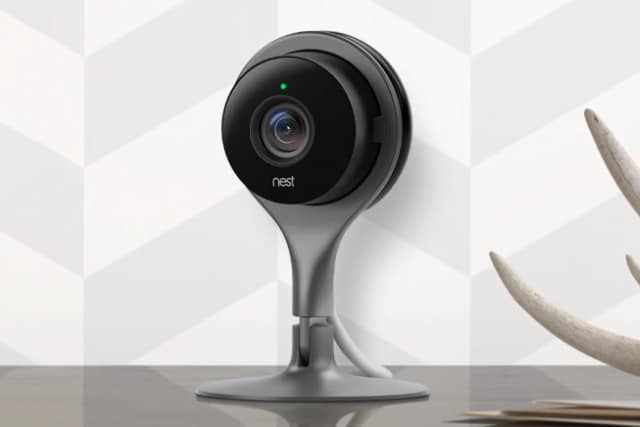
Google confirms that second-hand Nest Cams could have been used to spy on people
There been many concerns voiced about the privacy and security implications of many smart products. Some are well-founded, as a new admission from Google that its Nest Cams could be used to spy on people goes to show.
The problem does not center around hackers, but people who have sold or given away their Nest Cams. Even after the new owner performed a factory reset of the camera -- following Google's own instructions -- it was still possible for the original owner to access the camera feed.

The impact of data privacy on the healthcare industry
Healthcare companies are constantly consuming and sharing information to build better patient profiles and improve outcomes. Yet a new report reveals that only 70 percent are very or extremely confident in knowing exactly where their sensitive data is.
The study from data privacy specialist Integris shows that of these 50 percent update their inventory of personal data once a year or less, and a mere 17 percent of respondents are able to access sensitive data across five common data source types.

Facebook will pay you to gather information from you
That Facebook gathers personal information from its users should come as no surprise -- it could be argued that it is the social network's raison d' être. Following numerous privacy scandals, and the controversial (and since-closed) Research and Onavo programs, Facebook is now ready to be open about its data collection, and is even willing to pay people for this.
The new "Study from Facebook" app gives Facebook users the chance to volunteer to share information about their app usage -- and get paid for divulging this information. Sound good to you?
Microsoft takes down huge MS-Celeb-1M facial recognition database
Microsoft has deleted a database containing around 10 million photographs that was being used to train facial recognition systems.
Known as MS-Celeb-1M, the database was created in 2016, and originally contained photos of celebrities. Over time, however, images of writers, journalists and others crept in, and ultimately 100,000 individuals were to be found in it. Microsoft has not made much noise about the deleted content, but has said that the database was wiped as the person maintaining it was no longer a company employee.

Want someone's personal data? Give them a free donut
While you might expect Homer Simpson to hand over personal details in exchange for a donut, you wouldn't expect cybersecurity professionals to do the same.
However, technology services provider Probrand has carried out a study at a cyber expo attended by UK security professionals, where attendees voluntarily shared sensitive data including their name, date of birth and favourite football team -- all to get their hands on a free donut.

Secure contact center payment solution comes to the cloud
Contact center data security specialist Semafone is making its Cardprotect available as a cloud solution in the US for the first time.
Companies now have the choice of running Cardprotect on premise, as a managed appliance, in a hybrid could or fully cloud solution. The new, cloud version enables a much faster, more scalable, flexible and cost-effective deployment, as there is no need for contact centers to purchase or manage equipment.
64 percent of organizations believe they have suffered a breach due to privileged access
A global survey of over 1,000 IT security decision makers by privileged access management specialist BeyondTrust reveals that 64 percent believe they've had either a direct or indirect breach due to employee access in the last year, and 62 percent believe they've had a breach due to vendor access.
Employee behavior continues to be a challenge for a majority of organizations. Writing down passwords, for example, is cited as a problem by 60 percent of organizations, while colleagues telling each other passwords was also an issue for 58 percent of organizations in 2019.

Medical and financial details of 12 million Americans exposed in Quest Diagnostics data breach
Medical testing firm and clinical laboratory Quest Diagnostics has revealed that a data breach has led to the records of nearly 12 million of its customers being exposed. The data includes financial data, Social Security numbers and medical information.
Quest Diagnostics was itself not the target of hackers, but the American Medical Collection Agency (AMCA) was. The company is used by Optum360 for billing collections services, and Optum360 is used by Quest Diagnostics.