Users complain that Windows 10 is stuck in S mode
Windows 10 S mode is proving problematic for some people, with a number of users complaining that they are unable to get their computers out of the limited mode.
A number of laptops -- including the Surface Go and Surface Laptop -- come pre-configured to run in Windows 10 S mode, preventing users from changing their search engine in Edge, or from installing software from outside of the Microsoft Store. It is supposed to be possible to exit S mode, but the option has been broken for a number of days.
Privacy: Google stops transcribing Assistant recordings and Apple stops listening to Siri recordings
Following the revelations that Apple contractors are listening to recordings of things people say to Siri, and Google workers are manually transcribing Assistant recordings, both companies have said they will cease the practice -- at least temporarily.
Both Apple and Google were "listening in" on recordings with a view to improving their respective digital assistants, but privacy concerns have forced them to take action. But while Apple is suspending its "grading" program worldwide, Google is only changing the way it operates in Europe.
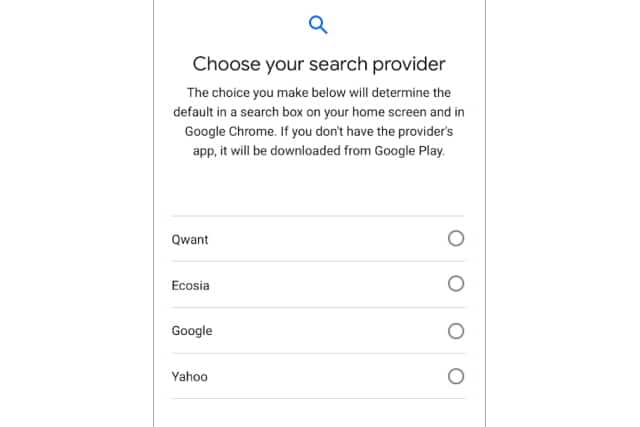
Google to let Android users in Europe choose their default search engine -- and will make money in doing so
In response to a $5 billion fine for antitrust violations in Europe, Google has announced that it will introduce a new "search engine choice" option next year. It's an idea that is similar to the Browser Choice screen Microsoft introduced following anti-competition complaints about Internet Explorer.
Google will "introduce a new way for Android users to select a search provider to power a search box on their home screen and as the default in Chrome (if installed)" in Europe starting in 2020. The search engines that appear in the list will be determined by auctions. Google rivals will have to bid to be featured in the list, meaning the company will -- controversially -- make money from giving users choice.
Cisco to pay $8.6 million for supplying the US government with software known to be insecure
Cisco has agreed to pay $8.6 million to settle a claim that it sold video surveillance software to the American government even though it was aware it contained security vulnerabilities.
A total of fifteen US states filed a case under the False Claims Act after Homeland Security, the Secret Service, the Army, the Navy, the Marines, the Air Force and the Federal Emergency Management Agency all purchased flawed software from Cisco. Rather than improving security as desired, the complainants said that Cisco's software actually made systems less secure.
NordVPN brings WireGuard-based NordLynx to Linux users
NordVPN has announced an important new option for users of the Linux version of its eponymous VPN tool. The company is introducing a new technology called NordLynx which is based on the WireGuard protocol.
The company says that it successfully combines the highspeed connection offered by WireGuard with NordVPN's own privacy-protecting double NAT system.
Chrome 76 arrives, blocking Flash and making paywalls easier to bypass
Google has released Chrome 76 for Windows, macOS and Linux. As expected from the preview releases, this version of the browser brings a couple of important changes: Flash is now blocked by default, and Incognito mode detection is also blocked.
The blocking of Flash will be welcomed by many, and -- once word spreads about what the implications are (namely that it makes it far easier to get around paywalls) -- the same is likely to be true of the changes to the detection of Incognito mode. The changes have been welcomed by privacy and security advocates.
Microsoft announces that Skype for Business Online will be retired
As Microsoft continue to push Teams, the company has announced that Skype for Business Online will be retired in 2021.
While this is far from surprising, this is the first time a date has been mentioned so users can prepare to transition away. With the retirement date set at July 31, 2021, users have two years to get ready for a move to Teams.

Apple Card: The Apple credit card is coming in August
You might well be waiting for news of the new iPhone line-up, and we'll know more about that soon. In the meantime, however, Apple has a new product for its loyal fanbase. A credit card.
The Apple Card has been talked about for some time, and now Tim Cook has revealed that it will be launching in August. The news came from the Apple CEO during an earnings call yesterday, and he said that the company's employees have been beta testing the Apple Card, which comes in both digital and physical forms.

EU says that websites with Facebook Like buttons are liable for private data sharing
The fingers of Facebook have spread like a cancer across the internet. Even people who have made the conscious decision to boycott the network find it near-impossible to completely avoid its reach thanks to the prevalence of Like buttons.
Now the Court of Justice of the European Union has ruled that websites with embedded Like buttons can be held responsible for the transmission of data to Facebook. This is a particularly important ruling due to the fact that Like buttons can be used to share information about site visitors without the need for the button to be clicked.

Personal details of 106 million Americans and Canadians stolen in huge Capital One data breach
A hacker has been arrested following a massive data breach at Capital One. The attacker -- Paige A Thompson, also known as "erratic" -- was able to access the credit applications of 100 million Americans and 6 million Canadians after exploiting a "configuration vulnerability".
In most cases, personal details such as name, date of birth, address and phone number were exposed by Thompson, but for tens of thousands of individuals, she also gained access to credit scores, Social Security numbers and account balances.
Windows 10's WSL 2 now lets you add a custom Linux kernel and enjoy localhost access
For Windows 10 users looking to install a Linux-based operating system within Windows, WSL -- Windows Subsystem for Linux -- was a blessing from Redmond. And things are just getting better and better.
The latest Insider build of Windows 10, Windows 10 20H1 build 18945 includes Windows Subsystem for Linux 2 (WSL 2) with a couple of key enhancements. Not only are you now able to gain localhost access to network resources, you can also make use of your preferred Linux kernel.

Hate the new-look Twitter? Here's how to get the old version back
People are often resistant to change, particularly when it feels like change for the sake of change -- and this is certainly the feeling that abounds with the recent redesign of Twitter.
While some Twitter users have been working with the new look for some time, it only rolled out globally a couple of weeks ago. Predictably, the reaction has been mixed, but the redesign has certainly not been met with universal praise. If you're one of the many who hate the way things are now, you'll be frustrated to learn that Twitter does not give you a way to revert back to the old look. But where there's a will, there's a way...
Privacy: Apple workers may well hear all of your sordid secrets via Siri
It's only a couple of weeks since we learned, for certain, that Google is listening to what people say to Google Assistant. Now -- and perhaps surprising no one -- it transpires that Siri is just as much of a privacy invasion.
Just as with Amazon and Google with Alexa and Google Assistant, Apple shares some of the recordings made via Siri with contractors with a view to improving the service. But while it may mean that Siri gets better at responding to queries, it also means that the contractors charged with "grading" Siri's performance "regularly hear confidential details" -- everything from people having sex, to people making drug deals.
Microsoft's web-based Outlook 365 is leaking users' IP addresses in emails
Anyone using Office 365's webmail component to send emails is unwittingly sharing their IP address with the people they communicate with.
The web-based Outlook 365 inserts the sender's IP address into the header of an email, which makes it stand apart from other webmail services such as Gmail -- and even Microsoft's own Outlook.com. While the injected IP address serves something of a purpose, it's also a privacy and security risk that many users may not be aware of.

Alleged critical VLC flaw is nothing to worry about -- and is nothing to do with VLC
There has been a degree of confusion over the last few days after news spread of a supposed vulnerability in the media player VLC. Despite being labelled by security experts as "critical", VLC's developers, VideoLAN, denied there was a problem at all.
And they were right. While there is a vulnerability, it was in a third-party library, not VLC itself. On top of this, it is nowhere near as severe as first suggested. Oh -- and it was fixed over a year ago. An older version of Ubuntu Linux was to blame for the confusion.