
EBay found innocent in counterfeit jewelry appeal
In 2004, American jewelry company Tiffany & Co. sued online auction site eBay in the US District Court for trademark infringement. In the complaint, Tiffany sought to establish eBay responsible for the trade of counterfeit Tiffany goods on its popular site, saying that eBay was "liable for direct and contributory trademark infringement, unfair competition, false advertising, and direct and contributory trademark dilution. "
The suit opened the door for a number of luxury brands to sue eBay on the same grounds. In the years since Tiffany's complaint, Moet Hennesy Louis Vuitton, Christian Dior Couture, Rolex, L'Oreal fragrances, and PPR, the conglomerate that owns Gucci, Yves Saint-Laurent and Stella McCartney all put legal pressure on eBay to curb the trade of counterfeit products.
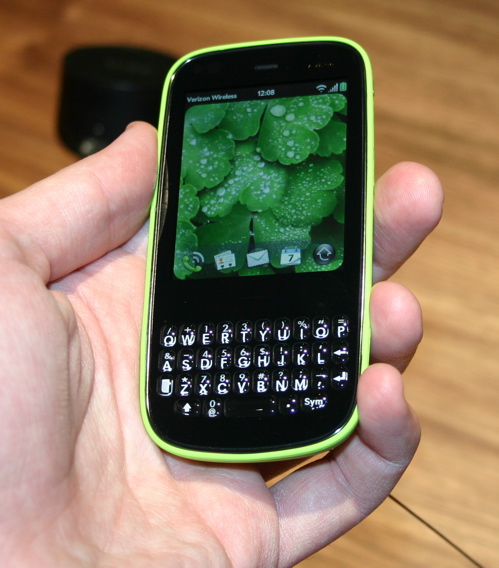
Palm's free hotspot functionality will help evolve the mass market smartphone
Palm hasn't exactly been raking in the dough for the last few years. Quite the contrary, it has consistently posted quarterly losses since well before its switch to webOS last year.
But Palm has so much going for it. Its devices are aesthetically pleasing, they offer a high level of functionality, they're available on three of the four major wireless carriers, and above all, they're cheap.
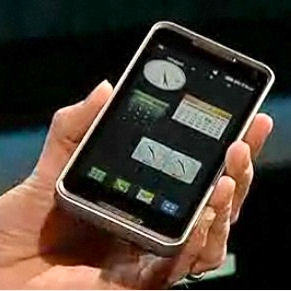
MeeGo launches for developers, users given very little to get excited about
MeeGo, the mobile Linux project that merges Nokia's Maemo with Intel's Moblin, has officially launched for developers today.
Both the MeeGo core distribution infrastructure and the operating system base are now available as downloadable images from the MeeGo project's Web site, here.

Sprint Nextel announces free 30-day trial contracts
While most U.S. wireless carriers offer a 30-day grace period where users can return their new phone and cancel their service package without having to pay the exorbitant early termination fee, the subscriber who canceled his plan never really gets all his money back. There are activation fees, restocking fees, and fees for all the minutes/data used during that grace period.
Today, Sprint Nextel announced a new "Satisfaction Guaranteed or Money Back" program which gives users the customary 30 day grace period, but if they decide to cancel their plan and return their phone, they get all their money back. Sprint refunds everything included in its plans, but will not reimburse users for services above and beyond that. For example, if they sent a bunch of text messages without a texting plan, or if they used services with third-party billing, Sprint won't reimburse that.
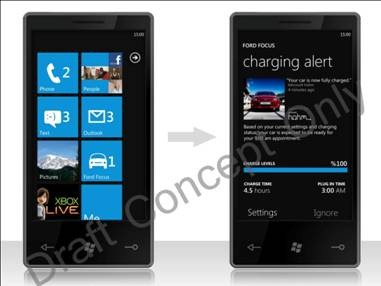
Microsoft's Hohm smart grid service pairs with Ford's 2011 electric car
Microsoft and Ford have worked closely for more than three years on the Sync in-car communication, navigation, and entertainment system, and today the companies announced their partnership has branched out into energy management for electric vehicles.
At the New York International Auto Show today, the two companies announced that the 2011 Ford Focus Electric will be the first vehicle to utilize Microsoft Hohm for automation and optimization of charging. Hohm is a cloud-based service that provides actionable info on your energy consumption that Microsoft first debuted nine months ago.

Apple launches iPad-friendly iTunes 9.1
Just four days ahead of the iPad's first day of availability, iTunes has received an upgrade which adds sync for the new device. According to the software updater, the new version of iTunes lets users "Organize and sync books you've downloaded from iBooks on iPad or added to your iTunes library," and "Rename, rearrange, or remove Genius Mixes."
The icon under "Library" which formerly was called "Audiobooks" is now simply, "Books," and Genius mixes can now be re-named and moved. Otherwise, there is not much of an outward difference between 9 and 9.1
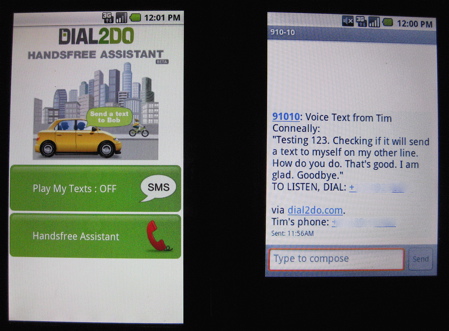
'Hands-off' review of Dial2Do's solution to the texting and driving problem
Back in December, I tried to enable everything I use on my Motorola Droid with text-to-speech, with only limited success. Ideally, I would have been able to have all of my incoming text-based media from Twitter, RSS, e-mail, and SMS read aloud to me so I could use my phone while driving. Unfortunately, Android's built in TalkBack functionality is very limited, and the talking apps I've tried are also pretty limited in what they do.
But with safe driving legislation in committee in Congress, and a growing list of states that have banned texting while driving, the market for eyes- and hands-free phone interfaces is hot.
The explosion of non-Flash devices is driving HTML 5 growth, Brightcove says
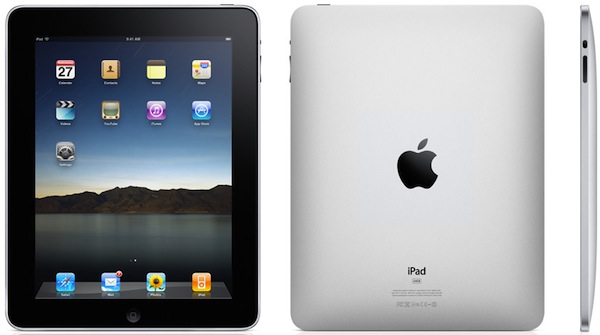
Video sharing site Brightcove is using the impending launch of the Apple iPad as a platform to talk up its support for HTML 5, the updated spec for the Web's core markup language which brings rich functionality to sites (such as video) without the need for third-party plug-ins like Adobe's Flash or Microsoft's Silverlight.
Earlier this year, Brightcove's bigger competitors YouTube and Vimeo announced they were experimenting with HTML 5, but both warned that not everyone would be able to see videos unless they had a compatible browser. Vimeo, for example, said 90% of its videos would work in HTML 5-compatible browsers, but only 20% of viewers would be using one.

Apple rolls out Snow Leopard update (10.6.3)
It's been about five months since Apple put out the Mac OS X 10.6.2 update, which fixed a potentially damaging guest account bug that could delete a user's account data if another user logged in and out of a guest account on a Snow Leopard machine.
Today, the company rolled out its next update to the operating system, which has reportedly been in beta since late December. The update includes more than 70 security fixes and 49 general improvements to Snow Leopard, including fixes for Mail, MobileMe, and AirPort. The full release notes are here.
Swype and T9 Trace are on a collision course
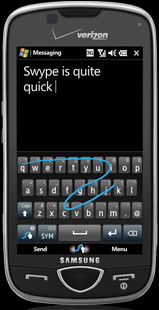
You may not know the name Nuance Communications, but you can bet you've used this company's products. It deals with linguistic solutions in the health care, enterprise, and the consumer mobile spaces. If you were to know the company for anything, though, you'd probably know Nuance as the company that owns T9 text completion, which ships on 85% of all mobile phones.
You may also not know the name Cliff Kushler, but he was one of the inventors of T9 at Tegic Communications. He went on from there to launch the company Swype after Nuance acquired Tegic in 2007.
That phone you're about to throw away could be worth $500
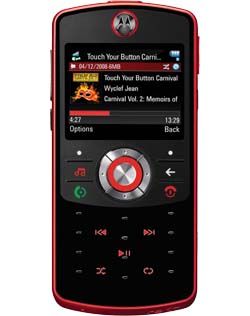
The lifespan of mobile phones is getting very short, and CTIA is packed with evidence to prove it. When I met with HTC at CES in January, they had an array of eight handsets to show off, most of which had only been released into the market within the last six months.
Now, just two months later, HTC has added four new high-end smartphones that put the entire batch that I saw in January to shame. Smartphones only remain on the cutting edge for a matter of weeks before they're usurped by the latest hot device. In the case of Android, sometimes it's only a matter of days.
Review: Eye-Fi X2, my CTIA secret weapon
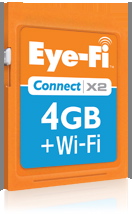
Two years ago, Lexar brought the Eye-Fi brand into the mainstream when it released 2GB SD cards endowed with Eye-Fi's 802.11b/g wireless connectivity. The capability turned any camera with an SD slot into one with Wi-FI. Since that time, Eye-Fi has grown its product line to include support for 802.11n, improved security features, improved capacities, and overall performance improvements.
On Tuesday, Eye-Fi's new X2 series of wireless SD cards hit retail, bringing the 4GB Connect X2 ($49.99), 8GB Explore X2 ($99.99) and 8GB Pro X2 ($149.99) to photographers across the country.

How I slashed my connection to cable TV without missing anything
Mission: Find an affordable alternative to cable/pay TV using only off-the-shelf products.
Deadline: Today (with a clause for extension)
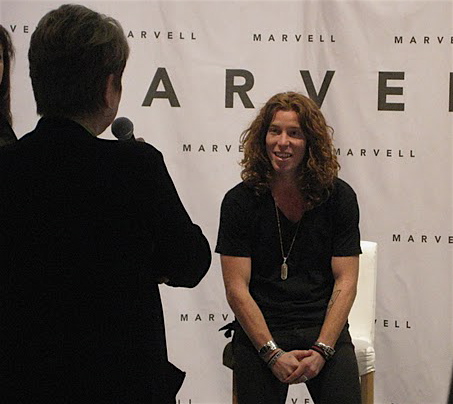
Exclusive: Olympic snowboarder Shaun White discusses his first skateboarding game
Of all the things we expected to come from a conference about wireless technology, an interview with a two-time gold medal olympian was not one of them, but today, Betanews got an exclusive interview with professional snowboarder/skateboarder Shaun White about his first skateboarding-only videogame from Ubisoft.
Truth be told, running into Shaun was purely accidental. I was scheduled to talk to Marvell about its Armada 600 platform at the very same time the he was scheduled to do an autograph signing for the company. As a huge line amassed around Marvell's booth, I completely expected to have my discussion time bumped. Instead, Marvell invited me to ask Shaun a few questions.
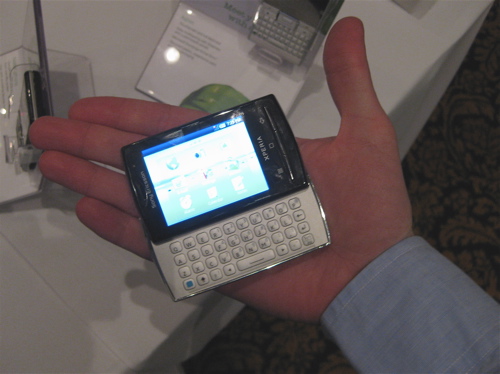
Why Sony Ericsson is worth watching in the Android space
In the past, having too many different screen resolutions to support was a problem for Windows Mobile developers. For the users of Android phones, it seems like too few screen sizes could become a problem. With Android, there are only three general screen classes: small, medium, and large.
And the trend lately among Android devices has been to have bigger and brighter screens. When the Motorola Droid debuted last October, the device's 3.7" screen looked downright huge. Yesterday, the 4" screen on the Samsung Galaxy S and 4.3" screen on the HTC EVO made the Droid look small by comparison. Unfortunately, the shape of the chassis must reflect the size of the screen. What's happening is that we are seeing bigger, flatter phones.