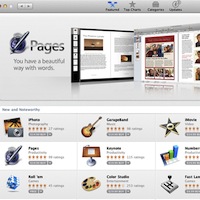
Mac App Store already a target for hackers and piraters
Just a day after Apple launched the Mac App Store to generally positive reviews, reports that the copy protection may have been hacked have begun to surface. In addition, several developers may have improperly secured their apps, making the pirator's job that much easier.
A group calling itself "Hackulous" said that it has developed a program called Kickback which circumvents the DRM methods used by Apple. However, the group is holding off public release of the application until the Mac App Store builds a larger library.

5 things you should learn from CES 2011
Today may officially be Day 2 of the Consumer Electronics Show, but, based on vendor announcements, it's really the fifth day. CES has a few lessons for those who live and breath tech, whether they work in the industry or follow it as analysts, bloggers, investors or journalists.
1. Rumors are often false. I shouldn't have to state this. Short of a reliable gadget blog/news site getting hands on a verifiably-authentic photo or video of something new -- or actual product -- rumors can't be trusted. The more general or speculative, the more likely to lead nowhere.

Apple's Mac App Store fundamentally changes PC software usage rights
Earlier today, Apple officially launched its application store for Macintosh, with about 1,000 free and paid applications available. Snow Leopard users download the Mac OS X 10.6.6 update, and the store is included. But people using the software are in for a change. Consumers typically buy software by machine. Those people buying from the Mac App Store purchase by person. The software is attached to an identity. This is a dramatic departure from how consumer software is typically licensed.
Licensing agreements typically restrict installation on one PC, sometimes two or even three. If a consumer goes into a store and buys, say, Microsoft Office, the purchase ultimately is tied to a computer. For years, Microsoft took machine purchases on trust, but in 2001 added product activation to Office and later Windows. Office 2011 is the first Mac version of the productivity suite to require product activation, which essentially locks the software to a computer. Not a person. Similarly, when a new PC ships with Windows, the license is tied to the machine not the buyer.
![Mirasol low-power MEMS display for e-readers, in a proof-of-concept built by Qualcomm. [Courtesy Qualcomm MEMS Technologies, Inc.]](https://betanews.com/wp-content/uploads/media/43/4381.jpg)
Qualcomm's Mirasol full color e-reader display, one year later
At CES 2010, Qualcomm made a surprise unveiling of a full-color e-reader display technology called Mirasol that utilized a new reflective technology called IMOD (Interferrometric Modulation) that gave it the color and refresh of an LCD screen, but with the sunlight viewability and low battery consumption of e-paper. At CES 2011, the screen still hasn't been employed in any e-readers yet, but it isn't far from being a reality.
Though Qualcomm couldn't tell me today who will be utilizing the technology in an e-reader/tablet, nor could they say when it should be expected, but judging by the company's readiness to let the public handle its protoype version --as opposed to last year's model, which was only viewed on appointment, and still couldn't be touched-- and time in development, a product offering the unique display should be in the channel this year.
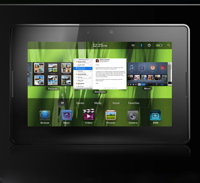
Hands-on with RIM's BlackBerry PlayBook, Sprint 4G not included
Research in Motion's 7" BlackBerry PlayBook slate/tablet made its first official appearance back in September, and today at CES 2011, it's gotten its first 4G U.S. carrier partner, Sprint, and has gone on display for the public to touch.
Of course, what the public can do with the Playbook today is still very limited. You cannot, in fact, pick up the device, as it's attached to the display stand. However, you can swipe through the QNX-crafted interface, open up a few apps and demonstrations, use the browser, and develop a general longing for a deeper experience.
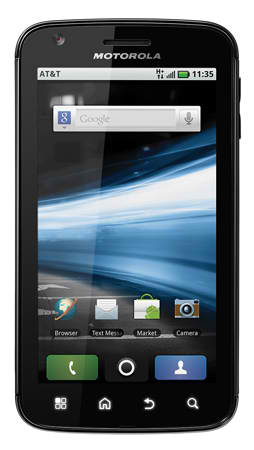
Motorola's Atrix bends the definition of mobile computing
Motorola Mobility's Atrix Android smartphone, announced separately by both AT&T and Motorola yesterday, is drawing crowds on the CES showfloor today. After talking to Motorola and getting some solid hands-on time with it, I can say it's an easy contender for the best announcement of the show.
The Atrix is not so much a smartphone as a dockable cloud computer, and without its impressive feature-enhancing docks, could have easily gone unnoticed against the dozens of tablet announcements coming from CES this year. Because without these docks, it would just be another Android smartphone; albeit one with mind-bending specs.

Skype buys video service Qik in $100 million deal
Skype said Thursday that it had acquired streaming video service Qik for an undisclosed amount, believed to be around $100 million USD. The VoIP provider says it plans to use Qik's technology to enhance its own video calling functionality.
Qik was founded in 2006 and is compatible with about 200 phones across several platforms including the iOS, Android, Blackberry, Symbian, and Windows Mobile platforms. The company has also struck several partnerships to have its applications come preloaded on select devices.
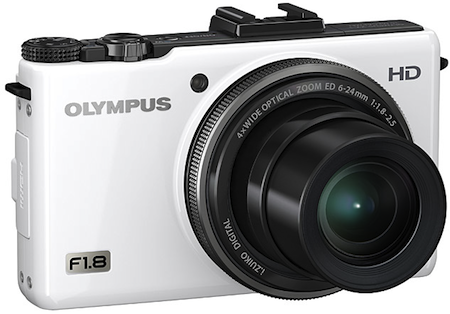
Olympus woos enthusiasts, photo pros with XZ-1 and PEN E-PL2 digicams
Olympus announced two new cameras at the Consumer Electronics Show, and, man, are they hot -- the diminutive XZ-1 and classy PEN E-PL2. Both cameras should appeal to enthusiasts and to pro photographers looking to carry a lighter kit. Honey, get the credit card. I want both.
The XZ-1 is Olympus' response to other high-end compacts, such as the Canon S95, Nikon Coolpix P7000, and Panasonic Lumix DMC-LX5 (I got the Lumix DMC-ZS7 for Christmas; get the gift receipt because it's going back for refund). These cameras generally pack high-end features, such as big-aperture lenses and RAW-capture capability. The XZ-1's f/1.8 lens is remarkable in a compact and will let in lots of light (the PowerShot S95 is f/2.0) for shooting in dimly-lit areas or for better producing the bokeh, or background blur effect, popular for portrait photography. Perhaps more than any other feature, the lens distinguishes the XZ-1 from other high-end compacts.
Apple opens doors to Mac App Store
Aiming to provide Mac users with a one-stop shop for basic applications, Apple on Thursday launched the Mac App Store. Much like its sister App Store for the iOS platform, the offering allows users to purchase and install applications from a single place.
Currently about 1,000 apps are available for download, ranging in price from free to as much as $79.99 for Apple's Aperture 3 product. Indeed, Apple is committing itself to the product, offering the Pages, Keynote, and Numbers applications from its iWork suite and the GarageBand, iMovie, and iPhoto apps from iLife '11 for individual download.
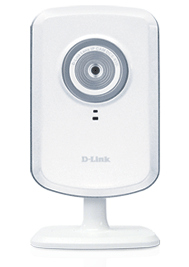
CES 2011 surprise trend: DIY surveillance gear
Every year, the average megapixel count of consumer mobile devices takes an incremental hop upward. Last year, the most common mobile phone cameras hovered around 5 megapixels. The phones being debuted at CES 2011 seem to be sticking around 8 megapixel with 720p video capture capabilities.
But at the same time as their internal sensors are getting more sophisticated, they're also becoming more sophisticated remote viewscreens. Today, Samsung launched a line of "DIY" video security cameras that can broadcast to smartphone or connected TV apps located either within the camera's local network, or remotely.
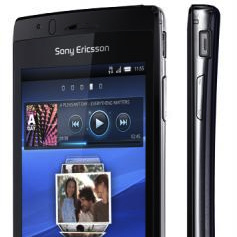
Sony Ericsson packs big features into the ultra-thin, curvy Xperia Arc
The days of teasers and rumors are over. At the Consumer Electronics Show in Las Vegas, Sony Ericsson unveiled the sleek and sexy Xperia Arc. Hell, I thought my Nexus S was bendy-looking with its curved screen. Curved doesn't aptly describe Sony Ericsson's new handset. It truly is arced.
The Xperia Arc has a curved 4.2-inch screen and measures a slim 8.7 mm, which makes it thinner than yesterday morning's CES hotness, the LG Optimus Black. Oh, how quickly these phones are outdated. ;-)
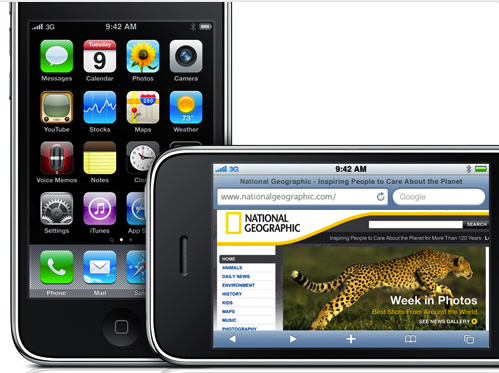
Text me it's not true: iPhone 3GS costs 49 bucks
Is iPhone 4 too rich for your recession-weary wallet? Can't spare $199 or $299 for Apple's newness but iPhone-envy is making you an insomniac? Today, AT&T announced the deal, or is that steal, of the week: iPhone 3GS for a sweet 49 bucks. Starting January 7.
The timing is baffling with the Consumer Electronics Show officially starting today and so many hot, Android phones being introduced -- the Motorola Atrix 4G and LG Optimus Black, among them. These are dreamy handsets. Who can get any work done just thinking about them?
Hey, Steve Ballmer, where's the beef?
Critics, and even customers, accuse Microsoft of being empty, of having exhausted its innovation -- and for many of them that means imitation. Microsoft is often called he great imitator. At first glance, last night's opening Consumer Electronics Show keynote given by Microsoft CEO Steve Ballmer fits the bill. The keynote felt empty, and short. Microsoft didn't even show off something substantially new about tablets, which is one of the event's hottest product categories this year. The rumors about a tablet operating system were wrong.
What is Las Vegas? It's a place to be entertained (and, yes, gambling is one of the recreations). I think of Vegas as where entertainers who have passed their peak of popularity go. It is the city of celebrity has-beens. Perhaps then, Ballmer was where he belonged.
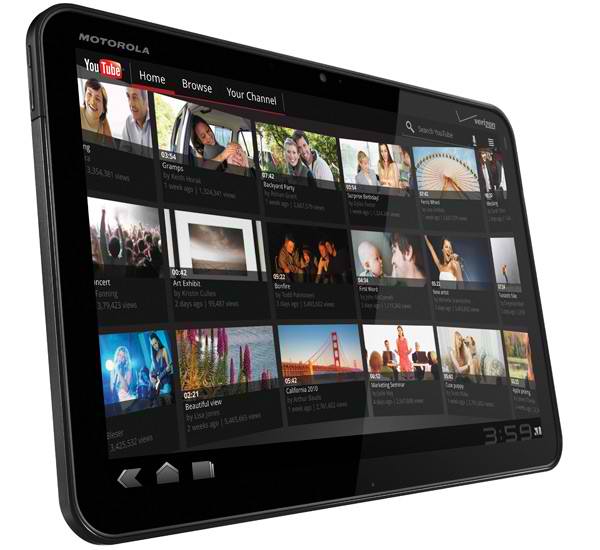
First Impressions: Motorola's XOOM tablet
Motorola Mobility was very deliberate with news about its intentions to release a tablet. Back in September, CEO Sanjay Jha announced the company would have a product out in 2011, but wouldn't be rushing it, and then in December the company released something of a "diss" video, denigrating the other popular tablets.
At CES 2011's press day yesterday, the company officially announced its XOOM tablet and showed it off, but clearly didn't have a finished product on its hands. This is likely due to the unreleased nature of the OS it will be running, Android 3.0 "Honeycomb."

FCC survey suggests Schools and Libraries need more IT staff
The Federal Communications Commission's Wireline Competition Bureau has released its 2010 E-Rate Program and Broadband Usage Survey, which gathered data from E-rate funded schools and libraries to assess the current state of broadband in our education system. The "E-rate" is a discount on telecommunications services and Internet access that the Schools and Libraries Universal Service Support Program offers to eligible institutions.
The report collected the various broadband connection types and speeds across urban and rural schools, districts, libraries, and consortiums; and then polled the administrators about whether they felt their speed and coverage were adequate.