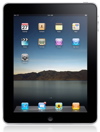
Will iPad bomb or be the bomb?
I'm now convinced that iPad can't fail, if for no other reason than the momentum of hype. Too many people believe in iPad. It's like a religion. But there are measures of success, and I don't expect iPad will be a fast starter -- nor does it need to be. Forrester Research conservatively forecasts Apple selling 3 million iPads this year.
Apple's history of new product categories is evidence enough that iPad sales will slowly proceed -- after a modest early surge -- before really taking off. For example, Macintosh (in 1984), iPod (in 2001) and iPhone (in 2007) all started off modestly. Some overly enthusiastic Mac fans will question any assertion that iPhone sales started off modestly. Hey, but they did compared to what came later. Apple reached 1 million iPhone v1 shipments in 74 days, a number later paled by iPhone 3G and 3GS launches.
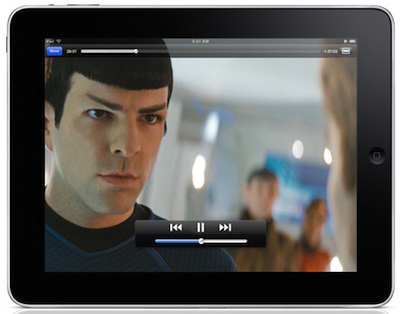
Rating three months of personal iPad punditry
Tomorrow morning, Apple's iPad goes on sale. Today is then perhaps a good time for assessing my last three months of prognostications about the tablet. I have not exactly been iPad's biggest fan, and I'll admit some of that trepidation is reaction to my journalist peers going so gaga over the device -- pretty much sight unseen.
Earlier today at BoingBoing, Cory Doctorow wrote: "I think that the press has been all over the iPad because Apple puts on a good show, and because everyone in journalism-land is looking for a daddy figure who'll promise them that their audience will go back to paying for their stuff." I agree.
Google is armed for iPad launch
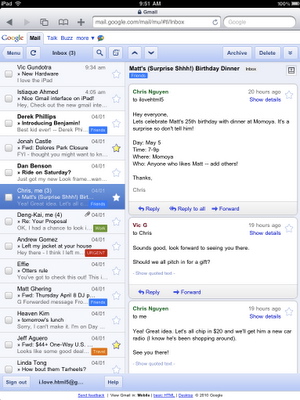
Google today announced its strategy for delivering services on the iPad, and unveiled a new mobile Gmail interface optimized for bigger touchscreens. Since the iPad lies somewhere between a notebook and a smartphone, the Mountain View search company is taking a hybrid approach, offering some services in their desktop format, some in their mobile format, and some as standalone apps.
"We're particularly excited by how tablet computers create the opportunity for new kinds of user interaction," Punit Soni, Product Manager for Google Mobile wrote in the official Google blog. "Here on the mobile team, we often talk about how mobile devices are sensor-rich: they can sense touch through their screens, see with a camera, hear through a microphone, and they know where they are with GPS. The same holds true for tablet computers, and we're just starting to work through how our products can become even better on devices like the iPad."
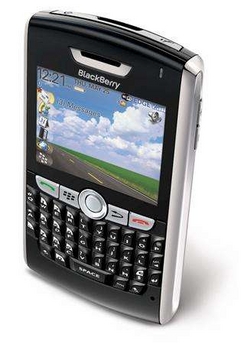
RIM approaches the edge: BlackBerry needs a reboot, fast
Is the BlackBerry beginning to go bad?
It's becoming increasingly difficult to ignore the rising volume of speculation that the smartphone that started the smartphone revolution may be moving into a bit of a middle-aged funk. The share price of BlackBerry maker Research In Motion took a hit Thursday after the company reported lower-than-expected earnings for the last quarter. Although bottom line revenue rose by 37% and the company added 4.9 million subscribers globally, the numbers failed to meet expectations and spawned growing concern that RIM's best days may be behind it.

How do you follow up after your app is a smash hit?
Shazam is a brilliant application. If you want to identify a piece of music that is playing, all you have to do is hold up your smartphone, and the Shazam app will tell you what it is based on its "audio fingerprint." It's simple to use, handy to have, and available on most mobile platforms. Though the idea behind Shazam wasn't exactly new, it arrived when the app store craze took off, and has since climbed to impressive heights.
It has 50 million users in 200 countries and has enjoyed a sustained growth of half a million new users per week for more than a year. Shazam has been downloaded more than 1 million times from Nokia's Ovi store, it was the #1 application on BlackBerry App World's launch date, it's Android's third most-downloaded app of all time, and it's Apple's biggest reseller of iTunes music on mobile devices.
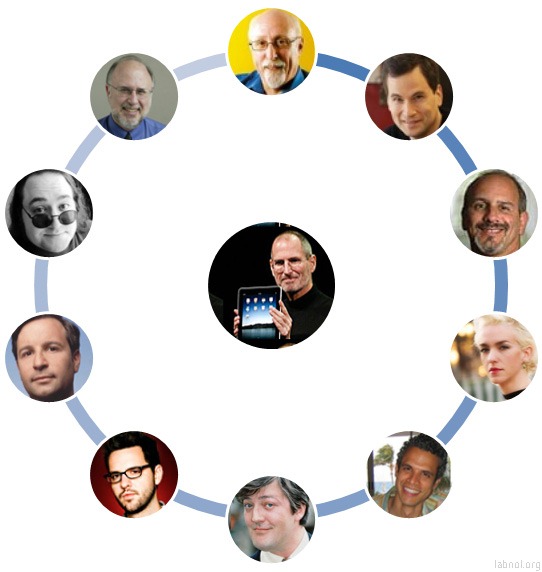
What does Steve Jobs' 'inner circle' say about Apple?
Over at Digital Inspiration, Amit Agarwal asserts there is an inner circle of 10 journalists that get advance review access to hot new Apple products -- ah, like iPad. The first iPad reviews appeared overnight, and many of them are quite favorable. The reviews come just days before iPad goes on sale -- Saturday 9 a.m. local time here in the United States.
Agarwal does an excellent job detailing the three-phase process, who is in the inner circle and what are the benefits to Apple. I won't repeat what he so astutely explains. Read his post. Too much Web content is the regurgitation of what someone else reported, rather than bloggers or journalists doing original reporting. However, Agarwal graciously gave me permission to use the inner circle graphic he created. If you don't know who these people are, read Agarwal's post!

EBay found innocent in counterfeit jewelry appeal
In 2004, American jewelry company Tiffany & Co. sued online auction site eBay in the US District Court for trademark infringement. In the complaint, Tiffany sought to establish eBay responsible for the trade of counterfeit Tiffany goods on its popular site, saying that eBay was "liable for direct and contributory trademark infringement, unfair competition, false advertising, and direct and contributory trademark dilution. "
The suit opened the door for a number of luxury brands to sue eBay on the same grounds. In the years since Tiffany's complaint, Moet Hennesy Louis Vuitton, Christian Dior Couture, Rolex, L'Oreal fragrances, and PPR, the conglomerate that owns Gucci, Yves Saint-Laurent and Stella McCartney all put legal pressure on eBay to curb the trade of counterfeit products.
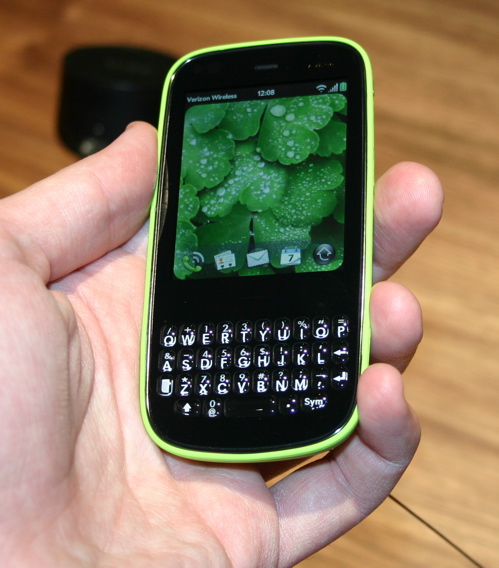
Palm's free hotspot functionality will help evolve the mass market smartphone
Palm hasn't exactly been raking in the dough for the last few years. Quite the contrary, it has consistently posted quarterly losses since well before its switch to webOS last year.
But Palm has so much going for it. Its devices are aesthetically pleasing, they offer a high level of functionality, they're available on three of the four major wireless carriers, and above all, they're cheap.
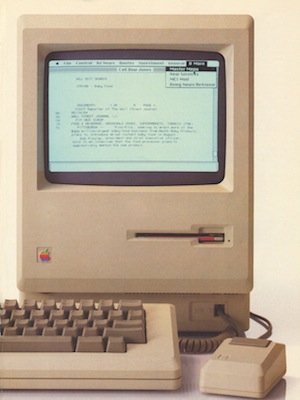
What 1984 Macintosh marketing reveals about iPad
The strangest of role reversals is occurring right now as Apple prepares to release iPad on Saturday. In 1984, Apple needed the media and publishers to promote Macintosh. Twenty-six years later, the media and publishers need -- or seem to think they do -- Apple and iPad. How strange is that?
Apple's "1984" Super Bowl commercial is legendary advertising. The commercial aired just once on TV, although it lives online in its original form and in many spoofs. But Apple's Macintosh promotion didn't stop there. For example, Apple purchased all the ad space -- 39 pages -- in the Newsweek 1984 election issue. The Graphical User Interface Gallery has scanned and preserved all 39 pages of ads.
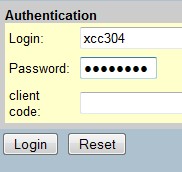
Security researcher: 'Trivially easy' to buy SSL certificate for domain you don't own
Last week, Betanews reported on the discovery by two university researchers, made at a recent security conference, that security companies often deal with governments that can compel certificate authorities to produce SSL security keys for them. Those keys can then be used to sign certificates as any other Web site, enabling a law enforcement authority -- hypothetically speaking, of course -- to spoof virtually any other site.
Today, Betanews heard from world-renowned security expert Kurt Seifried, author of numerous books on Linux system administration, network security, and cryptography. In the May 2010 issue of Linux Magazine, Seifried reports on his own discovery, which goes one very critical step further: You don't need to be a government, he found, to compel a certificate authority (CA) to issue an SSL certificate for a major Web mail service of your choice. You just need a valid credit card.
MeeGo launches for developers, users given very little to get excited about
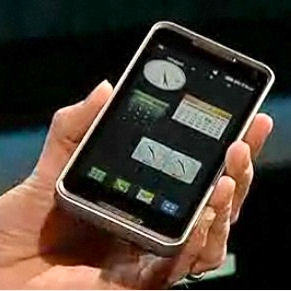
MeeGo, the mobile Linux project that merges Nokia's Maemo with Intel's Moblin, has officially launched for developers today.
Both the MeeGo core distribution infrastructure and the operating system base are now available as downloadable images from the MeeGo project's Web site, here.

Sprint Nextel announces free 30-day trial contracts
While most U.S. wireless carriers offer a 30-day grace period where users can return their new phone and cancel their service package without having to pay the exorbitant early termination fee, the subscriber who canceled his plan never really gets all his money back. There are activation fees, restocking fees, and fees for all the minutes/data used during that grace period.
Today, Sprint Nextel announced a new "Satisfaction Guaranteed or Money Back" program which gives users the customary 30 day grace period, but if they decide to cancel their plan and return their phone, they get all their money back. Sprint refunds everything included in its plans, but will not reimburse users for services above and beyond that. For example, if they sent a bunch of text messages without a texting plan, or if they used services with third-party billing, Sprint won't reimburse that.
One more try to modernize US surveillance laws for the Internet age
You may think that your communications with other individuals over the Internet may be protected from unreasonable use by US law enforcement without subpoena and due process. The truth is, judges have been loosening the interpretation of a 1986 wiretapping law, almost pretending that it did apply to present circumstances. But perhaps the greatest problem with the current Electronic Communications Privacy Act (ECPA) lay with its definitions, which at one point appear to be applicable (after several stretches of logic) to the Internet...and then, upon further review, does not.
"Electronic communication" means any transfer of signs, signals, writing, images, sounds, data, or intelligence of any nature transmitted in whole or in part by a wire, radio, electromagnetic, photoelectronic or photooptical system that affects interstate or foreign commerce," paragraph 12 of section 2510 begins. Sounds fair enough, until you go on: "...but does not include (A) the radio portion of a cordless telephone communication that is transmitted between the cordless telephone handset and the base unit; (B) any wire or oral communication..."
Microsoft's Hohm smart grid service pairs with Ford's 2011 electric car
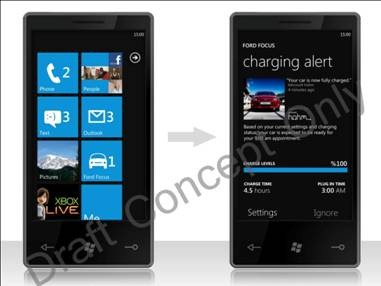
Microsoft and Ford have worked closely for more than three years on the Sync in-car communication, navigation, and entertainment system, and today the companies announced their partnership has branched out into energy management for electric vehicles.
At the New York International Auto Show today, the two companies announced that the 2011 Ford Focus Electric will be the first vehicle to utilize Microsoft Hohm for automation and optimization of charging. Hohm is a cloud-based service that provides actionable info on your energy consumption that Microsoft first debuted nine months ago.

The end, finally, at last, hopefully? Jury finds Novell retained UNIX copyrights
As first reported this afternoon by Groklaw, the publication that made its name covering the ugliest chapter in the history of computing, a jury in Utah district court has found that the copyrights to UNIX were never transferred to the original Santa Cruz Operation by way of a 1995 asset purchase agreement.
The decision may finally put to rest a 15-year-old argument over who, or what, has the rights to UNIX.