
'Golden Tee' arcade game to integrate with social media, get more obnoxious
Social networking sites have already been integrated with the decidedly anti-social home videogaming ecosystems. On the PlayStation 3, for example, users can set their machines to automatically post a Facebook status update when they earn an in-game trophy.
People who prefer to play video games in louder, drunker, more public spaces will soon have the option to share their videogame skills on Facebok as well.

First Google Chrome 5 offers a peek at future security settings
Download Google Chrome for Windows Dev Channel build 5.0.301.1 from Fileforum now.
At the beginning of what will eventually be released as version 5 of Google's Web browser for Windows and other platforms, the developers of Chrome are just now taking into account what other manufacturers might have considered a fundamental aspect: the ability to turn on and off active content, such as JavaScript.

Report: Nvidia Tegra-powered 'Zune Phone' coming this month
Microsoft made it abundantly clear that it was not talking about Windows Mobile 7 when we discussed the company's plans to create a user-friendly mobile OS that wasn't built on a legacy architecture. Naturally, this raised some questions with us; such as one about the mysterious project Pink from Danger, and the offhand talk of an Nvidia Tegra 2-powered device, and of course, the old "Zune Phone" rumor.
Today, Spanish language blog MuyComputer said that an anonymous source has "confirmed" Microsoft and Nvidia's joint presentation of a Zune Phone.

Google: Phase-out of IE6 support will remain limited to Google Apps
In a now very well-cited blog post from last Friday, Google Apps Senior Product Manager Rajen Sheth announced that as of March 1, Google Docs and Google Sites (the company's tool for building your own Web sites) will no longer support Microsoft's Internet Explorer 6 Web browser. A Google spokesperson told Betanews this afternoon that Sheth meant exactly what he said, and no more -- specifically, that the initial phase-out will begin a schedule of similar phase-outs for other apps in the Google Apps suite.
The statement should not be taken to mean, the spokesperson told Betanews, that the company's various Web properties (for instance, ad platforms) will no longer support IE6. Sheth was only speaking for the Google Apps team, we were told. YouTube, a Google division, announced its plan to phase out IE6 support last July.

Nine out of 10 premium-priced PCs sold at US retail is a Mac
Windows 7 did little to slow the Mac's sales trajectory during fourth quarter, according to NPD. Year over year, Apple doubled US retail unit share -- from 5 percent to 10 percent -- for PCs selling between $500 and $1,000. More startling, Apple increased its unit share from 79 percent to 90 percent in the market for "premium" PCs, meaning those selling for more than $1,000. In July, I reported that Apple's revenue share for PCs selling for more than $1,000 was 91 percent, because of higher average selling prices; nearly all Macs sold for more than $1,000. Now Apple benefits from 90-percent unit share, too.
Stated differently: Nine out of 10 premium PCs purchased from US retail brick-and-mortar stores or online sites (including major chains and Apple Store) during fourth quarter was a Mac. The data isn't good for Microsoft's Windows PC partners. Microsoft and OEMs touted more feature-rich Windows 7 PCs for the holidays. Additionally, ahead of Windows 7's launch, Microsoft spent six months marketing premium Windows PCs during its "Laptop Hunters" campaign. These marketing efforts apparently failed. Apple doesn't just own the premium market, its sales are increasing there.

The battle over e-book prices hits authors and readers the worst
Over the weekend, the e-book ecosystem shuddered a bit.
Major publisher Macmillan met with Amazon.com last Thursday to discuss terms of e-book distribution, and the two parties could not establish terms. Macmillan CEO John Sargent took an ad out in Saturday's Publishers Lunch announcing that Amazon had pulled all of the publisher's content, both printed and digital.

Unified communications comes closer with Vo-Fi over 802.11n
The following commentary is by Jay Botelho, a product manager with network administration and tools provider WildPackets. This is not an advertisement; Betanews is merely presenting Mr. Botelho's point of view.
In case you missed it, seven long years of wrangling have come to an end: 802.11n has now been officially ratified by the IEEE.

The iPod touch: Still a category of one
Of all the short-form conclusions about the iPad, the one that seems to stand out from the crowd is, "iPod touch on steroids."
I'll buy that, since I also concluded much the same thing in a conversation with at least one reporter following the iPad's introduction. At first glance, it extends the same old iPhone-based operating system over a larger form factor that manages to both delight (still-unique industrial design and support for the largest online app inventory anywhere) and annoy (no memory card support, no USB, and supported by only one, less-than-beloved carrier) all at the same time.

Sybase rises against rival databases from Microsoft, Oracle, and IBM
On news of its best financial quarter in company history, Sybase celebrated this week by officially rolling out a new edition of its enterprise database.
The new Adaptive Server Enterprise (ASE) 15.5, which shipped in December 2009, is the first product from Sybase to be shipped with an in-memory database (IMDB), an emerging alternative to disk-based databases which has already been adopted by competitors Oracle and IBM.

When does online news cost too much?
My answer is $155. Yesterday, when checking my bank account, I found that Dow Jones had charged $155 for a year's Wall Street Journal online subscription. I had been expecting the same $119 charge as last year, which already was borderline too high but acceptable (I had a fulltime job 12 months ago). WSJ had gone too far with its pricing. I called customer service, cancelled the account and asked for a refund. The call wasn't easily made, because of the real and sentimental value received. I do regularly read the Journal online, and I have subscribed since 1996! No longer.
With that introduction, and before continuing with the post, I must ask: What price is too much for you to pay for online content? How much would you pay -- haha, if anything? What about digitized content, such as ebooks? What do you consider to be a fair price for new ebook titles, or older ones? Please answer in comments.

Google's next step in hardwiring the Internet: More location-sensitive DNS
If today's Internet worked the way it was originally designed, where content took whatever route seemed most convenient at the time to reach its destination, there's a good chance we'd already be in a state of gridlock today. As it turns out, global-scale load balancing has already been well under way for several years, with companies like Akamai providing edge caching services that move copies of frequently accessed content from a high-volume server geographically closer to the clients that access it.
Now, Google wants the entire Internet to be capable of implementing a concept that could make similar services to Akamai's feasible on smaller scales everywhere. Earlier this week, the company announced it had submitted a formal proposal to the Internet Engineering Task Force, that would enable authoritative nameservers -- the principal directories in the Domain Name Server system -- to ascertain more clearly where the request for a resolved address is coming from. That way, Google says, the DNS server can craft a response that can be more directly and expressly routed to its recipient. As it stands now, recursive resolvers -- the DNS entities that more often directly face the public -- tend to forward requests to nameservers using their own geography, rather than that of the original client.
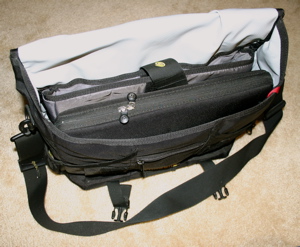
How to fit an entire HD video rig into a 15-inch notebook sleeve
Mission: Assemble a full-HD video camera setup that can fit into a carry-on bag with a total weight under 6 pounds.
Deadline: SXSW Interactive Conference and Festival, March 12.
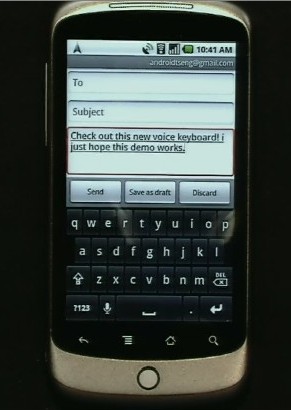
New wave of outages impacts the plagued Google phone
Since early Friday morning, as hundreds of commenters on T-Mobile's and Google's support forums are reporting, 3G data connectivity service has been completely unavailable -- for some, since approximately 4:30 am Eastern Time this morning, but for a great many more users beginning at 10:00 am. Some users in recent minutes are reporting service restored, although indications from both forums are that service can come back and go away again.
Users attempting to connect to the Internet are apparently being greeted with this message: "To connect to the Internet with the device you are using, you'll need a webConnect data plan." At least one customer, speaking with T-Mobile customer support this morning, was informed that he appeared to have been enrolled on the wrong data plan -- specifically, one for the T-Mobile G1, not the Nexus One. If that's the case for other customers as well, the problem could lie in T-Mobile's database, which could be telling Nexus One users they're not qualified to connect. Another customer reports having been told by a support rep at HTC (the phone's manufacturer, where customers reportedly received the best service for the first outage) that T-Mobile is investigating its N1 customer databases.

'Apple iPad was my idea'
I've been awfully hard on Apple's iPad, criticalness that I really should consider, for a surprising reason. With iPad, Apple took the approach that I recommended nearly a year ago. Microsoft's current, catchy PC operating system marketing campaign ends with some consumer asserting: "Windows 7 was my idea." Perhaps I should claim that "Apple iPad was my idea." ;-)
Some background: In early 2009, as the economy sucked growth from the PC market, netebook sales surged and Windows OEMs slashed prices, there were many calls by Wall Street analysts and pundits for Apple to release a netbook and to slash Mac prices. I opposed both ideas in several blog posts. I've called netbooks a menace, because they suck margins out of the PC market without offering much value to the computer manufacturer or netbook buyer. Meanwhile, Mac price cuts made no sense to me, even as more analysts called for them. Apple has established a premium brand that price cuts would jeopardize, all while reducing margins and offering little other business benefit. Apple had long priced against itself rather than against Windows PCs, which has been a successful strategy. Why change it?

Canada's privacy office puts Facebook back in the hot seat
One of the principal factors behind Facebook's revision of its privacy policies has been said to be a formal complaint filed by the office of Canada's Privacy Commissioner last July. That complaint alleged that the leading social network failed to properly disclose to its users the extent to which it could use personally identifiable information, including sharing that information with partners and advertisers. The following month, Facebook agreed to implement changes.
Those changes led to last December's overhaul of the Facebook privacy system, which many now consider to be more of a giveaway than ever before. With the guise of clear and straightforward explanation, users are now being asked to accept default settings that expressly give Facebook permission to share personal information with partners, and are even told that in the absence of such permission, there are ways in which it could be shared anyway.