
Finance tasks top the list of processes companies want to automate
Pretty much any business workflow can be automated, but which ones do enterprise executives say are the most important and deliver the greatest value?
A new report from automation specialist Kofax shows that tasks relating to financial transactions top most lists, with accounts payable automation top on 85 percent.

Change automation: A step-by-step guide to network security policy change management
In today’s fast-paced, data-driven environment, the only constant that businesses can bank on is change. For organizations to function and compete in the modern digital landscape, they need their data to be able to move freely and unobstructed through every branch of their business, unimpeded by security issues that require constant manual attention.
The network is arguably the beating heart of an organization but keeping it ticking requires more maintenance than it once did, owing to constantly changing risk profiles and circumstances. That’s why a greater number of businesses are turning to change automation to bridge the gap between network alerts and the action that needs to be taken.

Hybrid and remote working aren't going away but enterprises are slow to adapt
Within the next two years one in five workers will be remote and more than half will be in hybrid environment according to a new report.
However, digital employee experience (DEX) specialist 1E and Forrester Consulting have released data that shows only 34 percent of organizations can currently support their future hybrid and remote work needs.

Automated analysis can help stop security teams wasting 10,000 hours a year
It's well known that security teams are suffering from alert overload and new research from Invicti Security shows that false positives and the need for manual verification are serious problems.
Analysis of six years' worth of real-world vulnerability data shows enterprise security teams are spending nearly 10,000 hours a year checking unreliable vulnerability reports, and this could cost as much as half a million dollars annually.

Lack of automation hampers certificate management
A new study carried out by Opinium for certificate authority GlobalSign shows that managing digital certificates, especially expirations and renewals, continues to be a challenging process for businesses of all sizes.
The top challenges respondents typically encountered when keeping track of certificates include managing multiple types of certificates (45 percent) and managing large quantities of them (41 percent).
Automation projects held back by security and data concerns
A new report shows that 70 percent of automation initiatives are being hindered by security concerns and data silos, as organizations increasingly look to automation to improve efficiency and productivity.
The IT and Business Alignment Barometer from MuleSoft does offer some hope though as it shows companies can overcome these challenges and enable faster innovation across their organizations if IT and business teams work closely together.
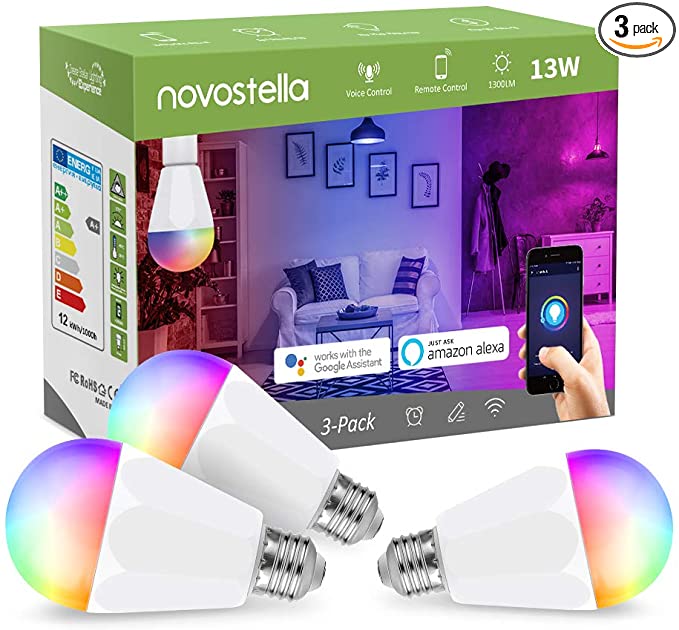
Novostella brings it all to automated lighting [Review]
Home automation continues to grow in popularity at an ever-increasing rate. The market value is expected to reach $114 billion by 2025, with smart lighting products accounting for 25 percent of that.
It’s hard to say where the average user begins with home automation, but we’d argue it’s likely to be with a smart lightbulb for most of them. It’s a product that seems straightforward and doesn’t have the dangers of locking you out of your house (as a smart lock could) or making you feel like you’re either in a) Death Valley, or b) Nome, Alaska (unlike a smart thermostat).
Office workers welcome automation but worry about their jobs
Workers in IT, HR, finance and other roles welcome the use of tools that automate processes and improve productivity -- but many are concerned automation might someday make their jobs less relevant.
A study by Thirdera, specialist in services for ServiceNow users, finds 83 percent of workers are using AI-powered search, chatbots, self-service portals, mobile apps, AIOps, business intelligence and dynamic scheduling tools every day, and 46 percent have been doing so for at least a year.

SmartThings updates its home automation app to make it faster and easier to use
Home automation is settling into its place in the world, with more and more people embracing it. Predictions have the home automation market hitting 350 million users by 2023.
Most people start simple with lightbulbs that can be controlled remotely, or a security camera or a water leak sensor to notify you of an emergency wherever you are. Some items can even be controlled by voice through a third-party service like Alexa. The big thing, especially for new users, is ease of setup and use.
6 automation trends in 2021
Automation has becoming more prominent around the world in recent years. In 2021, this increase in adoption has led to automation being present in a variety of business industries, as well as in consumer’s homes.
To learn more about the exciting happenings shaping automation progress this year, just keep reading.
More process automation needed to support digital transformation
Software engineering and IT operations teams are facing increased complexity in meeting customer and employee demands, as well as remote and hybrid work policies ushered in by COVID-19.
The key to dealing with this is increased process automation in IT operations (ITOps) according to a new report from DevOps process orchestration company Transposit.
How automation can help people do their jobs [Q&A]
The past year has seen many changes to the way businesses operate, including a stepping up of digital transformation and more interest in automating processes.
But many people still fear that greater automation could lead to a loss of jobs. We spoke to Yakaira (Kai) Nunez, senior director of research and insights at Salesforce to discover why she thinks enterprises can deploy automation to partner with rather than replace humans.
Fear of automation is part of the pandemic
We’re nowhere close to being out of the woods just yet, with COVID-19 death rates in the US still averaging around a 1,000 a day, but we're starting to get there at last thanks in part to a robust vaccination program.
However, the after-effects of the pandemic's impact will linger long after the illness subsides. According to new research, a lot of people are losing their jobs as a result of automation.

Three-quarters of security analysts fear missing alerts
Almost 75 percent of security analysts are worried about missing out on alerts according to a new study carried out by IDC for FireEye.
The research, which surveyed 300 IT security managers and security analysts in the US, also shows that nearly half of the alerts security analysts receive are false positives, and almost a third get ignored.
Automating routine operations tasks will address critical IT challenges
In a new study, 82 percent of respondents cite too many redundant or routine tasks as their most critical IT challenge, but 91 percent agree that automating routine manual tasks by introducing Artificial Intelligence for IT Operations (AIOps) can provide significant benefits across the enterprise.
The Autonomous Enterprise survey from Digitate shows 65 percent say lacking a proactive ability to predict, identify, and detect system issues is a major challenge.