
SaaS vs locally-installed software: The truth behind the security myths
I recently read a LinkedIn discussion about SaaS vs. locally installed software. There were many myths presented, mostly to suit the agendas of the vendors and their respective technologies (I know, I know -- shocking that such things would happen on LinkedIn).
The discussion spiraled towards the (incorrect) conclusion that treasurers are paranoid about cloud software's security issues. However, I've not personally encountered such paranoia. What I've instead found is that treasurers are inquisitive about any pitfalls a cloud delivery model presents -- as they should be. Most often they will engage their IT colleagues to evaluate the security, infrastructure, and technology of any proposed third party solution. Treasury is not often equipped to make this assessment, and would otherwise risk falling prey to the agenda (and technology choices) of the vendors. Security assessments typically focus on three areas:

Dell Cloud Marketplace simplifies selection and purchasing
Cloud adoption is booming amongst business users, but there's a big variation in what developers and IT managers want from their cloud deployments.
Developers want instant access to cloud services and true self-service capabilities, while IT managers require greater control, visibility and integration across the whole cloud spectrum.

Backupify adds HIPAA compliance to enterprise security features
Cloud backups are all the rage at the moment, but they do raise security concerns, particularly for businesses that deal with sensitive information.
Cloud to cloud backup specialist Backupify has added some new features to its service to make it more secure. These include HIPAA (Health Insurance Portability and Accountability Act) compliance as well as new features for admins.

Faster cloud deployments with Metalogix
Many businesses are put off moving their systems to the cloud by the complexity and time involved to complete the transfer process.
To help overcome this problem management tools specialist Metalogix is launching a Cloud Acceleration Suite along with a Partner Program to help businesses deploy collaboration abilities on their chosen cloud platform.
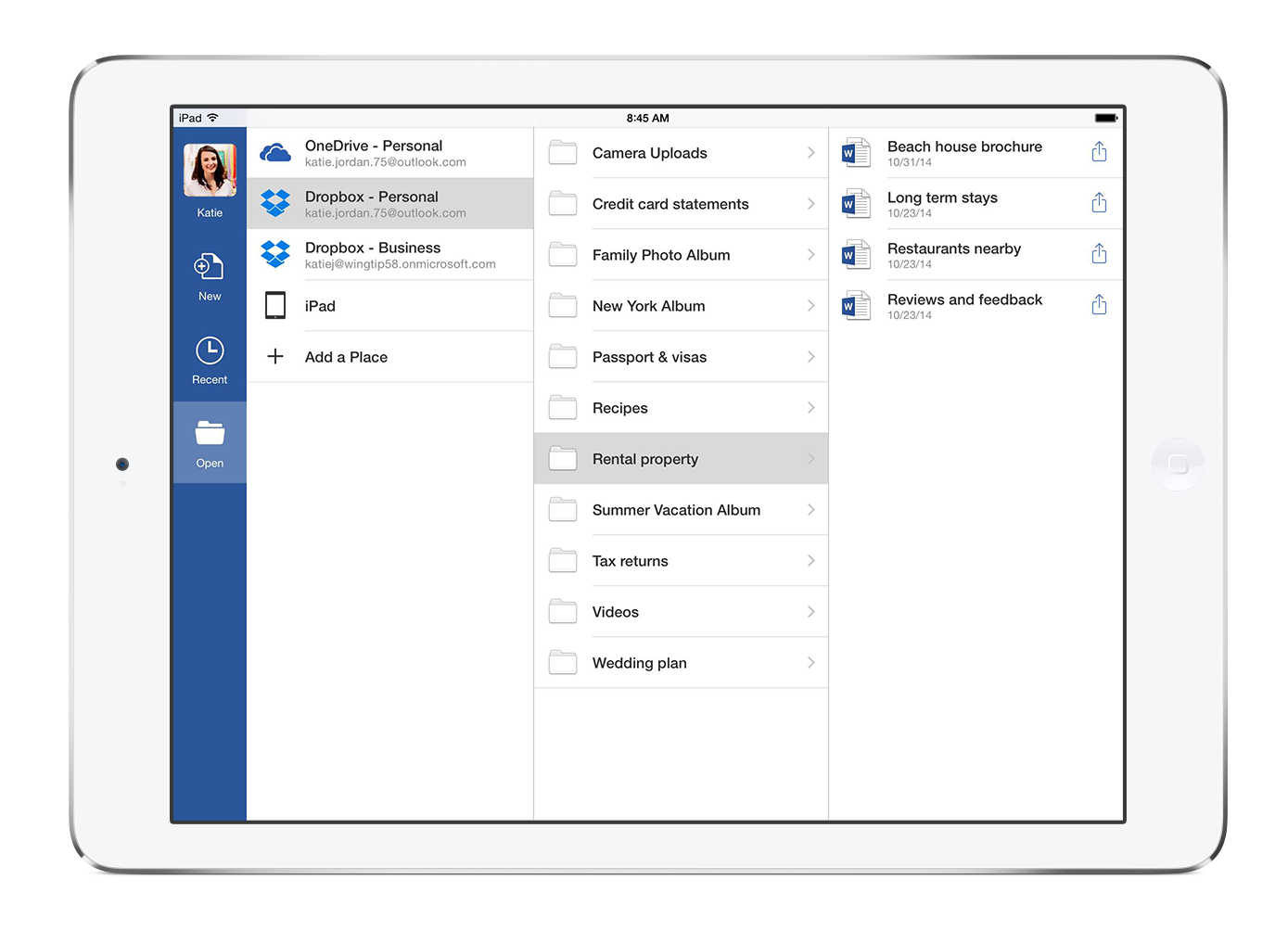
Dropbox partners with Microsoft for improved Office integration
In an unexpected announcement today Microsoft and Dropbox have revealed that they're joining forces to integrate Dropbox more closely into Office.
The link up will allow Office files to be edited directly from the Dropbox mobile app and the changes synced across devices. It works the other way too with access to Dropbox from within Office.

Microsoft breaks down business barriers with new cloud solutions
With Azure and Office 365, Microsoft already has a strong position in the business cloud market. But the company isn't resting on its laurels, it used this week's Convergence 2014 conference in Barcelona to announce a number of innovations to help enterprises gain greater benefit from the cloud.
The main announcement is that the latest Microsoft Dynamics CRM 2015 release will be generally available in December this year. The new release is designed to address the growing need for businesses to deliver seamless experiences to their customers by helping them break down the barriers between divisions.

Two clouds are better than one
Despite the news that enterprise cloud adoption is up 61.5 percent since 2010, many businesses are still skeptical of moving critical communications applications such as email and corporate data over to a single cloud vendor. Even admitted cloud enthusiasts and members of the Open Data Center Alliance, a consortium of global IT companies such as Infosys, Deutsche Telekom and SAP, have admitted that two-thirds of its members are delaying their move to the cloud due to a number of concerns around security and downtime.
Security has long been one of the primary barriers to cloud adoption, but while vendors are working hard to assuage fears on that score, the issue of unplanned downtime is another major hurdle that must also be overcome.

Understanding the cloud
How many of you really understand the cloud? If you were tasked with explaining "the cloud" to a child could you manage it?
A recent discussion with top industry professionals and cloud thought leaders revealed that, for cloud solution providers, education was the biggest hurdle in cloud service adoption. Thankfully at a SAGE hosted round table, we dissected exactly what the cloud is, what it does, and how it can benefit you.

Choose a cloud vendor that meets your needs
There is little doubt that cloud will play an increasingly important role as more and more organizations adopt cloud based strategies to underpin their IT infrastructures. Indeed, cloud hosting offers a wide variety of advantages to companies with the expertise to take advantage of it. Applications can be rolled out faster, resources can be rented rather than purchased and infrastructure can be right-sized to support monthly and seasonal peaks.
However, a global survey commissioned by iland in April 2014 and undertaken by analyst firm Enterprise Management Associates (EMA), highlighted that there are also plenty of challenges when moving to a new cloud based infrastructure. In fact, 91 percent of those surveyed experienced at least one unexpected challenge when moving to the cloud with pricing, performance, scalability and location all topping the list of issues.

Bring your own security approach protects Azure cloud apps
Securing applications in the cloud can prove a difficult challenge for businesses. Any solution needs to balance protection against accessibility and not harm performance.
Java security specialist Waratek has used the Microsoft TechEd Europe conference in Barcelona to announce an innovative bring your own security (BYOS) approach to the problem called Waratek Locker.

Twitter: Your Twitpic photos and videos are safe... for the time being
After flip-flopping between closing, then not closing, and finally closing, Twitpic has now shut up shop. But that's not quite the end of the story. There had been rumors flying round that Twitter was going to buy the image and video hosting service, but that ultimately amounted to nothing. The latest twist in the story is that Twitpic and Twitter have come to an arrangement that means content that has already been uploaded is safe. For now, at least.
In a statement on the Twitpic blog, founder Noah Everett explains that a deal has been struck with Twitter. What this amounts to is Twitpic handing over the domain and content archive to Twitter. This will keep "the photos and links alive for the time being".
How to remove devices from your Dropbox account
Dropbox is not especially consumer focused. However, it is still very popular in the cloud market for individuals. The good thing about this combination is that security insights needed for the business aspect of its model seep into the consumer product.
For example, it has much better security settings than Google Drive or OneDrive, the other two popular cloud services in the consumer space. Only Dropbox allows you to view, and remove connected devices.
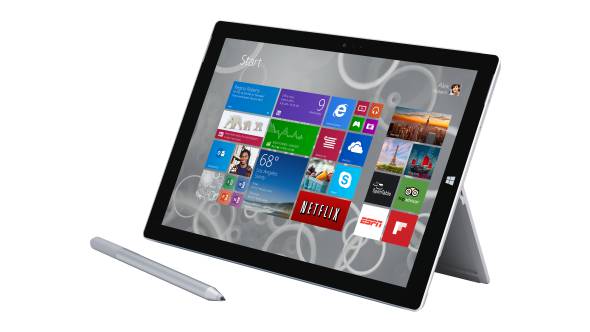
Surface generated almost $1 billion revenue for Microsoft last quarter
Anyone who was under the impression that Surface was a failure for Microsoft need look no further than the latest earnings release for proof that they're wrong. In the quarter ending September 30, Microsoft pulled in $23.20 billion in revenue, and $908 million of this came from the Surface division.
All told, FY15 Q1 represents record first quarter revenue for Microsoft, and it can be at least partly attributed to the influence of Satya Nadella, as well as the restructuring surrounding Nokia Devices and Services. There was a strong performance in the Devices and Consumer divisions, with revenue increasing 47% to $10.96 billion, while commercial revenue rose 10% to $12.28 billion.

IBM and Microsoft team up to offer greater hybrid cloud choice
One of the problems that enterprises often see in implementing cloud computing is that they risk getting tied into a single supplier for software and platform.
This is leading to more interest in 'hybrid cloud' solutions which allow the mixing and matching of features from different suppliers. Today industry giants IBM and Microsoft announce that they're working together to provide their respective enterprise software on Microsoft Azure and IBM Cloud.

Making direct interconnection of networks a Snap
As businesses increasingly turn to the cloud to store their data the weak link in the chain remains the use of the public internet to transfer information.
To overcome these concerns enterprises are looking for secure and scalable ways to directly connect data centers across the globe. Now IIX (International Internet Exchange) has acquired a platform that fully automates the buying and provisioning of network connections in under five minutes, replacing a manual process that can take as long as 30 days.