
Google updates image search to eliminate clutter, improve results
Google's image search service will be getting a revamp this week, aimed at making the search function easier to use, and to provide more relevant results. The redesign is essentially the service's first major makeover since Google Images went live in 2001.
At that time, only 250 million images had been catalogued by the Mountain View, Calif. search company. Now over 10 billion images are indexed. With such an increase in volume, obviously the search functionality will need to improve, as does the way the site displays ever larger results.

Foursquare talking to search engines over sharing data
Social networking company Foursquare is in talks with Microsoft, Google and Yahoo over using its data to help enrich search results, UK paper The Telegraph reported on Monday. According to co-founder Dennis Crowley, the data would be anonymized and then shared.
Foursquare is one of the most rapidly growing social networking services on the Internet. Last week, it signed up its two millionth user, just three months after signing up one million. Word of mouth seems to be driving a lot of the growth, as friends sign up to follow one another.

Google buys Metaweb to improve results for complex search queries
Google moved to better its search results by acquiring Metaweb, a San Francisco based company that maintains an open database of "things," and their relationships to one another. Terms of the deal were not disclosed.
Metaweb's database currently includes some 12 million items, including places, notable people, companies, and movies. Queries to the Google search algorithm would return more relevant results as a result of the company's technology, the company claims.
![One of the few official photos of HP's 'Slate' PC, as yet unnamed. [Courtesy HP]](https://betanews.com/wp-content/uploads/media/43/4326.jpg)
HP's Android tablet delayed, WebOS now takes center stage
In a sign that Hewlett Packard is becoming much more serious about WebOS following its acquisition of Palm in April, the company has apparently "tabled" its plans for an Android-powered tablet. The device was originally intended to come to market later this year.
Sources told All Things Digital Thursday that HP has no new timetable for the release of the device. Following a similar fate for the Windows-powered Slate, it certainly seems as if WebOS is the future at the company. It is not known whether the Android project may be restarted.

Hulu Plus preview launches on PlayStation 3, service to be exclusive until 2011
Today, a select group of PlayStation Plus subscribers got access to the first preview version of Hulu Plus on the PlayStation 3.
Hulu Plus is the new subscription tier for the popular streaming TV website which lets U.S. subscribers watch their favorite programs on connected TVs, Set-top boxes, mobile devices, and now video game consoles for $9.99 per month.

Report: Apple has acquired mapping company Poly9
French canadian online news site Cyberpresse said Wednesday that Apple had purchased 3D map making company Poly9, possibly indicating the company has plans to enter the competitive online mapping sector with an entry of its own.
The acquisition is the second mapping-related acquisition. A year ago, Apple silently acquired Placebase, a mapping software company. Together, the technology would enable the Cupertino company to produce a product that could be akin to Google Earth.

Bing enjoys largest growth of search services, research says
Market research firm comScore released its U.S. search rankings for June 2010, and though the search business is still soundly dominated by Google, both Microsoft and Yahoo increased their market share where Google actually lost some ground.
According to comScore, Google's market share for June was 62.6 percent, down from May's 63.7 percent. Microsoft and Yahoo each increased their search shares from 12.1 to 12.7 percent and 18.3 to 18.9 percent.
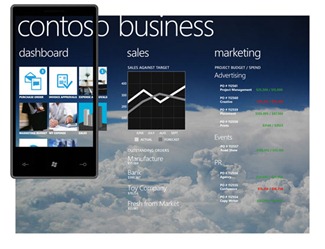
Microsoft announces Windows Phone Live, integration with Zune
There is more Windows Phone news coming from Microsoft's Worldwide Partner Conference today, and this time, instead of focusing on developers, it is focused on the consumer experience. Microsoft's Senior Vice President of Mobile Communications Andy Lees introduced a couple of major consumer-facing enhancements to Windows Phone today that extend functionality off of the phone's various "hubs" and into other connected services.
First, there will be a new addition to the Windows Live suite of Web services dedicated strictly to Windows Phone, appropriately named Windows Live Phone. Integration with Windows Live services has always been a strong aspect of Microsoft's mobile strategy, and was executed well even with the much derided Windows Mobile 6.5.

Fring calls Skype 'cowards,' Skype says Fring is damaging brand and reputation
Popular Social/Messaging/VoIP application Fring made serious waves last week when it launched a new version that supported two-way video calling over 3G for the iPhone 4. Apple's FaceTime iPhone 4 video chat, by comparison, only works while the device is connected to a Wi-Fi hotspot.
Very shortly after launching, however, support for the face-2-face video chat was halted. Fring said the feature's unavailability was the result of a blockage by Skype.

Microsoft opens up Intune beta to 10,000 more testers
Reacting to the success of its launch in April, Microsoft on Monday said it would allow 10,000 more testers into its Intune computer management service. The offering gives small and midsize companies without a vast IT department the capability to manage their computers via a web-based connection.
When the Intune beta was first made available in April, the initial 1,500 beta slots were filled within 30 hours. The company decided to hold off until this weeks Worldwide Partner Conference to open up the beta again due to the gathering's planned focus on cloud computing.

Google provides a look at Android's highly customized future with App Inventor
For anyone with an Android phone and a great idea for an app but no experience with writing code, Google has announced the ultimate solution.
Today, Google began the beta phase of App Inventor, a graphical tool in Google Labs for designing custom Android applications. Users of the tool do not need to know anything about programming to be able to create an app, package it, and upload it to their USB-connected Android phone.

Android gaming to get big boost from popular OpenFeint social platform
Android's unabated growth has been a hot topic recently, and comScore's smartphone market share breakdown released today shows that from February to May 2010, it was actually the ONLY major mobile platform to experience positive growth.
Among this growth, a complaint about the Android platform has persisted: it has no good games. While this may be a bit of an overstatement, users frequently compare the Android platform with Apple's iOS in terms of functionality, features, and apps; and iOS simply has more high quality games.

Testing YouTube's automated closed captioning beta
Back in March, YouTube gave users the ability to run an automated closed captioning feature which uses speech-to-text technology to convert a video's audio track into live subtitles. This feature was in development for more than two years, and was in private beta testing since November 2009.
The Auto-captioning feature combines some of the speech-to-text algorithms found in Google's Voice Search, and automatically generate video captions when requested by a viewer. The video owner can also download the auto-generated captions, correct the mistakes, and then upload the corrected version. Viewers can even choose an option to translate those captions into any one of 50 different languages.

Facebook begins pushing updates to photos application, tagging first
Facebook realizes that its photo application is sometimes cumbersome to use, and promised late Thursday that it is working to make things better.
The impetus behind making one of the most commonly-used features of Facebook better seems to be Facebook's acquisition of photo sharing site Divvyshot in April. In fact, the social networking site turned to Divvyshot co-founder Sam Odio -- now a product manager at Facebook -- to introduce the first enhancement: facial recognition.
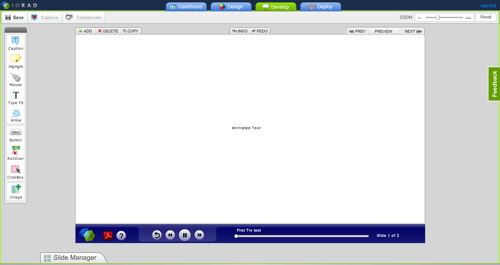
Simple tutorial creation app iorad opens in beta, automatically turns walkthroughs into annotated slides
When a new piece of software is released, companies frequently include a video of someone walking through the features of the software, explaining how it works. Unfortunately, videos like this lack the basic interaction of a step-by-step tutorial.
Now, a Web app called iorad has opened in beta, which lets developers create interactive instructions for their software completely within the browser.