
Organizations plan to invest in 'human-centered' software
A new survey shows that 76 percent of respondents consider building human-centric applications more important than it was two years ago, driven by a combination of business considerations and cultural shifts.
The survey, of over 700 application developers and IT decision-makers, from infrastructure software company Progress shows a gap between intentions and actions, however. 98 percent of respondents say human-centric app development is important, but only 34 percent are currently addressing the issue through tools, training and policy.

Almost a quarter of consumers consider cybersecurity when choosing a bank
What factors do you take into account when choosing a bank? How good the interest they offer on your savings is perhaps? Whether there's a convenient branch nearby? How easy the website is to navigate? A new study shows that 23 percent of US and UK consumers say that a bank's approach to cybersecurity is a factor when they consider opening an account.
The research from CybSafe finds that 85 percent of customers feel it important that their bank offers training about staying safe online and avoiding scams to those who want it, with 42 percent of respondents stating that such measures are 'very important'.

Dealing with the rise of hybrid and remote working [Q&A]
The pandemic led to a dramatic shift in working patterns with many more people working from home or spending less time in the office.
Recently though we've been seeing more calls for staff to go back to the office. So, have working patterns changed for good and if so how can productivity levels be maintained with remote working? We talked to Mark Cresswell, co-founder and executive chairman of Scalable Software, to find out.

Is there a better way of protecting your digital life? [Q&A]
The nature of the modern world means that we all have lots of different accounts to manage various services.
Protecting all of these can be a challenge and you can end up with lots of different tools like password managers, VPNs, anti-virus tools and more. It also leads to people getting lazy and reusing passwords.

Improving visibility into end-user computing [Q&A]
In the wake of the coronavirus pandemic we've seen greater focus on workplace flexibility with many employees being in the office for fewer days each week.
But to make this work, enterprises must be able to track the state of their end-user computing to understand their access, performance and user satisfaction.
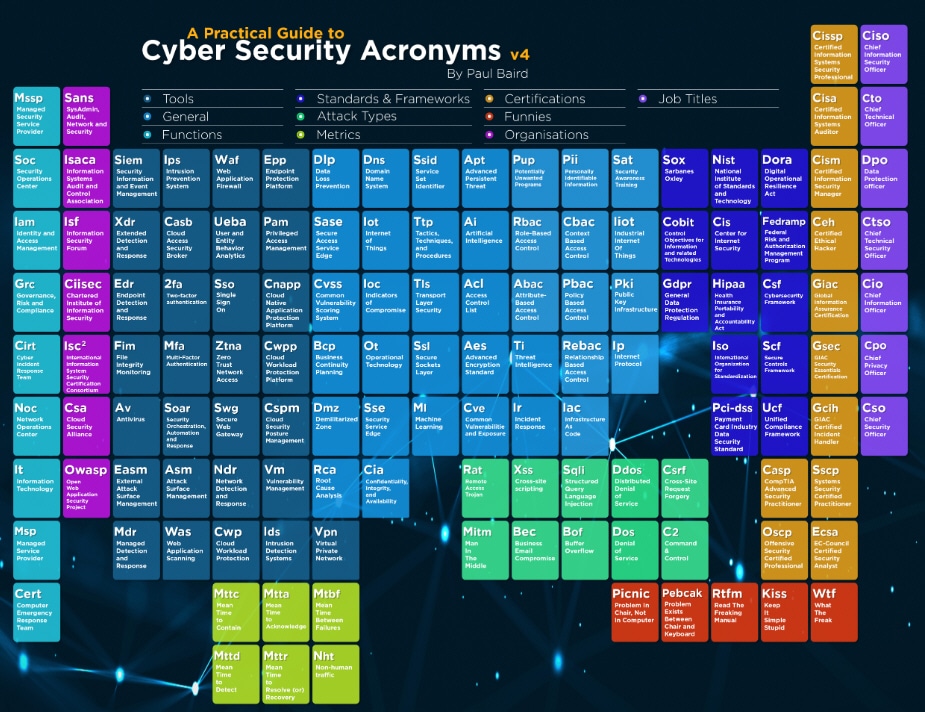
Making cybersecurity elementary [Q&A]
There are so many terms and acronyms used in the cybersecurity sector that it can be a little overwhelming at times, even for people who work in the industry.
Paul Baird, director of cyber security operations and engineering at Advanced Software and fellow at the Chartered Institute of Information Security (CIISec) has produced a round up of all the terms that you might ever need to know in the security space in a format based on the periodic table of elements.

Brits reach for the phone when seeking support from businesses
New research finds that 69 percent of British adults will contact a business via phone call first before trying other methods when seeking assistance.
The study from telecoms company Gamma Communications shows 38 percent of 2,000 people surveyed say direct phone calls are their preferred method of communication with businesses over other channels such as emails, web chats, social media and video calls.

How the internet is keeping over 50s alive
We hear a lot about the negative aspects of the internet, but a new report from Atlas VPN shows that internet users aged 50 and older have a 33 percent lower risk of death than non-users.
Older adults who use the internet have a 19 percent lower risk of a stroke than those who do not, while internet use among individuals aged 50 and above is also associated with a 17 percent lower risk of diabetes.

Generative AI sparks excitement and uncertainty
A new survey from Betterworks shows that the arrival of generative AI has generated excitement, experimentation, innovation, fear, and uncertainty among employees and organizations.
The research, conducted by Propeller Insights, shows over half of employees are using GenAI at work for complex activities and believe it has the potential to reduce bias across a range of processes, despite the fact that only 41 percent of organizations are actively evaluating it or have made GenAI a priority.

Information overload puts cybersecurity at risk
Over half of today's office workers are ignoring important cybersecurity alerts and warnings due to information overload from digital communication.
New research from CybSafe, based on a survey of 1,000 office workers, shows 54 percent have ignore warnings, while 47 per cent admitted to feeling the information overload is having an impact on their ability to identify threats such as suspicious emails.

'Application Generation' wants better digital experience
A new report from Cisco finds 62 percent of consumers say that their expectations of digital experiences are far higher now than they were two years ago.
It also charts the rise of what it calls the 'Application Generation.' Aged 18-34, this group relies on applications like no generation before, having used them to navigate the pandemic and today, to live and thrive in a hybrid world.

Majority of employees want GenAI in their lives
Employees are embracing generative AI and its capabilities, with 86 percent of respondents to a new survey saying they want to use GenAI at work, and 52 percent seeing GenAI as a great tool to find more relevant information.
The study, of over 2,000 US adults conducted by Arlington Research for Coveo, finds 56 percent of respondents believe GenAI tools would save them at least an hour a day at work. However, more than 50 percent of respondents' companies don't have a GenAI policy in place to enable their employees to leverage these capabilities safely and privately.

The (not so) secret behind successful DEI programs: build in diversity, equity and belonging, don't bolt it on
Why do organizations launch diversity, equity, and inclusion (DEI) programs? Simple: It's the right thing to do. Equity and inclusion are basic human rights. DEI is also better business. Multiple studies show companies highly rated for DEI enjoy superior employee engagement and belonging, EBIT margins, total shareholder return, revenue growth, and change agility.
DEI is clearly a slam-dunk must-have. In an HR context, DEI is the philosophical core of building and creating equal career development opportunities for all employees.

A quarter of IT professionals are considering quitting their jobs
New research released today by Ivanti shows that a quarter of IT professionals are seriously contemplating leaving their current jobs within the next six months, potentially costing US companies upwards of $145 billion dollars.
The report also shows IT staff are 1.4 times more likely to disengage and 'quiet quit' their jobs compared to other knowledge workers.

60 percent of consumers prefer a fintech app to an accountant
Fintech apps have simplified financial management to the point where 60 percent of people will now seek advice from personal finance tools before reaching out to financial professionals.
A new survey from Capterra makes gloomy reading for accountants as it finds 64 percent of fintech users feel that these tools have significantly reduced their reliance on financial advisors.