Built-in safety measures create a false sense of security
It's increasingly common for hardware manufacturers and software developers to build in various security measures to protect users.
However, a new survey by cloud encryption company Alertsec reveals that these standard security precautions may be creating a false sense of security for PC and mobile users.

Apple's Tim Cook on weakening encryption: 'Any backdoor is a backdoor for everyone'
Tim Cook is concerned about privacy. The Apple CEO has spoken out against requests from governments for backdoors into encrypted products. Following the UK government's decision not to ban strong encryption but to force companies to provide authorities with access to encrypted data upon production of a warrant.
This is effectively a backdoor into products and Tim Cook gives a stark warning: "Any backdoor is a backdoor for everyone". He also suggests that security is something that needs to be tackled on a global scale rather than by individual countries.
Linux users targeted by new Linux.Encoder.1 encryption ransomware
Extortion is just the latest in a series of weapons being used to terrorize computer users and technology companies. One of the most recent victims was ProtonMail which found itself the subject of a DDoS attack and a ransom demand -- and despite paying up, the attacks continued. But individual users also have their feet held in the fire by ransomware.
It's something that mobile users have become familiar with. Android users have been hit by malware that encrypts the contents of their phones and renders it inaccessible until a ransom is paid. It's a problem that has also affected Windows users, and the latest target is Linux. Web servers powered by Linux are being targeted by the Linux.Encoder.1 crypto-ransomware.
Most IT pros are against UK's Investigatory Powers bill
Late last week, the UK government introduced a new Investigatory Powers bill, which requires Internet service providers to keep a record of the Internet activity of everyone in Britain, as well as cracking down on encryption and increasing government surveillance.
The initial reaction from industry professionals was mixed, but a new survey from Swiss data bank Artmotion has found that a massive 87 percent of IT leaders disagree with the government’s plan to reduce the strength of data encryption.

ProtonMail suffers DDoS attack, preventing secure email correspondence
Given all the spying that goes on these days it's no wonder that people are looking for more private ways to get online and stay in touch with one another. Secure email -- which is what Edward Snowden chose to use for his communications with journalist Glenn Greenwald of The Guardian -- is proving more and more popular.
Unfortunately, not everyone is keen on such services. One such secure email provider, ProtonMail, has been taken down today, by a DDoS attack. Who would want to attack the service? That's the million dollar question and the list of potential attackers could be quite long. A bevvy of agencies have spoken out against encryption, going so far as asking for backdoors into data, blithely oblivious to the consequences of such action. ProtonMail was designed securely and doesn't possess records of correspondence, so law enforcement can't demand data.
ISPs to be forced to store users' browsing history for a year
The UK government today published a draft version of the Investigatory Powers Bill setting out a framework for new surveillance powers. Among the proposed measures is a requirement for ISPs to keep a record of every website their customers visit for 12 months.
Fears that encryption would be banned were not realized, but privacy campaigners will be disappointed that internet connection records will be accessible by police and security services without the need for a warrant. The NSA-style data collection is indiscriminate. Data will be stored about everyone's internet usage, not just those suspected of crime, terrorism and the like.

89 percent of Americans fail to recognize the threat posed by stolen health records
Most people worry about the risk of their financial information being stolen, but a new survey from data security platform supplier Vormetric reveals that many are unaware of their vulnerability to medical data theft.
Of over 1,000 US adults polled by Wakefield Research on behalf of Vormetric, only 11 percent included medical records in their top three selections for personal data they would be most concerned to have lost in a data breach.

Government forced to U-turn on internet spying and encryption ban plans
The UK government has performed an about-face on plans for controversial internet surveillance plans. The "snooper's charter" may have been kept at bay so far, but plans were afoot to force ISPs to retain the browsing histories of their customers. Prime Minister David Cameron had also strongly hinted at a desire to ban the use of strong encryption.
Today Home Secretary Theresa May told the BBC that security agencies such as GCHQ would not be granted the power to check web browsing histories. She also said that an encryption ban would not be implemented. Dismissed by some as little more than 'spin', the U-turn will be widely seen as the government's response to suggestions that any extension to online surveillance powers would be blocked in the House of Lords. While this is something of a climb-down for the government, it is not the end of the battle for privacy groups.

Tor Messenger Beta brings ultra-secure messaging to the masses
When talk turns to privacy and online anonymity, it isn’t long before Tor enters the discussion. The Tor browser has become famous for its use of .onion domains, making it easier for people to browse the web without fear of being snooped upon.
Now there is a new tool for the security-minded to play with. Tor Messenger Beta is -- as you would expect -- a chat tool that routes traffic through Tor. One thing it has in its favor right from the start is that this is not a weird proprietory app -- it can be used in conjunction with existing networks such as Jabber (XMPP), IRC, Google Talk, Facebook Chat, Twitter, Yahoo, and more.

UK government says app developers won’t be forced to implement backdoors
The UK government is sending mixed messages about how it views privacy and security. Fears have been mounting since Prime Minister David Cameron wondered aloud "in our country, do we want to allow a means of communication between people which we cannot read?" -- his view obviously being that, no, we don’t want to allow such a thing.
Following the revelations about the spying activities of the NSA and GCHQ, public attention has been focused more than ever on privacy and encryption, Cameron having also suggested a desire to ban encryption. Today, some fears were allayed when it was announced that the government was not seeking to require software developers to build backdoors into their products. That said, the government said that companies should be able to decrypt 'targeted' data when required, and provide access to it.

Self-encrypting Western Digital drives have serious security flaws and backdoors
Security researchers have discovered that a number of Western Digital drives -- including many My Passport and My Book devices -- are blighted with serious vulnerabilities that leave encrypted data stored on them accessible by attackers. The self-encrypting drives were found to be so insecure that it was possible to recover data without the need for the relevant password.
A paper published at the end of September provides details of how some Western Digital drives are susceptible to brute force type attacks, and there are even some models which store the decryption key on the drive. Western Digital would almost certainly rather people were talking about its purchase of SanDisk, but people are more likely to be interested in the company's seemingly terrible approach to security.

Tim Cook: We shouldn't have to choose between privacy and security
In a debate held on Monday, Apple’s CEO Tim Cook argued with government agencies over privacy and backdoor issues once again, stressing that a backdoor is not a good solution.
According to a Bloomberg report, he squared off with NSA Director Admiral Michael Rogers at the Wall Street Journal Digital Live technology conference in Laguna Beach, California.
US has no plans to impose encryption backdoors
US President Barack Obama’s administration will no longer pursue legislation which allows the government to legally spy on its citizens, Reuters reported on Monday.
A White House spokesperson confirmed the move, announcing a change in strategy for the US government, where it will go for a more patient approach.
ARCHOS announces the privacy-centric GranitePhone to take on the Blackphone
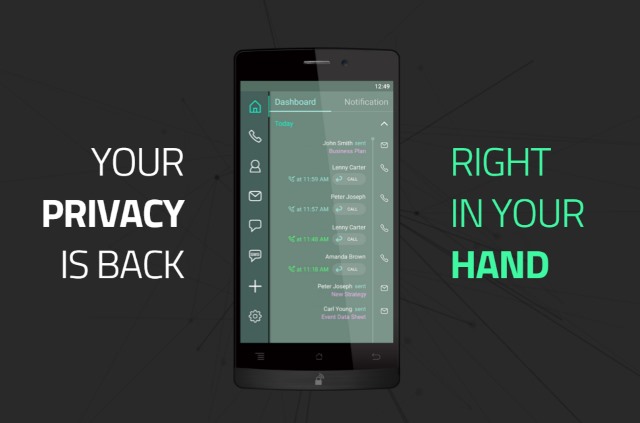
Smartphone owners will often argue over which mobile platform is the most secure, but if you're looking for the ultimate security, you need to step away from the mainstream. Silent Circle is probably the best known off-the-beaten-track company thanks to its ultra-secure Blackphone, but now there is a new contender: the GranitePhone by SIKUR.
Just as the Blackphone 2 runs the custom-made Silent OS 2.0, so the GranitePhone is driven by Graphite OS. It's a handset aimed at not only governments and businesses looking to secure their communications and data, but also individuals who are particularly concerned about their privacy.
US government will not force companies to decode encrypted data... for now
The Obama administration has announced that it will not require companies to decrypt encrypted messages for law enforcement agencies. This is being heralded as a 'partial victory' by the Electronic Frontier Foundation; partial because, as reported by the Washington Post, the government "will not -- for now — call for [such] legislation".
This means that at the moment companies will not be forced to build backdoors into their products, but there is no guarantee that this won’t happen further down the line. The government wants to continue talks with the technology industry to find a solution, but leaving things in limbo for the time being will create a sense of unease on both sides of the debate.