
New non-profit seeks to get justice for cybercrime victims
Internet and cyber crimes cause financial loss and have emotional impact for people around the world. Now though a new non-profit organization has been formed to pursue justice for victims of these crimes.
Intelligence for Good aims to make the internet a safer place for everyone, and to ensure that cybercriminals are not only brought to justice but fear the consequences of scamming innocent people.

How the .ai domain is benefiting cybercriminals (and a small Caribbean island)
Given all the interest in AI at the moment it's no surprise that cybercriminals are keen to cash in with a rise in AI themed attacks.
One way of doing this is with a .ai domain name. An unexpected beneficiary of this is the British Overseas Territory of Anguilla which has .ai as its country code.

Google is making it easier to get the best prices and find discount codes
Google is introducing new tools in both Chrome and Google search that should help to make online shopping a little cheaper. With the holiday season just around the corner and shoppers eager to save money, the timing is ideal.
Chrome users are gaining access to a new feature that will seek out discount codes much like services such as Honey. There is also a new section landing in search results that makes it easier to track down products that are on sale.

Prolific Puma protects pernicious phishing plotters
We're all familiar with link shortening services, those handy tools that allow you to shrink URLs down to a manageable size to make them easier to share.
Of course in the past these have been used for nefarious purposes too, hiding the true nature of a link to get people to click on phishing or malware messages. Now though researchers at Infoblox have uncovered something even more sinister, the operation of a shady link shortening service made especially for cybercrime.

Flaw in social login could expose billions to account takeover
New research from Salt Labs highlights API security vulnerabilities uncovered in the social sign-in and Open Authentication (OAuth) implementations of multiple online companies.
Sites affected include Grammarly, Vidio, and Bukalapak. The flaw has now been fixed but could have allowed for credential leakage and enabled full account takeover. Salt Labs also reports that 1,000s of other websites using social sign-in mechanisms are likely to be vulnerable to the same type of attack, putting billions of individuals around the globe at risk.

Google.com could be about to undergo its biggest change in years
There are some significant changes being tested on Google.com. A major focus on news could on the horizon as Google explores adding a Google Discover-style newsfeed to its search engine homepage.
Google Discover is something that will be familiar to many mobile users, offering up an algorithm-driven personalized selection of news stories. Now very much the same feature is being tested for desktop users.

Businesses struggle with IoT device connectivity
A new report finds that IoT success is being jeopardized with just one percent of respondents achieving better than 98 percent connectivity levels on average across their devices.
The study, by connectivity solutions specialist Eseye, shows that only 16 percent of respondents are achieving more than 95 percent connectivity. Mission-critical IoT devices -- medical equipment for example -- require near-100 percent connectivity and the fact that companies are prepared to accept poor performance is concerning.

Remote work creates extra challenges for network teams
The ongoing shift to hybrid and remote work environments has resulted in key changes to the roles and priorities of network administrators in order to address new connectivity challenges and prioritize and preserve a secure, productive end-user experience.
New research by Enterprise Management Associates (EMA) and Auvik shows 73 percent of network professionals reported an increase in workloads, either slightly or significantly, following the shift from traditional to hybrid work environments.

Almost 8 million DDoS attacks launched in first half of 2023
Cybercriminals have launched approximately 7.9 million DDoS attacks in the first half of 2023, representing a 31 percent year-on-year increase.
A new report from NETSCOUT shows global events like the Russia-Ukraine war and recent NATO bids have driven recent DDoS attack growth.

Google is bringing the Read Aloud feature of Microsoft Edge to Chrome
There is a great deal of copying of features and ideas in the browser world, so it can be hard to say which is "best". From Chrome and Firefox to Edge and Opera, there is so much inspiration and cross-contamination that it's difficult to find much that is unique.
The latest example of this is Google using the latest Canary build of Chrome to introduce its own version of a feature found in Microsoft Edge. Google's implementation of "Read Aloud" is near-identical to Microsoft's, but Chrome has a significantly larger user-base meaning that this handy tool will be enjoyed by more people.
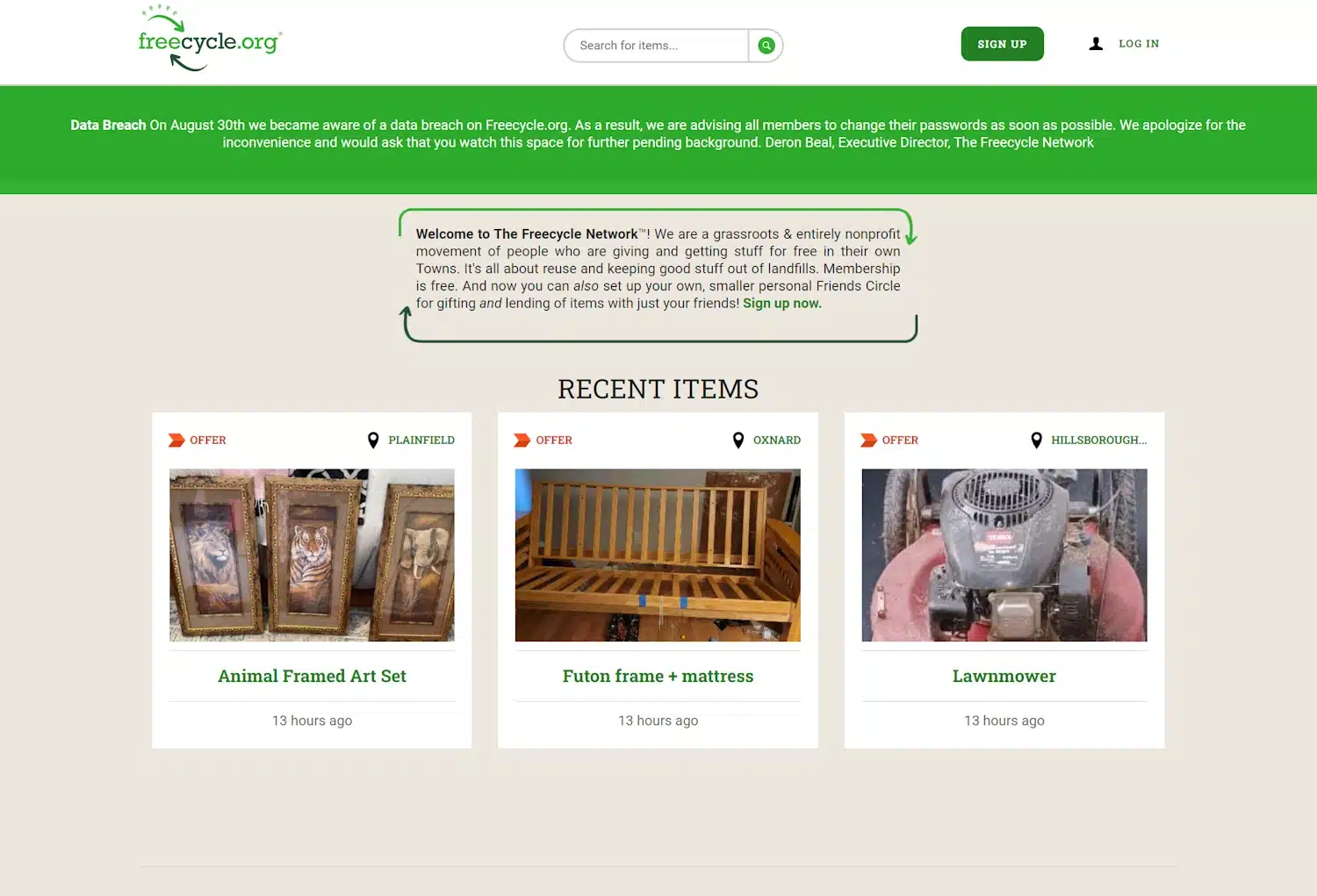
Millions of Freecycle users need to change their passwords following a huge data breach
Swap-unwanted-stuff-for-free site Freecycle has acknowledged a security breach that took place at the end of last month. Hackers were able to access a wealth of data including usernames, User IDs, email addresses and passwords.
The organization says that it has notified the "appropriate US authorities" of the incident, as well as the Information Commissioner's Offier (ICO) in the UK. Few details of what happened have been revealed, but Freecycle is advising all members to change their account passwords as a security measure.

How the metaverse is set to change the way businesses communicate [Q&A]
Increased use of the metaverse and other immersive spaces using VR, AR and digital avatars, is going to change how businesses communicate with their customers.
In an increasingly globalized world part of the issue is how real time experience will cope with the use of different languages. This is expected to put real pressure on automated and machine translation services to deliver fast, accurate results.

74 percent of cloud and web applications with PII are vulnerable to exploits
New research reveals a high proportion of vulnerable public cloud, mobile and web applications exposing sensitive data, including unsecured APIs and personal identifiable information (PII).
The study from CyCognito, based on analysis of 3.5 million assets across its enterprise customer base, finds 74 percent of assets with PII are vulnerable to at least one known major exploit, and one in 10 have at least one easily exploitable issue.

Browser extensions are making a comeback in Firefox for Android
Mozilla has issued a notice to developers, saying that it is preparing to launch support for an open ecosystem of extensions on Firefox for Android.
Pointing out that the move will make Firefox the only major Android browser to support such an ecosystem for extensions, Mozilla says everything sound be in place before the end of the year. The change means that it should not be long before Firefox users with Android handsets are able to use more than just the handful of extensions that are currently available.

IP address view helps guard against attacks
Many organizations need help gaining visibility into the IP addresses across their whole environment in order to understand their attack surface.
New enhancements to the Detectify platform include an IP Addresses view, this lets users gain seamless access to a comprehensive list of all IPs associated with their domains.