
McAfee's new security hub gives you tips on how to stay safe online
Security experts at McAfee have unveiled a new cyber-security education hub, aimed at making people stay safer online. It is called the Ultimate Guide to Security Threats.
The security firm decided to create the hub after realizing that many people are still fairly uneducated when it comes to cyber-security. At the same time, cyber-crime is growing at an unprecedented rate.

Broadband is not an automatic right in rural areas of the UK
While most of the UK enjoys fast (or superfast if you want to swallow the rhetoric) broadband, there are still numerous pockets plagued with dial-up speeds. Talks had been underway between the government and broadband providers about whether the aim of providing broadband access to 95 percent of the country by the end of 2017 was ambitious enough.
But it is the remaining 5 percent that’s concerning. 95 percent coverage might sound impressive, but 5 percent of the population is still a huge number of people. The government has now decided that broadband is not a right to which households are entitled. Rather than forcing providers to install connections for everyone, the Universal Service Obligation (USO) will require homes and business to submit requests for connection; and, despite the name, there is no obligation for these requests to be honored.

Adblock Plus and Flattr help sites earn money from donations even if visitors block ads
Adblock Plus has for some time tried to find a way to balance the needs of websites to display money-making ads, with the preferences of visitors who do not want to see such ads. After experimenting with its Acceptable Ads program whereby some discrete ads are allowed to slip through the net, Eyeo, the company responsible for Adblock Plus, is teaming up with Flattr to give sites another way to make money.
The scheme is called Flattr Plus, and it gives people the chance to pay a monthly subscription to access content on sites. It's a similar idea to an existing payment option run by Flattr, but the monthly subscription is used as an alternative to paying for access to individual articles.

Free online service helps uncover malicious domains
Phishing sites that use domain names similar to a legitimate company’s, along with cybersquatting are a major problem. Open DNS recently claimed that cyber squatters have become more active during the US election campaign.
Web security solutions company High-Tech Bridge is launching a new, free, online service that will allow anyone to instantly detect typosquatted, cybersquatted or phishing domains targeting their domain or brand name.

More UK adults taking online courses
Adults in the UK are turning to online learning platforms in order to stay competitive in their fields and to learn new skills, despite their increasingly busy schedules.
Coursera, which offers online courses from some of the top universities worldwide, has noticed that the number of new users registering for its educational platform has increased by 50 percent over the course of the past 12 months.

Free Wi-Fi hotspots are a major security threat for businesses
Free Wi-Fi hotspots are the biggest security threat for mobile workers, according to new reports.
The recently released iPass Mobile Security Report says that 62 per cent of organizations are banning their mobile workers from using free Wi-Fi hotspots, with another 20 percent planning on doing the same in the future.

ISPs offer inadequate DDoS protection
A new report from Corero Network Security, which provides security solutions against distributed denial of service (DDoS) attacks, shows that 85 percent of enterprise end users want their Internet Service Providers (ISPs) to offer better protection against DDoS attacks.
To compile its research, the security company polled more than 100 ISPs and 75 enterprise customers in regards to their DDoS mitigation strategies. Corero found that a high number of ISPs still rely on outdated technologies to protect their customers from these attacks.

PC Internet usage is dropping
ComScore, an online measurement specialist, has released new data that shows that less users are using desktop devices to access the Internet and are instead browsing on their smartphones and tablets.
The company has noticed a steep decline in the overall time people have spent online in the US using both desktop PCs and laptops.

Mozilla to make internet more inclusive
Years ago, personal computing and the internet was a hobby reserved for those with a lot of money. Unlike today where you can buy a Chromebook for under $200, a desktop could cost $3,000 or more -- preventing many from participating. In other words, even in many of the richest countries in the world, many people could not afford to surf the web.
Nowadays, however, the number of people owning internet-connected devices has exploded. Heck, many households have multiple such devices and Wi-Fi is ubiquitous. Sadly, not everyone in the world has internet access, and many folks are computer illiterate -- including oppressed women in some countries. Thankfully, Mozilla is looking to change this by making the internet more inclusive.

Women and black writers are the biggest victims of abusive online comments
Online abuse is a serious problem. While the likes of Twitter and Facebook are great platforms for trolls to indulge their hobby, it's the good, old-fashioned comments section where you'll find some of the most obvious examples of threats and abuse. The problem is so great that many websites have taken the seemingly drastic step of completely disabling comments on stories, while others do so on an individual basis for articles that could prove controversial.
Clearly this is less than ideal. In many ways it could be viewed as a form of censorship that curtails freedom of speech, and comments can be a valuable way to help a story to evolve. For many sites, comments are a black and white topic; on or off. Moderation -- again, often seen as a type of censorship -- is often employed, but this does little to stop abuse aimed at writers. The Guardian has conducted research into the abuse dealt out via comments on its site, and the findings make for disturbing reading.

Pedants revolt -- the Internet is dead, long live the internet
In a move that's likely to prove somewhat divisive -- old-fashioned stick-in-the-muds on one side, sensible people on the other -- the Associated Press is dropping the capitalized Internet from its widely-adopted style guide.
For what seems like far, far too long, the internet has been treated by the AP and countless websites, magazines and newspapers as a proper noun, driving those of a sensible bent mad. But now it's only a matter of weeks before Internet is consigned to history and 'internet' will become the norm.

The rise of the advanced persistent bots
Overall bad bot activity is decreasing, but the number of advanced persistent bots is up according to a new report.
The 2016 Bad Bot Landscape Report from Distil Networks reveals that 88 percent of all bad bot traffic has one or more characteristics of an advanced persistent bot, one that's able to mimic human activity and evade detection.
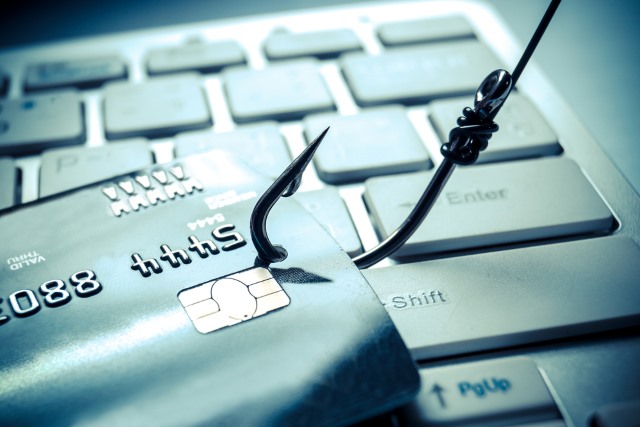
Police: if you fall victim to online fraud, it's your own fault
Victims of online fraud are to blame for their misfortune and should not be rewarded with a refund for money they lose. This is the view of UK Metropolitan police commissioner Sir Bernard Hogan-Howe who says that banks should not pay money lost to online fraud as the victims have not taken their security seriously.
Rather than offering refunds to customers, banks should instead be encouraging them to use stronger password, keep antivirus software up to date, and generally be more careful. It's a view that’s certainly going to prove controversial and raises the question of whether the carrot or the stick is the best approach to tackling online fraud.

Fighting censorship: Edward Snowden, Amnesty International, AdBlock and Pussy Riot
Online advertising is incredibly divisive, and for World Day Against Cyber Censorship, AdBlock is opting to replace banner ads that would normally be blocked with links to Amnesty International. The human rights group is fronting an anti-cyber-censorship campaign, joined by Edward Snowden, Pussy Riot (famous for rubbing up Russia's President Putin the wrong way) and Ai Weiwei.
The aim of the campaign is to promote freedom of speech online but highlighting examples of free speech being censored -- not just in obvious places like China and North Korea, but also the United States and the United Kingdom. Government control of the internet is something that many think is restricted to limiting what journalists are able to publish online, but as the campaign highlights it's a problem that can affect anyone.

Your office distractions are quite costly!
OfficeGenie.co.uk has conducted a research to see how much time people are wasting being distracted at the office, and it’s not good news. Those silly cat videos you watch on Facebook every day at work are costing the country billions of pounds. Yes, you read that correctly.
On average, British workers spend more than three quarters of an hour (more than 45 minutes every day) being distracted online. When you combine how much that costs, and how many workers there are in the UK, you come to a figure of £88 billion each year.