
68 percent of enterprises are not ready to cope with DNS attacks
A new study reveals that 68 percent of the top 50 companies on the Fortune 500 rankings are not adequately prepared for the next major DNS attack.
The Global DNS Performance Report by network intelligence company ThousandEyes shows that DNS best practices are not widespread in major enterprises and SaaS providers, leaving them needlessly vulnerable.

Symantec delivers integrated approach to cloud security
Companies increasingly rely on cloud applications and infrastructure for their critical systems. Protecting these is vital and to help businesses do so, Symantec is launching an expansion to its cloud security portfolio.
Symantec’s Cyber Defense Platform offers a broad range of protection, providing visibility and control for virtually any cloud app and integrations with CloudSOC CASB, Cloud Workload Protection (CWP) and Data Loss Protection (DLP).

77 percent of CISOs get conflicting advice on changing regulation
A new report released ahead of the Infosecurity North America event to be held next month, shows that the majority of chief information security officers (CISOs) are receiving conflicting advice about new or changing regulation.
In addition, when asked what regulatory bodies should do to help promote a smooth rollout of privacy regulations, 35 percent of respondents say that regulators should provide clearer communication about compliance requirements.

Basic identity and access management tasks are still a struggle for many
One in three organizations rely on outdated and manual methods, like spreadsheets, to manage privileged accounts, and there's widespread lack of confidence among IT professionals in access control and privileged account management programs.
This is among the findings of a new report from One Identity which also shows one in 20 organizations have no way of knowing if users retain access even after they’ve left the organization.

Attacks on IIS web servers soar over the last quarter
Attacks targeting IIS servers have shown a massive 782 times increase, from 2,000 to 1.7 million, over the last quarter according to a new report.
The report from threat protection specialist eSentire reveals that most attacks targeting IIS web servers originated from China-based IP addresses.

4.5 billion records compromised in first half of 2018
The first half of 2018 saw 945 data breaches which led to 4.5 billion data records being compromised worldwide, according to a new report.
The latest Breach Level Index from digital security company Gemalto shows that compared to the same period in 2017, the number of lost, stolen or compromised records increased by a massive 133 percent, though the total number of breaches slightly decreased, suggesting attacks are getting more severe.

Google implements new Play Store policies for apps that request SMS and Call Log permissions
Google has introduced privacy and security focused changes as part of an update to Google Play Developer policies. In a move designed to protect sensitive data, there are new rules for apps that request SMS and Call Log permissions.
With immediate effect, it will only be possible for apps configured to be the default calling or text app to access phone and SMS data.

After failing to disclose user data leaks, Google is shutting down Google+ and improving APIs
The private data of nearly half a million Google+ users was exposed to third-party developers, and Google failed to notify anyone. A bug in Google+ APIs meant that users' names, email addresses, occupations, gender and age were accessible from 2015 until Google discovered and patched the problem in March this year.
Despite the data possibly having been accessed by 438 apps, Google chose not to go public about the security breach until now. And in a dramatic move, the company has announced that it is shutting down Google+ for consumers. Google has also revealed details of Project Strobe, an audit program through which it discovered the problem.

Artificial intelligence used to identify social engineering risks
Security awareness training company KnowBe4 is launching a new version of its platform using artificial intelligence to identify evolving risks.
It includes a Virtual Risk Officer that helps security or IT professionals identify risks at the user, group or organizational level, resulting in better decision making for their security awareness plans.
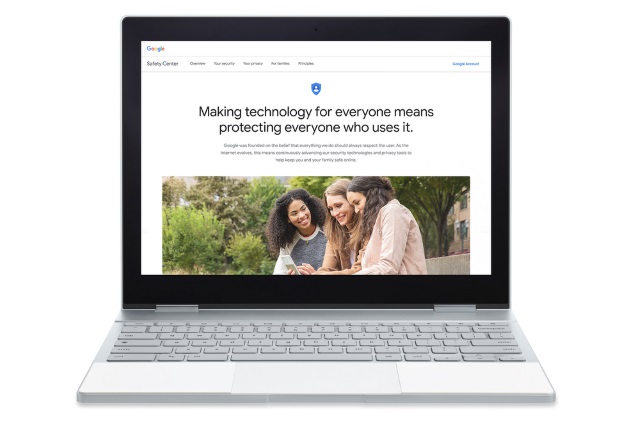
Google Safety Centre arrives in Europe -- or Safety Center... Google hasn't decided
Google has announced that its Safety Centre hub is rolling out across Europe. The announcement means that people in Belgium, France, Germany, Italy, the Netherlands and the UK have access to Google's selection of tools and tips for staying safe online.
The launch has been timed to coincide with European Cyber Security Month, but Google doesn't quite seem to have decided how to spell the name of its own offering.

Understanding the privacy paradox
In the modern world people often say they care about privacy, but their actions don't reflect their words. Exploring this privacy paradox is a new infographic from privacy app company Keepsafe.
It shows that 35 percent of people have concerns when making purchases on their mobile devices, but 43 percent do so anyway in the name of convenience.

DevOps and digital transformation are creating more insecure apps
For enterprises looking to build new applications as the cornerstone of their digital transformation initiatives, techniques like DevOps are undeniably attractive.
But while they speed up development they also mean that nearly 70 percent of every application is made up of reusable components like third-party libraries, open source software. This means that applications can easily inherit the vulnerabilities in those components.

Insiders cause more than half of data breaches
Most companies consider hacker attacks to be the most dangerous threat, but according to a new report, insiders cause the majority of security incidents by either malicious or accidental actions.
The study from threat detection specialist Netwrix looks at the experiences and plans over 1500 organizations have in addressing IT risks. The insider threat is underlined by the fact that 44 percent of respondents either don't know or are unsure what their employees are doing with sensitive data.

Data theft malware targets Fortnite players
It's no surprise that the release of a new season of Fortnite has led to a rise in scammers keen to exploit gamers who are eager to sample the new software.
Among a rash of supposed free passes and free Android versions of the game that hide surveys and other nuisances, researchers at Malwarebytes have uncovered a malicious program seeking to steal data and Bitcoins.

67 percent of organizations believe hackers can penetrate their network
Around two-thirds of executives and IT professionals responding to a new survey believe that hackers would be able to penetrate their networks.
The study from security and application delivery company Radware focused on global companies and reveals that at least 89 percent of respondents have experienced attacks against web applications or web servers of the past year.