
Mozilla's Glass House experiment reveals lax attitudes to online privacy
The discussion about online privacy is something that rumbles on. Those who know what is happening with personal information on the internet are aware of the inherent risks, but these are being joined by increasing numbers of the previously-technologically-illiterate who are coming to understand what being online means.
To highlight the implication of third party tracking and data sharing, Mozilla ran an experiment in Hamburg, Germany. As well as bringing the issue of privacy to people's attention in quite dramatic style, the experiment also aimed to educate people about security and privacy through expert discussions. Some of the public reactions are priceless.

EFF accuses Google of sneakily gathering data about students
The Electronic Frontier Foundation claims that Google is gathering data about school children, including their web searches. In a complaint to the Federal Trade Commission about the search giant, the EFF gives details of the deceptive usage tracking it says was uncovered while conducting research for its Spying on Students campaign.
The campaign, which launches today, aims to "spread the word about companies collecting students' data and launching a campaign to educate parents and administrators about these risks to student privacy". At the center of the controversy are Chromebooks and Google Apps for Education.
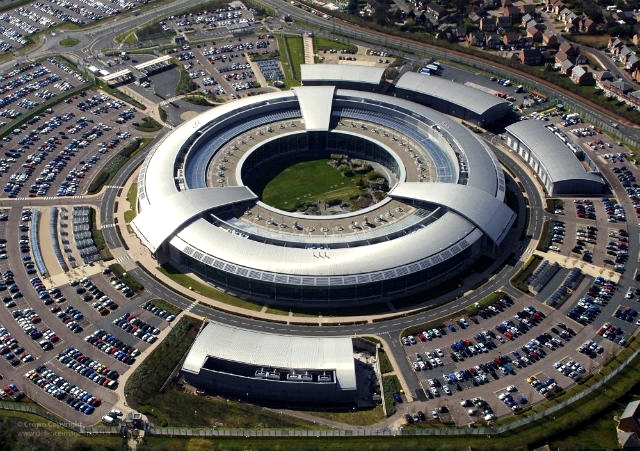
GCHQ accused of "persistent" illegal computer hacking
Court documents released during a court case brought by Privacy International show that GCHQ -- the UK version of the NSA -- has engaged in "persistent" illegal hacking. The targets of the intelligence agency's surveillance include computers and phones around the world without the need for individual warrants.
There is concern about the use of "thematic warrants" which allows GCHQ to hack computers with very little justification or oversight, and with very broad remits. Privacy International is involved because there are clear privacy issues involved in GCHQ's activities, and it is seen as being of greater importance than ever with renewed interest in the Investigatory Powers Bill.

Microsoft's enterprise security software now offers PUA protection
Microsoft has started to offer potentially unwanted application (PUA) protection in its anti-malware products for enterprise firms.
The news means that businesses will finally have an easy way of removing adware, browser hijackers and any other piece of software that deploys programs without the user’s knowledge or consent.

Some VPN services might expose your IP address
Just because you’re hiding behind a VPN (virtual private network), it doesn’t mean your real IP address cannot be traced. Those are the results summarised in a report by security firm Perfect Privacy, which says that it has found a vulnerability "in a number of providers".
The flaw, described as "port fail", affects virtual private network providers which offer port forwarding and do not have appropriate protection against the vulnerability.

How DDoS attacks have evolved in 2015
As with most other cyber threats, the world of DDoS attacks seldom stands still, with new techniques constantly evolving to make them more effective and harder to defeat.
Security strategist Andrew Lemke, writing on the IBM Security Intelligence blog, has taken a look at some of the most significant DDoS developments of the past year.
How to securely manage the Windows 10 devices in your network
Microsoft’s decision to make Windows 10 a free upgrade means that, according to industry analysts, more than 350 million Windows machines are expected to be on Windows 10 within the next 12 months. This can create a huge gap between enterprise IT teams and employee devices.
While "free" has accelerated the adoption of Windows 10, what truly sets this release apart from others is that Microsoft plans to expand Windows 10 to an unlimited number of devices via the Internet of Things (IoT). IoT is becoming an increasing topic of conversation both in and outside of the workplace, in particular in discussions around how to secure these connected devices.

Raspberry Pi generates predictable SSH keys
The ultra-cheap Raspberry Pi computers have a security flaw which results in the devices generating a weak and predictable SSH key, new research suggests. The researchers say the computer’s operating system, Raspbian, should be patched to avoid the flaw.
"As soon as the systems start up systemd-random-seed tries to seed /dev/urandom, but /var/lib/systemd/random-seed is missing, because it hasn’t been created yet", explains the developer oittaa.

The threats of November 2015, Linux ransomware leads the way according to new report
November is almost in the books and we're into the holiday season. Unfortunately that means some people would like your money to shop with. November was about ransomware, not just viruses, trojans and malware, or at least that's what a new report has found.
Dr Web states that Linux was at the top of the list in terms of what could go wrong. Linux.encoder.1 ranked as the top threat of the month. This is a derivative of Trojan.encoder.737 which was found in 2014 and has since been changed into this iteration.

The security risks of IoT devices
The Internet of Things (IoT) isn’t a new concept, but it has gained momentum especially within the last year, as more and more connected devices have come to market. While connecting everything brings added convenience to our everyday lives, it’s crucial to understand what we may be compromising from a security perspective, and importantly, which devices could pose a threat either now or in the future.
With so many connected devices we decided to take a look at those that have made the headlines so far this year. Cars, for instance, have only recently become connected, although they have long been computerized. However, with poor Internet security expertise some manufacturers are being caught out.

How to keep your mobile data safe
Every month we see another story hit the headlines of how a household name has lost customer data. These type of incidents can cost millions to put right, not just in updating the IT systems, but in terms of lost revenue due to loss of good reputation, and potentially punitive fines.
When the new EU General Data Protection Regulation (GDPR) comes into force, expected during 2017, fines for non-compliance could be five percent of global turnover. This is a significant sum for any size of organization and deserves serious consideration.

Government enterprise surveillance demands drive BlackBerry to quit Pakistan
BlackBerry wants nothing more to do with Pakistan. The Pakistani government had demanded that it be permitted to monitor BlackBerry Enterprise Service emails and BBM messages. Unwilling to bow to these demands, the company has decided to pull out of the country entirely.
From the end of 2015, BlackBerry will no longer operate in Pakistan as the company says that it does not want to compromise its customers' privacy. Unwilling to comply with surveillance directives or show any sort of support for backdoors, BlackBerry has decided to cut its losses and run.

Taking enterprise security to the next level with two-factor authentication
Two-factor authentication (2FA) has been about for much longer than you think. For a decade or more we have been used to being issued with a card reader (in essence a hardware token device) to use with our bank card and Personal Identification Number (PIN) when looking to complete our internet banking transactions.
2FA technology has also, over the past years, been employed by seven of the ten largest social networking sites (including Facebook, Twitter and LinkedIn) as their authentication measure of choice.
NSA stops bulk collection of phone metadata
The NSA's bulk surveillance and collection of phone data has come to an end. President Obama announced that the current surveillance program would stop by 11:59 pm EST Saturday, but this does not mean that phone surveillance has completely disappeared.
Instead of wide scale dredging of data, the NSA will now engage in more targeted surveillance programs -- something that privacy advocates have been calling for for some time. The scaling back of surveillance has not come out of the blue; it's became of a legal requirement earlier in the year that has now been implemented two and half years after Edward Snowden blew the whistle on NSA spying.

FSS ePub Reader silently installs adware?
FreeSmartSoft is the developer of a range of popular Windows freeware, including FSS Video Downloader, FSS Google Books Downloader, FSS ePub Reader and more.
You’ve installed one of their packages before? Then beware: we’ve discovered they have a mechanism that can silently install adware on a user’s PC.