

Almost 40 percent of AI time savings lost to fixing low-quality output
A new report from enterprise AI platform Workday shows that almost 40 percent of AI time savings are lost to rework, including correcting errors, rewriting content, and verifying outputs from one-size-fits-all AI tools. Only 14 percent of employees say they consistently get clear, positive net outcomes from AI.
Despite this employees who use AI every day are overwhelmingly optimistic -- more than 90 percent believe it will help them succeed. But they also carry the biggest burden, 77 percent review AI-generated work just as carefully as work done by humans, if not more.

Almost half of Gen Z hide their AI use at work
A new survey shows that nearly half of Gen Z workers (48 percent) quietly keep their AI use under wraps -- roughly in line with the 45 percent of all employees who say the same.
But the research from Slingshot finds that, unlike their older colleagues, Gen Zers (ages 18-28) conceal their AI use because of concerns about being judged (47 percent) or that it will be seen as cutting corners (44 percent).
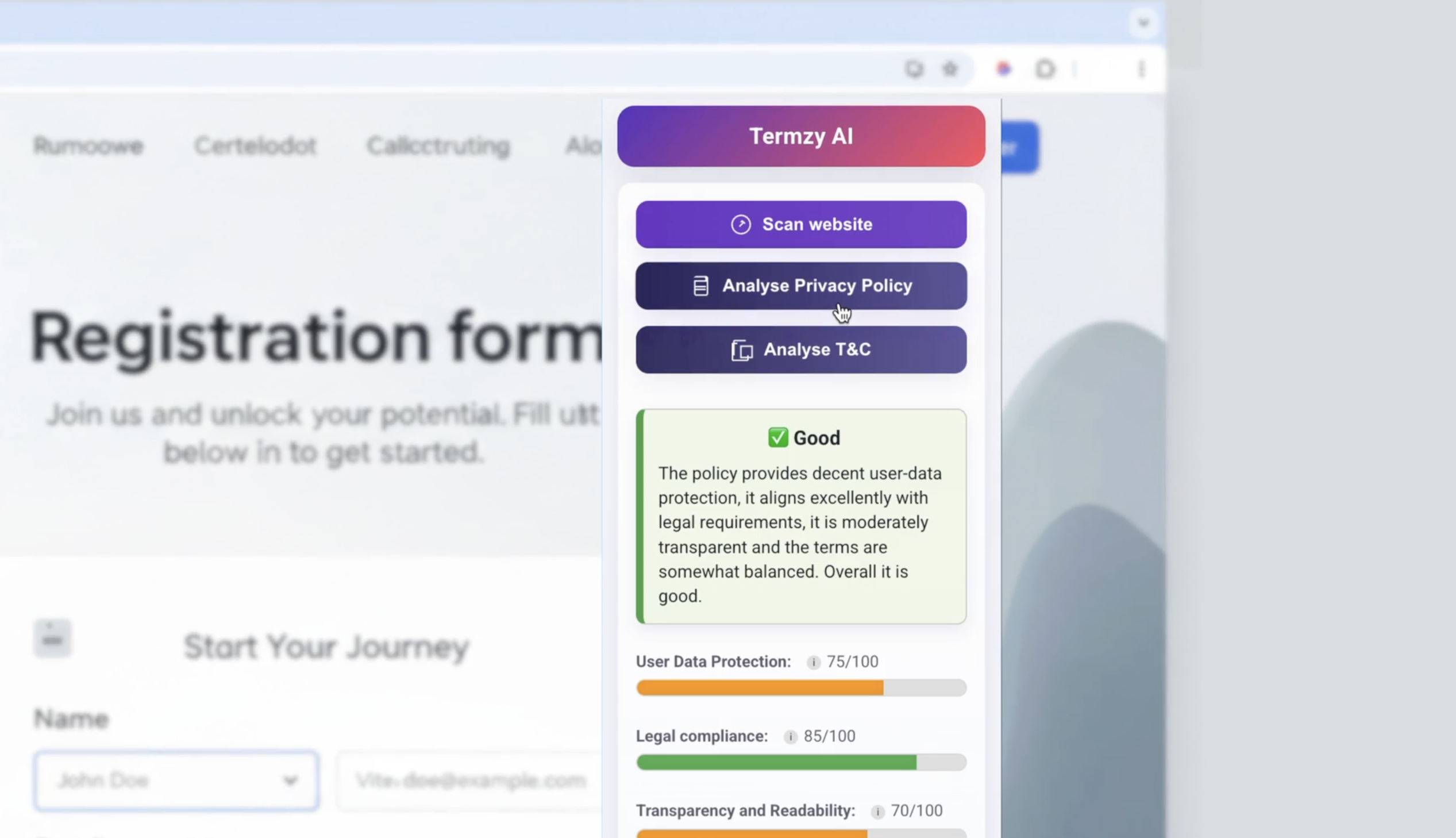
Don’t waste time reading T&Cs -- AI can do it for you
Be honest now, do you really read T&Cs, privacy policies, etc when signing up to a service? Of course you don’t, you just scroll to the bottom and click Accept, trusting that you haven’t just handed over your first born child to a social media mogul.
Step forward Termzy AI, an AI tool that can scan those pesky T&Cs for you and alert you to any problematic things lurking in there that you might be agreeing to.

Over a third of US adults now use AI every day
ChatGPT burst onto the scene just three years ago, but a new survey reveals that 34 percent of US adults now use AI platforms daily, and nearly half say they’re using them more than they were a year ago.
The survey, of over 1,000 from US adults, from Tinuiti shows that Gen Z and millennials are leading the AI charge. 67 percent of both groups use AI at least weekly. Platforms like ChatGPT, Google Gemini, Character AI, and Sora are carving out generational niches.
Agentic AI set to reach mass adoption in 2026
A new survey of global technology leaders across Brazil, China, India, Japan, the UK and US suggests that agentic AI will reach mass or near-mass adoption by consumers in 2026.
The study by IEEE shows top uses are likely to be personal assistant/scheduler/family calendar manager (52 percent), data privacy manager (45 percent), health monitor (41 percent), errand and chore automator (41 percent) and news and information curator (36 percent).
AI delivers time gains but people are still key to productivity
Workers say they are saving an average of two hours per day thanks to AI use. But these perceptions of productivity gains are at odds with the reality experienced by many organisations according to a new report.
A study from the Adecco Group draws on insights from 37,500 workers across 31 countries and 21 industries. It finds confidence in AI usage has surged, with a staggering 71 percent of respondents suggesting that nothing holds them back from using AI, a significant jump from 19 percent in 2024.

Can’t FB ATM, BB -- the social media acronyms that have us scratching our heads
The tech industry has always been fond of acronyms for various technologies, and the rise of social media has brought many more into everyday use. But how many of these have you shrugging your shoulders and saying IDK* what that means?
Website design agency ProfileTree has analyzed the monthly search volume for each acronym to see which are the most confusing and misunderstood.

America embraces AI but some states show greater interest
Americans are increasingly turning to AI to save time, automate tasks, and boost creativity. Research from AI company Chatronix shows that the US is embracing the use of AI but that some states show more interest than others.
Analysis of Google Trends data between June 2024 and June 2025 reveals where searches for ChatGPT and Gemini are most concentrated. Scores from 0-100 represent the relative popularity of each search term by state, as a fraction of total Google searches in that region. Higher values reflect a larger share of interest, not higher total search counts.

Only 11 percent of US consumers trust their first search result
According to a survey of over 1,000 US consumers conducted on behalf of brand visibility platform Yext, just 11 percent trust the first tool they use when searching online, meaning nearly nine out of 10 double-check or expand their results elsewhere.
The research suggests the age of one-stop search and shop is ending and Americans are increasingly blending traditional search engines with AI tools, social media, and review sites to make purchase decisions.

IT issues cost 100s of 1,000s of hours in lost productivity
A new report shows that poor digital employee experience (DEX) directly costs global businesses an average of 470,000 hours per year in lost productivity, equivalent to around 226 full-time employees.
The study from Nexthink, based on analysis of data from more than 20m endpoints across 474 global businesses, finds the average employee suffers 14 negative digital experiences a week. These include device crashes, application glitches, or slow load times, and can reduce productivity and collaboration while also increasing employee frustration and stress.

Two-thirds of people working with AI are not in tech roles
We tend to think of artificial intelligence as being at the cutting edge of technical development, but new analysis from Multiverse shows that over two-thirds of people using AI at work in the UK are in roles not traditionally associated with tech.
The analysis of over 2,500 people on Multiverse’s AI apprenticeship programs reveals that over two-thirds (67 percent) are in non-tech roles -- that is, roles whose job titles don’t include keywords related to tech, data and AI. Instead, among the 50 most common ‘invisible’ roles are frontline public service, education, healthcare and construction roles, including nurses, doctors, librarians, pharmacists, therapists, lecturers and surveyors.

‘I didn’t touch anything’ and other ways to annoy your IT team
To mark today’s IT Pro Day today, SolarWinds, has released some new global survey data looking at what winds up IT professionals. Plus, what the IT team want in return for keeping our lives running smoothly.
Based on a survey of over 400 global IT professionals it shows that the biggest triggers, cited by 19 percent are hearing the dread phrases, “I didn’t touch anything” or “You’re good with computers, right?” These are closely followed by the classic, “The Wi-Fi’s broken” (18 percent).

Do Americans dream of AI?
Artificial intelligence is making its way into more and more areas of our lives and it seems that includes our dreams.
New research from Amerisleep.com, shows that one in five Americans have dreamed about AI and 16 percent are doing so several times a month. While these dreams may reflect curiosity, some reveal anxieties about the role of technology.

How social media is changing workplace communication
Time was when office colleagues would exchange information, ideas and gossip around the water cooler or coffee machine.
That's changing because of technology though, new research reveals that platforms like TikTok and Instagram are directly influencing how 83 percent of people communicate professionally, fueling conflict and misunderstanding among an increasingly intergenerational workforce.

Don't let your child become a victim of autocorrect
Some 22.6 million adults in the UK have experienced autocorrect changing their name, or their name being flagged as incorrect, that's 41 percent of the population.
A new campaign I Am Not A Typo (IANAT), is calling on the tech giants to correct autocorrect and spell-check spell-check to make the technology more inclusive and has released some results of a survey carried out by Censuswide to back up its cause.



