
Google improves Android with a bumper crop of new accessibility features

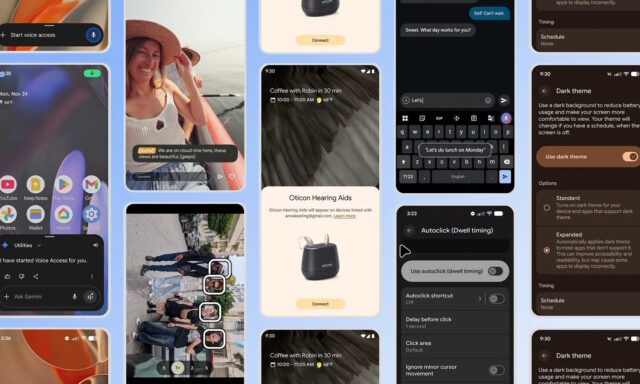
Making Android better is not always about making it faster, smoother or more packed with AI. Going some way to prove this, Google has unveiled no fewer than seven new accessibility focused features for its mobile operating system.
The features take into account the varying needs and expectations of users. Google says that the additions are designed to help “make it easier to see your screen, communicate with others and interact with the world”. So, let’s take a look and see what has been added.
It is worth noting right from the offset that not everything Google is highlighting is available immediately. For example, while the Fast Pair feature that makes it possible to connect hearing aids to your phone with a quick tap has launched, it only works on Demant hearing aids at the moment. Google says that “we’ll be expanding compatibility to Starkey hearing technology in early 2026”.
TalkBack has been updated with a couple of interesting new options. The option to use voice dictation in Gboard with a two-finger double-tap is still to come, but there is a photography feature available now:
Guided Frame in the Pixel camera app helps people who are blind or low vision take great photos. Now powered by Gemini models, it provides a richer, more descriptive understanding of what’s in the camera’s view. You won’t just hear that there’s a face in the frame; you’ll hear a description like, “One girl with a yellow T-shirt sits on the sofa and looks at the dog.”
For anyone who relies on captions, the difficulty in understanding the feeling or emotion that is being conveyed will be familiar. This is where Expressive Captions can help:
Expressive Captions uses AI to communicate things like tone, volume, environmental cues and human sounds from the audio playing on your device. Starting today, it can also detect and display the emotional tone of speech from the audio content on your Android device. This helps you grasp the speaker’s intent when captions are tagged with emotions like [joy] or [sadness], adding important context to the conversations and media.
And, after being built on Android, we’re bringing some of the capabilities of Expressive Captions to YouTube across all devices. Now videos in English uploaded after October will showcase a more immersive captions experience. Expressive Captions will use AI to automatically display the intensity of speech in all caps, expressions of sounds like sighs and gasps, as well as noises from the environment.
There are also improvements to experience of using an external mouse with Android, updates to Voice Access that mean it can be enabled via a Gemini voice command, and an important change to theming.
Google explains:
We’ve heard how frustrating it is to switch from a dark app to a glaring light one. With the new expanded option for dark theme in today’s Android 16 release, your phone will now automatically darken most of the apps on your device, even those that don’t have their own native dark theme. This creates a more consistent and comfortable viewing experience, especially for people with low vision or light sensitivity.



