
Apple: iPhone 11 Pro handsets check location to comply with regulations
It recently came to light that even with Location Services disabled, iPhone 11 Pro handsets appeared to be checking for location data, sparking concerns about privacy.
Having initially dismissed this as "expected behavior", Apple has now gone into more detail about what's actually happening. Rather than being a sinister case of tracking iPhone users, the company says that location checks are actually required because of the ultra wideband chips found in newer iPhones.
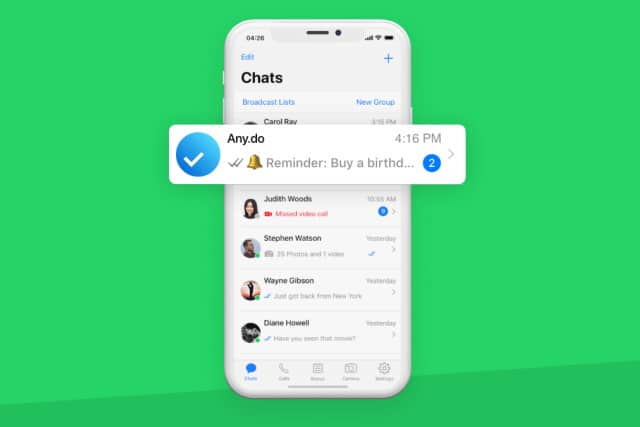
New Any.do integration lets you create tasks and reminders in WhatsApp
While WhatsApp is primarily a communication tool, a new integration from Any.do also makes it possible to extend the capabilities of the chat app to create tasks and reminders using natural language.
As WhatsApp is often used in both the business and personal worlds to discuss a set up meetings, appointments and get-togethers, the ability to set reminders at the same time as discussing plans makes perfect sense. Like Any.do and WhatsApp themselves, the new feature is cross-platform, and can be found on iOS, Android, Mac, Windows and the web.

Your iPhone 11 Pro tries to collect location data even when all location services are disabled
Security researcher Brian Krebs has discovered a peculiarity with the iPhone 11 Pro and its collection of location data.
In what is described as a "possible privacy bug", Krebs found that the iPhone 11 Pro seeks location data even when system services and apps are configured to never request this information -- the location arrow icon can be seen popping into view at unexpected times. Curiously, despite seemingly contradicting its privacy policies, Apple says that it is by design.
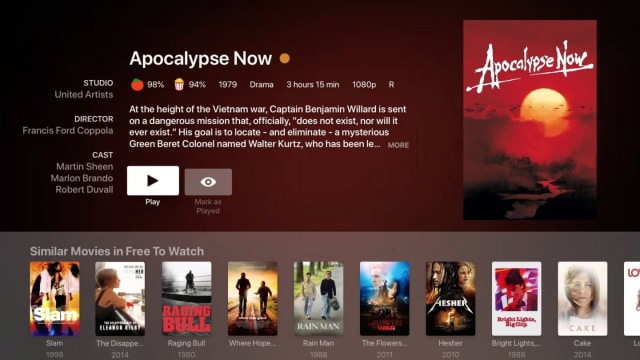
Plex introduces free TV and movie streaming
Plex has introduced a new free streaming service which you can use to watch a range of TV shows and movies without paying for a Plex Pass subscription, or having to pay for things on an individual basis.
Of course, "free" comes at a price. Ads. Plex says that it is going to be streaming "thousands of free movies, TV shows, extreme sports films, music documentaries, Bollywood musicals, and more" but content will be punctuated with ad-breaks. Free streaming is available in more than 200 countries, which will be appreciated by people in parts of the world that tend to miss out on such services.

The US shows a 'concerning lack of regard for the privacy of people's biometric data'
When it comes to the extensive and invasive use of biometric data, the USA is one of the worst offenders in the world, faring only slightly better than China.
According to research conducted by Comparitech, which rated 50 countries according to how, where and why biometrics were taken and how they are stored, the US ranked as the fourth worst country. Topping the list is China, followed by Malaysia and Pakistan.
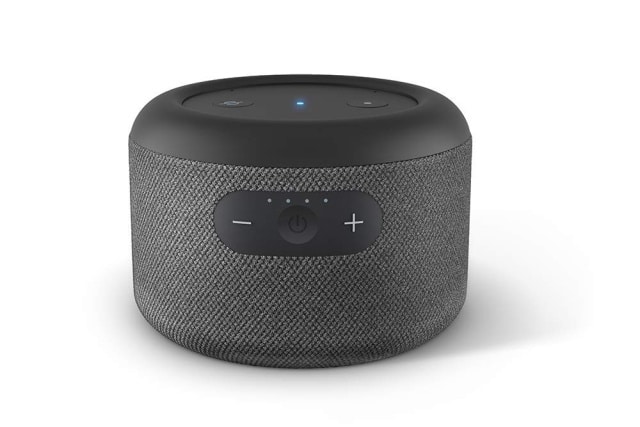
Now there is a battery-powered Amazon Echo
In response to customers demanding portability in their digital assistants, Amazon has launched a battery-powered version of its Echo device.
Lengthily named the Echo Input Portable Smart Speaker Edition, the device features a 4,800mAh rechargeable battery which Amazon says should be enough for 10 hours of non-stop music playback. But while the allure of using Alexa while freed from a wall socket may be strong, it could be a while until you can get your hands on a battery-powered Echo.

Apple fails to stop class action lawsuit over problematic MacBook butterfly keyboards
Apple has failed in an attempt to block a class action lawsuit being brought against it by a customer who claimed the company concealed the problematic nature of the butterfly keyboard design used in MacBooks.
The proposed lawsuit not only alleges that Apple concealed the fact that MacBook, MacBook Pro and MacBook Air keyboards were prone to failure, but also that design defects left customers out of pocket because of Apple's failure to provide an effective fix.
Facebook faces European probe over data collection
It is not just Google which is coming under the scrutiny of the European Commission – the European antitrust regulator have announced that they are also looking into the data collection practices of Facebook.
Just as with Google, the Commission has sent out preliminary questionnaires as part of an investigation into how Facebook collects and monetizes its data.
Twitter introduces new Privacy Center to give users greater transparency
Conceding that as a company it "is not perfect at privacy and data protection", Twitter has revealed details of a new Privacy Center. This central repository will serve as the portal through which Twitter will keep users informed about how it handles user data.
Twitter is also introducing updates to its privacy policy on January 1, 2020. These will be compliant with the California Consumer Privacy Act (CCPA) which places numerous obligations on large companies, including giving customer greater control and transparency, and the right to have their data deleted on request.

Facebook launches data portability tool to allow users to transfer photos and videos to Google Photos
Embracing the notion of data portability, Facebook has launched a new tool that lets users transfer their photos and videos from Facebook to other online services.
The social network is kicking things off by making it possible to transfer data from Facebook to Google Photos. It comes as part of Facebook's participation in the open-source Data Transfer Project and the ability to transfer to other services will be added soon.

Unencrypted SMS database found online, exposing millions of US text messages
A huge database of text messages and user data has been discovered online, completely unprotected and free for anyone to browse.
Found by researchers from vpnMentor, the database belongs to US communications company, TrueDialog. Among the exposed data are not only tens of millions of SMS messages, but also private information including usernames and passwords.

Google is under investigation over its data collection practices
The European Commission has started an investigation into "practices relating to Google's collection and use of data".
EU antirust regulators have already hit Google with record-breaking fines, but concern remains about how the company collects data about its users as well as how this data is then used. The regulator has contacted several companies to ask about agreements they have with Google to hand over user data and what -- if any -- money was involved.
You can still upgrade to Windows 10 for free
When Windows 10 first appeared, Microsoft made quite a fuss about that fact that while it was possible to upgrade for free, this was a time-limited offer. Many people rushed to upgrade because they felt the deadline was hanging over them like the sword of Damocles… but it seems that the deadline was not as pressing as Microsoft made out.
In fact, you might be surprised to learn that more than five years after the launch of Windows 10, it is still possible to upgrade for free. So what's going on?

RCS is being implemented dangerously, leaving users vulnerable to attack
Security experts from Security Research Labs (SRLabs) have warned that carriers are implementing RCS (Rich Communication Services which will supersede SMS) in ways that risk leaving users exposed to all manner of attack.
The German hacking research collective issues the stark warning that "RCS technology exposes most mobile users to hacking". This is not because of inherent problems with the messaging protocol, but with the ways in which it is being implement.

Using a high screen resolution on Raspberry Pi 4 can kill Wi-Fi
A strange bug has been discovered with the Raspberry Pi 4 which sees Wi-Fi failing when the screen resolution is set to 2560 x 1440.
Numerous users have taken to online forums -- including the official Raspberry Pi support forums – where various workarounds have been discussed. Of course, the simple solution to this problem is to use a lower resolution, but the root causes of it are still under investigation.