
Consumers are ready to accept Identity 3.0
There's always a trade off between access and security. Identity management specialist Gigya has released its latest State of Consumer Privacy & Personalization report looking at consumer attitudes surrounding data privacy.
A key finding is a growing willingness to accept next-generation authentication methods known as 'Identity 3.0'. Biometric technologies are emerging as a popular option for signing in. The study shows 41 percent of consumers have a high level of comfort logging in to a site or mobile app using a thumbprint or face/eye scan.

NYSE outage could have been avoided with code quality software
The last three years have provided a catalog of IT horror stories such as RBS which somehow lost over 600,000 payments, the NASDAQ glitch which cost $62 million in fines alone, and now the New York Stock Exchange (NYSE), where trading was halted last week for almost four excruciating hours.
The public is wondering how these software glitches still happen despite the millions spent to upgrade corporate IT systems. These wholesale technical upgrades have not prevented billions being lost in the global economy from what are generically described "technical faults". So what’s the real problem?

Pssstt! Wanna host some malware?
Whilst it's the hacks and the data breaches and the information thefts that grab the headlines, no one ever mentions the technology that lies behind them.
Where do the bad guys host their malware and where do they keep their stolen information? Like any legitimate online businesses, cybercriminals need a reliable, high availability hosting infrastructure.
Don't put your business at risk by continuing to use Windows Server 2003
One constant in the technology industry is that technology continues to evolve at a rate that many find it difficult to keep up with. Microsoft, for example, is currently busy promoting the launch of its latest desktop operating system (OS) -- Windows 10 -- that will be available from July 29 in 190 markets around the world. The company’s expectations are high, with it professing a goal of putting Windows 10 on a billion devices within two to three years.
As with its desktop OS, Microsoft’s Server solutions are also at a turning point, with countless businesses around the world facing up to the stark reality that as one server version comes into being; support for another one will drop by the wayside; now it’s the turn of Windows Server 2003. But managing any migration is not for the faint hearted.

Two-thirds of time spent responding to malware alerts is wasted
Organizations are increasingly bombarded with malware reports and that can lead to wasted time dealing with false alarms or minor issues.
A new report from The Ponemon Institute, commissioned by breach defense specialist Damballa, reveals that two-thirds of the time spent by security staff responding to malware alerts is wasted because of faulty intelligence.

'Hey, Siri, play the sound of farts'
Apple Music can be used for more than just streaming songs to your iPhone or iPad. It can also be used to play sound effects. Who hasn’t wanted to have their endeavors greeted by a round of applause, or their jokes met with howls of hysterical laughter?
Sure, you have to summon Siri to use the trick, which reduces the spontaneity somewhat, but there’s still plenty of fun to be had.

Organize, edit and share your photos with digiKam
After an initial release way back in 2006, digiKam has grown into a powerful, professional photo manager, crammed with high-end features and free for everyone to use.
The program started life on Linux, and so doesn’t get much attention elsewhere. There are builds available for Windows and Mac, though, so we installed a copy on a Windows 8.1 system to see what it had to offer.

HSBC prematurely announcing Apple Pay in the UK causes Apple stock to rocket
It’s not exactly insider trading, but if you want to make money on the stock market, monitoring social media in real time could help give you the edge.
On Sunday 12 July, HSBC tweeted a reply to a follower confirming that Apple Pay was due to launch in the UK on Tuesday 14th, beating Apple to the announcement. As a result, investors rushed to buy Apple Stock, causing a sizable spike in interest.
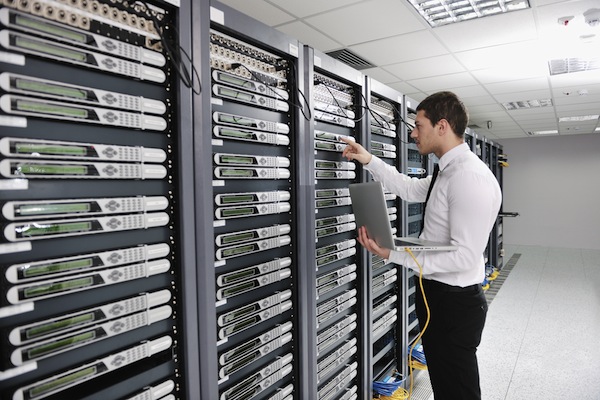
New software provides simplified view of IT assets
For large companies keeping on top of IT assets and software licenses can be a complex and time consuming process.
IT management company LANDESK is releasing a new version of its IT Asset Management (ITAM) Suite which provides a simplified view of assets in one central place via a LANDESK Workspace, putting decision-making data at the fingertips of managers.

Microsoft introduces Azure Data Catalog and Power BI Desktop
This week is a big one for Microsoft and its Azure cloud platform, with major updates coming through before its Worldwide Partner Conference. The updates introduce a raft of juicy new features, including Azure Data Catalog and Power BI Desktop.
Azure Data Catalog is actually available in public preview today, and Microsoft describes it as an enterprise metadata portal for the self-discovery of data sources.

Machine learning simplifies managing VMware environments
With a mix of on-site, virtual and hybrid environments, today's IT systems are increasingly complex and time consuming to manage. Yet traditional monitoring tools can result in information overload.
For businesses using VMware environments, SIOS Technology Corp is launching a new solution that applies machine learning techniques to IT analytics.

Remember when technology was exciting?
Al Mandel used to say "the step after ubiquity is invisibility" and man was he right about that. Above you’ll see a chart from the Google Computers and Electronics Index, which shows the ranking of queries using words like "Windows, Apple, HP, Xbox, iPad" -- you get the picture. The actual terms have changed a bit since the index started in 2004 as products and companies have come and gone, but my point here is the general decline.
Just as Al predicted, as technology has become more vital to our lives we’ve paradoxically become less interested, or at least do less reaching out. Maybe this is because technologies become easier to use over time or we have more local knowledge (our kids and co-workers helping us do things we might have had to search on before).

Mozilla blocks all versions of Flash in Firefox amid growing security concerns
As you may or may not know, Adobe Flash -- a veteran tool required by many modern browsers for video playback -- is riddled with vulnerabilities. The product has a long history of being thrown under the bus for its security incompetence. Such is the case today. Mozilla announces that it is blocking all versions of Flash Player in its browser with its latest update.
Mark Schmidt, the head of the Firefox team at Mozilla notes that the company is disabling Adobe Flash by default in the browser. The block is accompanied by an image showing a raised fist and the phrase "Occupy Flash". Users who wish to enable Flash can do so by flipping switches in the settings menu, however.
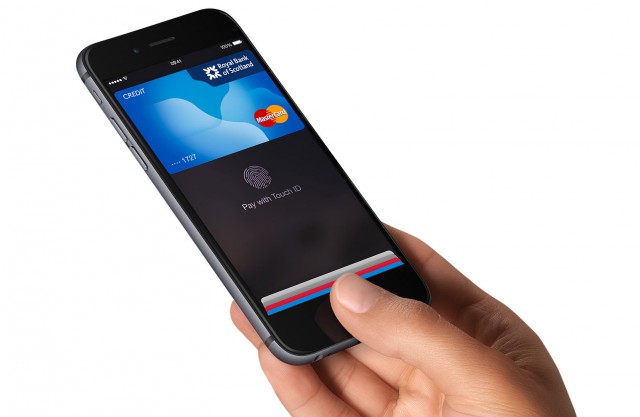
Apple Pay arrives in the UK -- Here's how to use it
While Apple Pay has been available in the US for a while now, the tap-and-pay service finally launches in the UK today. It works in the same way as contactless cards -- you just tap your iPhone 6, 6 Plus, or Apple Watch on a payment terminal to make a payment.
It’s very easy to use, secure, and has a maximum purchase limit of £20 per transaction (rising to £30 in September). This is what you need to do to use it.

It's your fault Google Photos continues to upload pictures after you uninstall it
Google's decision to break up Google+ into a number of separate apps and services led to the launch of Google Photos. Just like with Apple's iCloud, the app can automatically upload your images to the cloud ready for sharing, viewing, or just as a backup. You might decide that this automatic uploading isn't for you and opt to uninstall the Google Photos app... but your photos will probably continue to upload in the background.
This is the discovery that many Android users have made; what gives? Is Google being sneaky? The answer's not quite that simple. Before you start freaking out, proclaiming that Google is indeed evil, and wondering how on earth the company thinks it can get away with it, consider this: it's actually your fault.