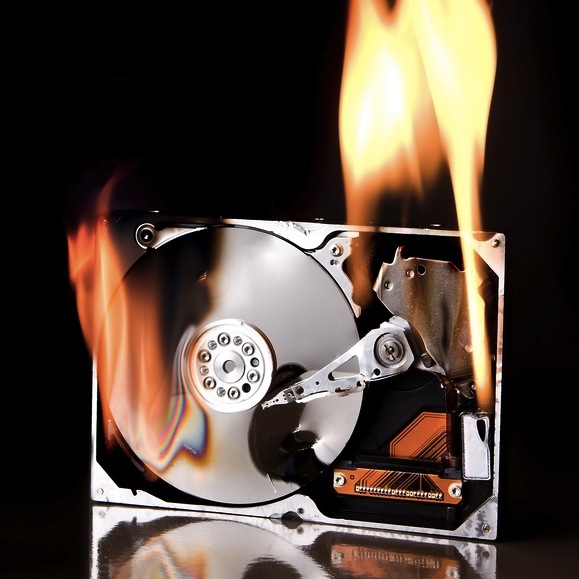
Protect your deleted data with Disk Wipe
Whether you’re concerned that files you have stored on a USB drive might be recovered by someone else after they have been deleted, or you are selling your computer and want to ensure that none of your personal documents can be accessed, almost everyone has a need to securely delete data at some point. Simply deleting files is not enough as there are all manner of tool in existence that can be used to restore them, but Disk Wipe is a free, easy to use app that helps to ensure that when a drive is formatted, none of its data is recoverable.
It is not just hard drives that the app can be used to secure. If you have stored private documents on a USB drive or have photos or other files stored on a memory card, the same app can be used to completely format any FAT, FAT32 or NTFS drive that can be accessed from within Windows. In addition to the secure file wiping, Disk Wipe also provides you with a good deal of information about the drives it detects, such as the number of sectors, the manufacturer and serial number.
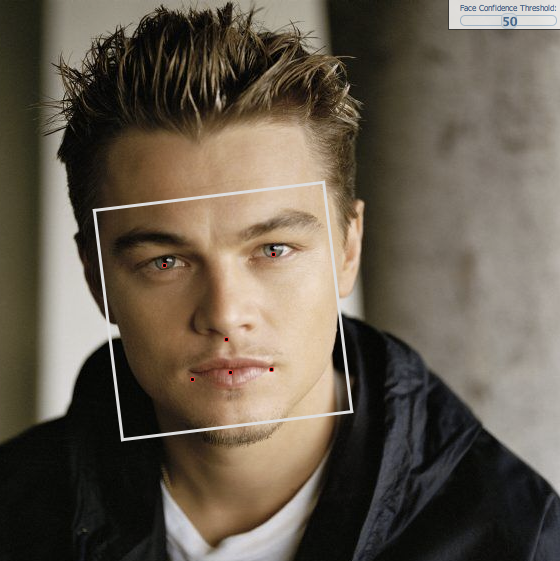
Face.com: You can't stay 29 forever
Are you 35 and claiming to be 29? Don't post photos to Facebook. Today Face.com added a new attribute to its facial-detection API: age detection. The startup claims the new attribute will let developers create apps that use three criteria -- minimum, maximum and estimated age -- to determine how old people are in photos.
While the technology surely will appeal to social networkers, the big boon could be marketers looking to maximize exposure to select demographic groups, such as 18-24 year olds. Developers can set the attribute to look for specific age segments, hence the marketing potential. But there are others, such as detecting fake IDs at establishments serving alcoholic beverages. Additionally, Face.com claims to have improved facial recognition by 30 percent in this release of the API.
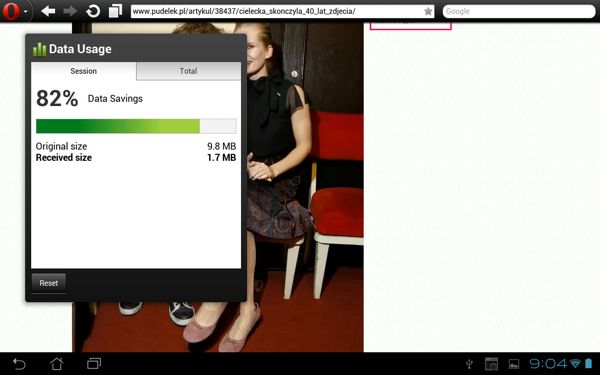
Opera Mini 7 launches for Android
Opera Software on Wednesday released the latest version of its compact Opera Mini browser for Android devices, which was heretofore available only as an Opera Next advance build.
Opera Mini 7 for Android features improved hardware acceleration for faster and smoother performance, and features the ability to set up the homescreen with an unlimited number of Speed Dial buttons.

Get AIDA64 Extreme Edition 1.85 for free, but hurry!
Properly understanding what’s happening on your PC -- monitoring hardware, assessing performance, diagnosing errors -- normally requires you to navigate a host of Control Panel applets and third-party tools. But if you’re tired of such hassles, then there is an easier way: install AIDA64 Extreme Edition 1.85 and you’ll get a whole library of PC management and information tools in a single, easy-to-use package.
Need to know more about your PC devices, for instance? AIDA64 provides detailed reports on your motherboard, BIOS, RAM, hard drive, sound card, network adapters, PCI and USB-connected devices, their resource use and more, so you can get a feel for your system setup without having to open the case.
Chrome 18 arrives, with GPU acceleration -- get it now!
Google Chrome 18 has just landed as a stable release, and while it has the usual mix of minor tweaks and security fixes, the real news is its graphics improvements.
Part of this comes from the browser enabling GPU-accelerated rendering for 2D Canvas content, which could bring a real performance boost to canvas-based animations and games. (Or that’s the plan, anyway. If you have any issues, or just want to find out what’s happening on your system, then entering chrome://gpu will give you more information on the browser’s current GPU acceleration usage.)

Got Ice Cream Sandwich? Get Google Maps 6.5 for Android now
Google isn't waiting for the install base of Android users to move to Ice Cream Sandwich, not that carriers or handset manufacturers help much (if you're waiting for that upgrade from Gingerbread, you know what I mean). Today the search and information giant updated Google Maps for Android to version 6.5, packing in capabilities specific to version 4.x. Don't you feel cheated? I would.
Google offers the best to a minority of users, and small is too big a word to describe them. According to Google's official stats, as of March 5, Ice Cream Sandwich accounts for a mere 1.6 percent of Android devices. But, hey, many of these users are the bleeding edge of influencers Google should want to reach -- and keep enthusiastic.
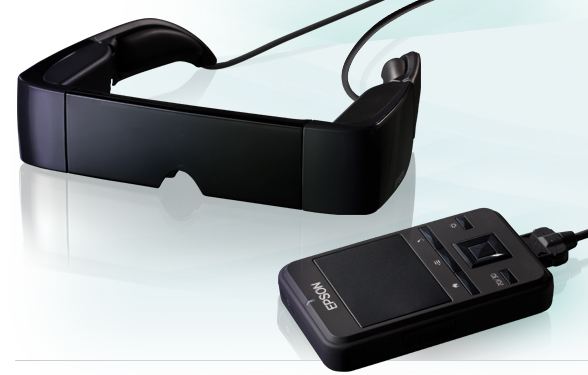
Epson's Android-powered display glasses: do want...don't know why
Proving that head-mounted displays aren't just PC peripherals, Japanese electronics company Epson on Wednesday launched the Moverio BT-100, the first self-contained, Android-powered head-mounted display.
The $699.99 unit include stereoscopic .52-inch (960×540) TFT LCD displays that create a perceived 80-inch display, which is powered by Android 2.2 touch navigation. Since you can't touch the actual screen without jabbing yourself in the eyeball, all touch interface activity is done through a handheld touch pad.
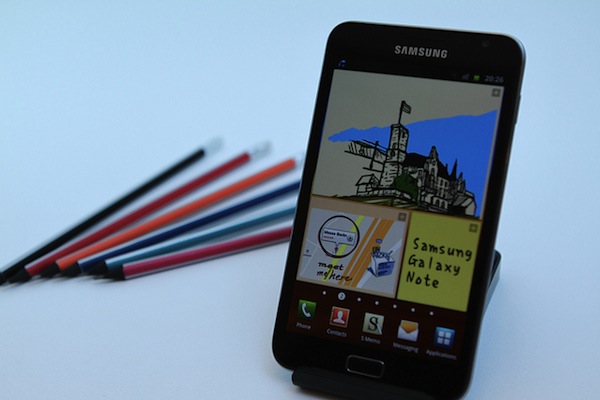
Who bought 5 million Galaxy Notes, because I want to know
Today's big Samsung Galaxy Note announcement -- 5 million shipped in five months -- has me wondering "Who?" Is it you?
It's a big number for an over-sized smartphone, under-sized tablet measuring 146.85 x 82.95 x 9.65 mm, weighing 178 grams and packing beastly 5.29-inch display. On Dec. 29, 2011, Samsung announced shipment of 1 million Galaxy Notes. Just weeks ago Samsung put shipments at 2 million. That's a helluva jump in just three weeks.

Box brings the mobile cloud to the enterprise
Today, cloud-storage provider Box updated its iPad and iPhone app to include support for the newly-launched Box OneCloud. The service is Box.com’s pitch to the enterprise and business market for the “post-PC era”, providing users with a means of using their iPad to directly edit documents that can be stored online, collaborated on and shared with other users as well as accessed via desktop.
Box for iPhone and iPad 2.7.1 is a free-for-personal use app that allows users to access the contents of their Box accounts via their iOS device. The app also allows users to upload files back to the service as well as edit them using supported apps on the mobile.

'This summer, when hunger strikes, and all hope seems lost, a small device will change your destiny' -- the VIP Fridge Magnet
Pack my bags, I'm moving to Dubai.
Local shop Red Tomato Pizza promises to make available a fridge magnet that you tap to place orders. For all I know, it's all gimmick. The promotional YouTube video is a smart production. Spoiler: You will want to order pizza after watching it.

NTIA says public and private sectors could share 95 MHz of wireless spectrum for broadband
This week, the U.S. Department of Commerce and the National Telecommunications and Information Administration (NTIA) announced that they have isolated 95 MHz of "prime" wireless spectrum that could be repurposed for mobile broadband uses.
The 1755–1850 MHz band was examined by NTIA as potentially viable for commercial wireless broadband services (.pdf here.) Currently, more than 20 federal agencies own more than 3,100 individual frequency assignments in this band. Their uses range from law enforcement surveillance, to military tactical communications, to unmanned aerial vehicles, to guided munitions.

Little changes add lots to Kaspersky PURE 2.0 Total Security
Kaspersky LAB has released a new version of its flagship do-it-all security suite, PURE 2.0 Total Security.
Although the upgrade is relatively minor, which is no surprise, really; the previous version did so much that there isn’t much left to add, the company has made a few useful tweaks which should appeal to fans of the package.

Game on with Adobe Flash 11.2 and AIR 3.2
Adobe Flash Player 11.2 and AIR 3.2, major updates to its browser plug-in and runtime environments, are now available. Flash Player, which is built into Chrome and available as a separate download for Internet Explorer, was until the advent of HTML5 the de facto standard for accessing rich, multimedia content on the web.
Both updates are aimed very much at repositioning Flash as a rival gaming platform to consoles, focusing on providing developers with tools to produce immersive, graphically rich games across all supported platforms.

Undo tweets with Windows 8-inspired MetroTwit
Inspired by the look of Windows Metro, MetroTwit is a unique-looking, clean Twitter client that oozes style and simplicity. The app has just hit version 1.0, having already proved itself to be worthy of note in the beta stages. The official release sees the addition of a number of important new features including highly configurable filtering that helps you to ensure that your stream is not cluttered up with tweets you are not interested in.
In a similar vein to TweetDeck, the MetroTwit interface includes multiple columns that can be used to display different aspects of your Twitter account, and there is great integration with Windows 7 that sees notification area popups revealing direct messages and other interactions.

Mobile app developers, don't forget about privacy and security
User experience is important when developing any mobile app but in an enterprise context, what about security? For example, if you are developing an app that stores personal information there are regulations that ask where this information resides. Depending on the industry, mobile app developers may be completely accountable if any security issues happen on an app that they develop.
To ensure that you are in full compliance to any privacy, security or regulatory questions, it is recommended that apps be developed in-house or through a partner. So do mobile app developers need to consider regulatory, security or privacy concerns in advance of mobile app development projects?