
Google answers Internet Explorer 9 Release Candidate with new Chrome 10 beta
Late yesterday, Google released the latest beta of Chrome, version 10, celebrating the move to double figures with some very interesting new features. Google has kept Chrome development at breakneck pace since the first beta released in September 2008. Chrome revved from v4 to v8 in 2010. The v10 beta release comes days after Microsoft's Internet Explorer 9 Release Candidate 1 topped 2 million downloads.
According to a Google blog post, Chrome 10's new Crankshaft version of its V8 JavaScript engine now runs scripts some 66 percent faster than previous versions, as measured by the V8 benchmark suite. The new beta build also includes hardware-accelerated video, which Google says may cut CPU usage by as much as 80 percent when running full-screen, assisting performance generally and extending your battery life.

5 password managers for storing, protecting and syncing your personal information
How safe are you online? These days the biggest prize for any hacker or thief is access to your online accounts -- financial or otherwise, and with many people choosing to protect all their online details with a single, easily crackable password, there's never been a better time to practice safe browsing.
The problem with staying safe is that ideally you should use complicated, unique passwords for every single account you have. That's brilliant in theory, but in practice it's almost impossible to remember that "fjdSkjAh43q2" is the password for your online bank while "rh13um93ba" protects your Paypal account. The answer lies in utilizing a password manager like one of the five we've plucked out from a lineup for this quick-fire comparison.
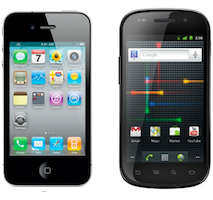
Gartner: 2011 is year of the smartphone, not tablet
The 2010s are rapidly shaping up to be like the 1990s, but with smartphones replacing PCs as the objects of want. This week's Mobile World Congress buzzed with excitement that felt like Comdex 1995. The next day's hottest device announcement eclipsed the day's before. Single-core processor today is obsolete to tomorrow's dual-core, which is outdated a day later by quad-core -- or that's how it feels.
Things are changing so fast, some manufacturers can only keep up by announcing the next big thing. Yesterday, veteran Mac journalist Jim Dalrymple chided Research in Motion: "Shut up and ship." He observed that RIM talks lots about new tablets -- "that's three generations of PlayBook tablets announced in five months, and we still haven't seen a single product make it to market." The excitement about mobile devices and pace that faster phones are shipping and new applications releasing are among the many reasons that last week I asserted: "The PC era is over." To be clear: Change of eras doesn't mean the end of the PC just its rapidly decreasing relevance before cloud-connected devices.

Google harnessing social in latest wave of search updates
Google is committing further to social search, and said Thursday that it would more tightly integrate results from its users' social circles. The Mountain View, Calif. search company first introduced the functionality two years ago in an effort to make results more personally relevant.
"As always, we want to help you find the most relevant answers among the billions of interconnected pages on the web," the company said in a blog post introducing the changes. "But relevance isn't just about pages -- it's also about relationships."

Five security backdoors every small business should shut
Corporate security is serious business, but what about small businesses? How do owners know if they're unconsciously leaving the backdoor open to cybercriminals? Monitoring for new and emerging threats is a daunting task, particularly when the small business owner wears a second hat -- IT manager. Cyberattacks come through a variety of channels. There are five backdoor entrances every small business should guard against.
Door #1: Social networks and community bad spirits. Most social networking activity is concerned with community spirit and sharing of a wide range of data including documents, music, video and links. The biggest problem here is trust. People trust people that they know, or that they think they know. This means that users are more likely to click an infected link if it comes from a trusted colleague or friend. Beef up your security policy. Only 23 percent of companies have any security policies in place that specifically addresses social media. Offer staff some guidelines to keep them and your company network safe.
$200 million in U.S. broadband census data now free, open source
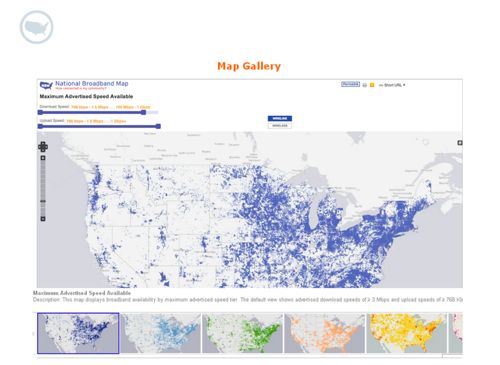
Thursday, the National Telecommunications and Information Administration (NTIA) released The National Broadband map, a staggeringly powerful free tool that gives anyone access to census-level data about broadband connectivity in the United States.
The map, which cost roughly $200 million to build, includes data from more than 25 million records, showing what types of broadband are available in all of the 50 U.S. states (FTTH, Docsis 3.0, Cable, DSL, Mobile, etc.), which companies provide service (and thusly where regional monopolies exist,) and the maximum advertised speeds. Users can then filter data by region, state, city, county, district, block, or even street address, or by regional and household demographic information. This data can then be plugged into the map's "analysis" feature, and compared with data from other areas.

Even $600 is too much for many gadget geeks to pay for Motorola XOOM
Late yesterday I asked: "Would you pay $600 for the Motorola XOOM tablet?" Whoa, did you respond. Reaction is mixed, but those of you who own Android phones, particularly Motorola models, are more likely to answer "Yes." However, plenty of readers still wouldn't pay $600 -- for any tablet, and that includes Apple's iPad.
Quick recap: It turns out that earlier leaks about XOOM costing 800 bucks were true. That's for a model with 3G/4G radios and WiFi. Yesterday, Motorola revealed that a WiFi-only model would be available for only $600. Betanews readers reacted quiet negatively to $800 XOOM. So what about 600 bucks?

Norton 360 v5.0 launches with free web app-desktop gadget and Cybercrime Index
The weakest link in any security strategy is human. No matter how good the technology, nothing creates risk like ignorance and naiveté. When Symantec released its Norton 2011 products back in September, the company spoke of "engendering goodwill" among potential customers with free tools to educate and protect their vulnerable systems. Today, concurrent with the release of Norton 360 version 5, the company made available yet another free tool to keep users aware of the ever-changing daily threat landscape.
The Norton Cybercrime Index, a free service, gives a daily snapshot of the most dangerous websites and the most hijacked search terms, as well as top scams, identity theft ploys and spam. The daily data from the Cybercrime Index can be viewed in a Web portal, on a mobile site, or as a free desktop gadget for Windows 7 and Vista. The main tool is a daily risk level meter similar to the Department of Homeland Security's threat advisory level.

GOP looks to overturn FCC's net neutrality rules
Fresh off their increased numbers in Congress, the GOP is setting its sights in the FCC controversial net neutrality rules as its next target. Forty Republican senators led by Commerce committee ranking member Sen. Kay Bailey Hutchinson of Texas as well as two Republican House members are spearheading a repeal effort.
The Congressional Review Act, passed in 1996, allows Congress to review the rulemakings of government agencies and overturn them if need be. Of course since this is a legislative procedure, any effort would require President Obama's signature or lacking that a two-thirds majority in either legislative body to override a veto.

Does your computer measure up to thousands of others? Geekbench has the answer
Does your computer feel tired, slow -- is a poor performer? Or have you tweaked, tuned and optimized your system so much that you're sure it's delivering the best possible speeds? Whatever you think of your PC's performance, there's only one way to get a solid and objective view of its speed, and that's by using an excellent benchmarking tool like Geekbench.
Launch the program, click the "Run Benchmarks" button, and Geekbench will run some exhaustive tests on your CPU and RAM's performance, before producing a detailed report with all the figures you need.

WinZip System Utilities Suite is Windows' Jack of all trades and master of one
WinZip has released version 1.0 of a new all-in-one system suite, comprising of no less than 20 separate tools covering most aspects of system maintenance, including fixing problems, cleaning out redundant files, providing improved privacy and security, and optimising performance. The tools are brought together under a single front end that includes a tool that quickly scans and fixes problems that it finds.
WinZip System Utilities Suite starts with the Smart PC Care tool, which scans your PC for problems and issues. These can then be fixed with a single click, and the tool scheduled to run at set intervals ensuring your PC remains in tip-top condition.
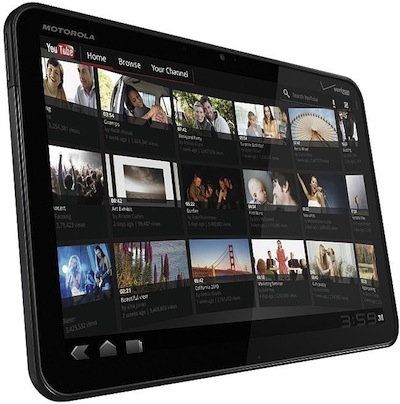
Would you pay $600 for the Motorola XOOM tablet?
Last week, I asked about $800, and most Betanews readers answering the question said emphatically "No!" Today, Reuters is reporting some potentially exciting news from Mobile World Congress: A WiFi-only version of the XOOM tablet will be available for $600. Is the price low enough for you? You know how to answer -- in comments or by emailing joewilcox at gmail dot com.
Surprisingly, Verizon, which will carry the 3G/4G model, is doing so unsubsidized -- so that previously leaked $800 price still applies. The Verizon model does WiFi, too, but based on leaked Best Buy documents buyers must use at least one month of data service first; then WiFi is enabled. How whacked out is that?

Without auto-update, 2 million users downloaded IE9 RC
Raw first-week sales numbers are often used to indicate the efficacy of a product's launch. But really, the thing these numbers best represent is the level of user excitement. Today, Microsoft revealed that users were very excited about Internet Explorer 9 RC, which launched last week.
According to Microsoft, IE9 RC was downloaded 2 million times in the six days following its launch. While a big number, it's doubly significant because these were users who actively downloaded the software without a Windows Update auto update, or a system alert telling them an update was available. These users knew the update was there and went out and got it.
Google One Pass gives back what Apple's iPad subscription plan takes away
Well, that didn't take long. One day after Apple dropped its subscription plan bomb on suspicious publishers, Google officially countered with One Pass. Google strips out the onerous restrictions Apple imposes. It's a brilliant marketing response, and aptly timed with new Android tablets like the HTC Flyer, Motorola XOOM and Samsung Galaxy Tab 10.1 going on sale within weeks. More significantly, the program isn't restricted to mobile devices. Can you say Internet?
Apple's subscription plan places many restrictions on publishers. Apple takes a 30-percent commission on all sales, requiring publishers to offer prices the same or lower in-app as elsewhere; that hugely limits promotions, for example. Apple's plan would prevent publishers from making in-app subscriptions free as a benefit to existing subscribers elsewhere (e.g., consumers pay more because of Apple policies). Publishers will likely loose access to vital customer data, since Apple is requiring an option that lets subscribers opt-in to this disclosure.
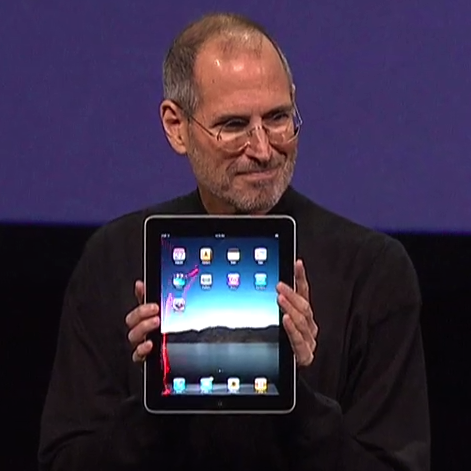
iPad accounted for 12 percent of global mobile PC shipments in Q4 2010
NPD's DisplaySearch has joined Canalys as labeling iPad as PC, pushing Apple to the top spot in global mobile PC shipments during fourth-quarter 2010. According to DisplaySearch, Apple shipped 10.2 million mobile PCs, including iPad, compared to second-ranked HP's 9.3 million. Apple's market share: 17.2 percent. It's noteworthy that Apple shipped considerably more smartphones, exceeding 16 million units, during the same quarter.
The findings pit Canalys and DisplaySearch against Gartner and IDC, which categorize iPad as a media tablet. IDC makes puzzling demarcation: Media tablets range in size from 5 inches to as much as 14 inches and run so-called lightweight operating systems, such as Apple's iOS and Google's Android OS, on ARM processors. However, IDC classifies tablets running Windows on x86 processors as PCs.