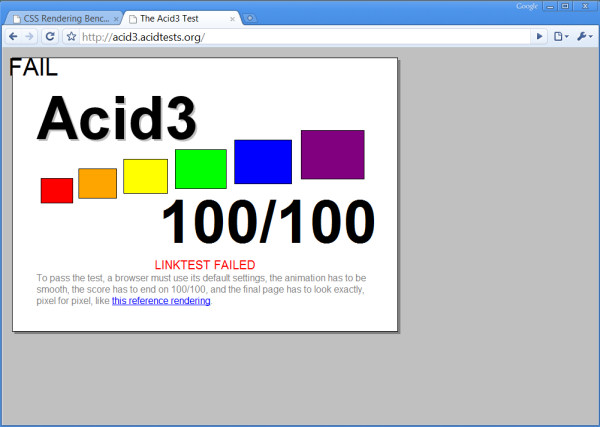
"EPIC" and "FAIL" make LSSU's 2010 list of banished terms
Lake Superior State University, noted for being the smallest public university in the state of Michigan with a student body of only 3,000, has released a list of words and phrases it has "banished" for the year of 2010. While many of the banished phrases are terms that are abused by media and marketers, some of the terms that top the list are actually those most commonly used by the anonymous masses.
The Lake Superior State University 2011 List of Banished Words is topped by "Viral," the term once used to describe a marketing strategy that turned an ad's viewer into a "carrier" of a marketing message, it has now grown to mean anything that gains online popularity in a sudden, explosive fashion.

10 for 2010: Apple stories that mattered
My last set of year-end retrospectives surprises me, and some Betanews readers may feel the same. Many commenters accuse me of shilling for Apple, of being a fanboy, which I always dismiss. But in looking over my own Apple posts over the last year, I see just how biting are the topics or analyses and wonder what are these fanboy claimers reading. As a group, the posts are insightful -- even though some Macheads' blog rebuttals will assert otherwise. From some one in the Mac camp will come the PC fanboy accusation, which also is untrue.
Unlike the top-10 story lists for Google and Microsoft, this one is more thematic, in part because of CEO Steve Jobs' incredible visible influence over Apple in 2010, following a media leave due to liver-transplant surgery in 2009. One of the best ways to understand how Apple operates and where it's going is to understand the mind of Jobs. He gave unusual opportunities to do just that this year. Among the top-five stories on this list, four are specifically about him.

4chan victim of DDoS as FBI investigates role in PayPal attack
Users of 4chan may have gotten a taste of their own medicine after the site was knocked offline by a DDoS attack from an unknown origin early Thursday morning. The attack came amid an FBI raid on a Texas collocation facility as part of a wider investigation into an attack on PayPal.
4chan may have been indirectly involved in the attack, which has also been blamed on a group that calls itself "Operation: Payback." Operation Payback is also believed to have involvement in attacks on Visa and MasterCard. In all cases, the attacks were in response to the suspension of accounts associated with WikiLeaks.
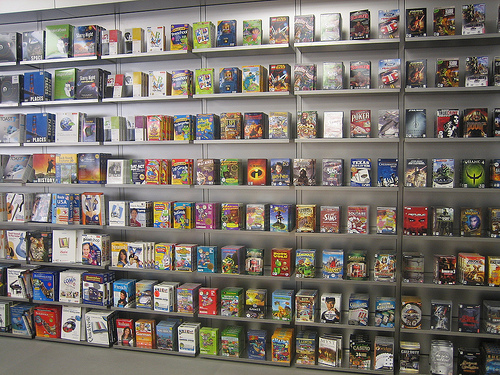
Boxed software isn't going away any time soon, says Smith Micro
Web retailer Amazon.com has released a few end of the year lists that show what people were buying in 2010. Among its "holiday hot sellers" list, Amazon said Smith Micro's Anime Studio Debut 7 and Manga Studio Debut 4 were two pieces of software that were given the most as gifts, along with Adobe Photoshop Elements 9.
When looking at the rising tide of app store-based software distribution, the popularity of netbooks and ultra slim PCs with no optical drives, and the hype surrounding smartphones, tablets, and Web terminals like Google's Chrome OS, boxed software like these would appear to be under serious threat of extinction. But good old fashioned boxed software serves a major purpose and has a specific group of consumers to whom it appeals.

Facebook becomes most searched, most visited in 2010
Google is often the target of the net faithful's ire for its ever increasing size and so-called "evilness." That distinction may now belong to Facebook, as Hitwise said Thursday the site now leads all others -- including Google -- as being both the most visited and most searched for in the US.
Facebook accounted for 8.93 percent of all traffic for the period of January through November 2010, followed by Google with 7.13 percent. Rounding out the top five were Yahoo Mail with 3.52 percent, Yahoo with 3.3 percent, and YouTube with 2.65 percent.
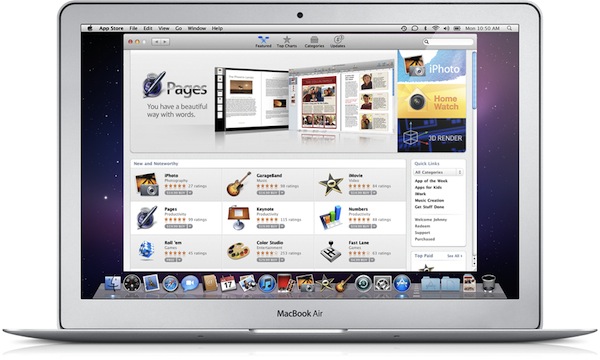
Should Apple stop selling software in its retail stores?
It's the question to ask with the Mac App Store launching in one week. Software takes up valuable shelf space Apple could use for other things, particularly in many of its smaller boutique-sized shops. I've asked Apple PR if the company plans to stop selling software at its retail stores but received no answer before posting.
Apple is notorious for pulling the plug on something and pushing the consumer market forward, whether or not it's ready to move. I remember when in 1998, with launch of the Bondi Blue iMac, Apple removed legacy ports, shifting to FireWire and USB. A decade later, Apple ditched the internal optical drive on the original MacBook Air. The newer model replaces the hard drive with solid-state storage. There are many other examples and some quite displeasing to consumers, when Apple releases something new incompatible with what its customers already have.

Amazon Kindle users can now lend e-books to friends
One of the major advantages Barnes and Noble's Nook e-reader offered over Amazon's Kindle was the ability to lend other users e-books that you had purchased. Today, Amazon closed that gap when it announced Kindle Book Lending.
Just like Barnes and Noble's Nook, Kindle users can now share certain books they have purchased with friends for a period of 14 days. From the "Manage Your Kindle" menu in your Amazon account, you can select "loan this book," and then enter the recipient's e-mail address and name. They do not have to own the Kindle hardware, and can read the book in any of the free Kindle applications. If one receives an e-mail alerting you that someone has loaned you a book, you have seven days to initiate the loan and start the 14 day loan period.

Chinese Trojan discovered in Android games
An Android-based Trojan called "Geinimi" has been discovered in the wild, mobile security company Lookout now warns. The Trojan is capable of sending personal information to remote servers and exhibits botnet-like behavior, the security company says.
Geinimi originated in China, and is being distributed inside applications and games downloadable in third-party Android app stores. Once the application is launched on the user's smartphone, the trojan collects location data, as well as the device's IMEI and IMSI numbers, and a list of all the apps the user has installed on his device. It then attempts to contact a remote server every five minutes to send this information.
What's it like to develop for Windows Phone 7?
I started developing applications and websites using Microsoft tools about 15 years ago, and I anticipated developing for Windows Phone 7. In fact, two of my WP7 apps were announced as winners in Microsoft's WP7 Federal Apps contest about two weeks ago. However, my enthusiasm is much less post launch, after struggling to get several of my apps approved for sale in the Windows Phone Marketplace.
When I went to register for my Marketplace account early in September, I got an error message at the end of the process. My credit card was charged the $99, but I had no access to the Marketplace developer portal. It took about a full week for this issue to be resolved and for me to get access to the portal -- however, the issue was fairly widespread as there were numerous postings to the support forum from other users experiencing the same issue. I believe this issue is still occurring, although not as commonly, as you can still find similar postings to the registration forums here.

Skype launches video chat for iOS, outdoes FaceTime
Popular instant messaging, voice and video chat client Skype today released a version for iOS that supports video calling on the iPhone and iPod Touch.
With the updated iOS application, users can make video calls to desktop versions of Skype as well as to other iOS devices over Wi-Fi or 3G mobile data connections.
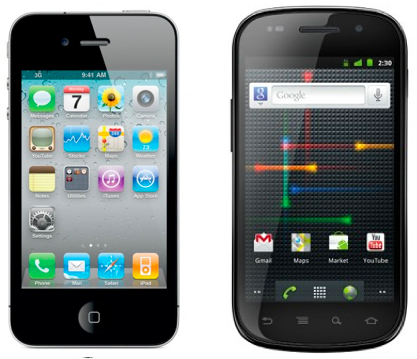
iPhone 4 vs Nexus S: Which smartphone is right for you?
Six months after moving to Apple's smartphone, I'm back on Android. On December 17, I bought the Samsung-made Google Nexus S from my local Best Buy. Days later, my iPhone 4 sold on eBay for $575, which will cover my early termination fee with AT&T and some of the new phone's cost. Like any other tech purchase, I did research beforehand but couldn't find what I most wanted: iPhone comparison to Nexus S reviews -- Apple's flagship smartphone to Google's superphone. After nearly two weeks using Nexus S, I'm ready to offer some experiential comparisons for other shoppers.
To be clear, I wasn't dissatisfied with iPhone 4. On the contrary, I was hugely satisfied with the phone and the user experience. Apple's smartphone feels solid to hold, offers breathtaking display and shoots pleasing photos and videos. With the exception of ongoing Bluetooth earpiece problems, iPhone satisfied -- perhaps too much. Psychologists say that marriages often break up not in a flurry of anger or arguments but silence. Two people drift apart, one day realizing they have little left in common. That sentiment in some ways describes my feelings about iPhone 4. Three-and-a-half years after the original phone launched, the iOS user interface is pretty much the same. The UI feels stale, uninviting and too PC-like. I love the hardware, but no longer pine for the software.
Skype explains outage, offers vouchers to customers
A systemwide failure which took down the popular VoIP service for about 24 hours beginning at 4pm GMT December 22 was caused by a server overload, chief information officer Lars Rabbe disclosed on Wednesday. This overload in turn caused delayed communication with Skype clients, in some cases causing crashes.
The problems even prompted CEO Tony Bates to e-mail users of the service, offering a credit voucher worth about 30 minutes of international airtime to its users -- and again publicly apologizing for the issues.

Nintendo: 3D may be harmful to children's vision
In what may be an attempt to fend off any potential lawsuits, Nintendo on Wednesday took the unusual step of actually recommending parents to not buy its upcoming 3DS handheld system for their children if they are under the age of six.
The game manufacturer's reason was that children at this age are still in the "developmental stage" and exposure to 3D imagery may damage their vision. It also recommended that gamers of all ages take more frequent breaks when playing 3D games.

What does Paul Allen need to win his patent lawsuit against Apple, Facebook? Texas
Microsoft cofounder Paul Allen really needs a lesson in how to effectively file and win patent lawsuits. For starters, you don't file them in a Washington State federal court. Other patent plaintiffs seem to get what Allen doesn't: You file in East Texas, in what is affectionately or unaffectionally called -- depending on which side of the verdict you're on -- the "rocket docket." Instead, Allen is back in a Seattle court, refiling a patent infringement case that got tossed about two weeks ago.
US District Court Judge Marsha Pechman vacated the original complaint for being too vague -- "spartan," she wrote -- listing infringers but offering no real examples of infringement. Based on my long experience reporting about technology patent cases, such little details probably wouldn't have stopped Allen in East Texas. The new lawsuit is more explicit, citing examples of real products that allegedly infringe on his patents. The lawsuit names Apple, eBay, Google, Facebook, Netflix, Office Depot, OfficeMax, Staples, Yahoo and YouTube -- but, hey, not Microsoft.

10 for 2010: Google stories that mattered
My second set of year-in-review retrospectives is 10 stories in disguise. The number is closer to 20, because I combined together the 7-part Chrome OS laptop review series into one. While I wrote fewer stories about Google than Microsoft, I found this list harder to create than the first one -- "10 for 2010: Microsoft stories that mattered."
These are 10 (OK, nearly 20) of my Google stories I believe that you should have read in 2010. You still have time! The stories are organized by importance, from least to most -- that is 10 to 1. I weighed importance based on relevance of the analysis to Google in 2010 and even in coming years. Not all readers will agree on which is more or less important, or perhaps not at all.