
Free tablets for UK pensioners as Argos promotes digital skills
We're increasingly becoming a digital society, yet almost one in five people in the UK lack digital skills and 52 percent of those are aged over 65.
In an effort to provide practical skills and access to technology, catalog retailer Argos has partnered with digital skills charity Go ON UK to offer workshops to 10,000 adults.

The Thing from the Internet -- and why we’re scared of it
According to a new survey UK consumers increasingly fear the pace of change they face and are particularly cynical about the need for connected, "Internet of Things" devices.
According to the survey of over 1,600 consumers by UK-based audit and accounting specialist KPMG, more than half of people (58 percent) resent the idea that computers seem to run their lives. Also 70 percent suggest that with the marketplace flooded by inter-connected devices, it's too easy for things to go wrong. The survey reveals a hankering for a return to 'simple' technology. Many, for example, mainly want their phone to make calls (54 percent) and the majority think that more advanced internet-based products such as smart fridges which self-order food or cookers reminding owners about recipes aren't needed.

The internet is a massive waste of time
Over the last couple of decades the internet has revolutionized how we work, how we shop, how we communicate, and how we consume media. In most regards it has made life quicker and easier, but it has also brought challenges and side-effects. Technology may have made many tasks simpler, but it has also increased distractions and shepherded in more ways to procrastinate. You've probably noticed that while you can get many things done faster than ever, you spend a great deal of time doing nothing of worth.
In fact, rather than saving money, the widespread adoption of technology could be costing business dearly. Research shows that nearly two-thirds of employees spend work hours browsing sites unrelated to work -- a surprising 3 percent of them spending more than 10 hours a week actively avoiding work online. All of these wasted man hours add up, resulting in an average cost of almost $3,000 for employee each year.

Lack of modern technology on the menu means UK restaurants are letting diners down
While new technologies have transformed a number of sectors, including healthcare, sport and finance, it seems that at least one industry is lagging behind. A new report commissioned by Berland and released by Velocity has revealed that UK restaurants are missing out on a collective £5.6 billion per year in revenue, due to their relative ignorance of modern tech.
According to the results, UK diners typically have to wait 11 minutes to pay in restaurants. This adds up to a staggering month of thumb-twiddling over the course of a lifetime, says Velocity. 76 percent of diners also said that inefficient service is a huge downside of eating out, and can have a more negative effect on the overall experience than receiving the wrong food order (48 percent).

Using mobile messaging to deliver better customer service
As mobile devices become almost ubiquitous, their attractiveness as a channel for businesses to interact with their customers becomes greater.
According to last year's ICMI mobile customer service strategy survey, 68 percent of experts believe mobile can improve the customer experience. To help companies take advantage of the opportunities mobile offers, enterprise mobile specialist OpenMarket is launching its latest Mobile Engagement Platform. It's a SaaS-based solution, allowing enterprises to easily create and deploy smart, interactive mobile engagement services worldwide with connectivity to over 200 countries.

Hand over your child and get free Wi-Fi
A handful of London residents unwittingly agreed to give up their first-born child when signing in to a public Wi-Fi hot spot as part of an experiment carried out by the Cyber Security Research Institute.
A "Herod clause" was included in the T's and C's, which promised free Wi-Fi if "the recipient agreed to assign their first born child to us for the duration of eternity".

Facebook apologizes to LGBT community, 'backs down' on real name policy
Facebook has issued an apology to "drag queens, drag kings", and the LGBT community for forcing users of the social network to reveal their real names or face having their pages suspended. The social network also bowed to pressure, saying that users will not necessarily have to use their real names in the future. Chris Cox, Facebook's Chief Product Officer, made a statement in an online post that admits the negative response to the policy "took us off guard". Why the sudden interest in real names? It seems that one person may have been to blame.
Facebook caused something of a storm of controversy recently when it forced many users to reveal their real names. Large groups of people were affected by this, but it was a number of drag artists who were most vocal in their complaints -- numerous petitions and campaigns, including #MyNameIs, started up. While it was drag queens who hit the headlines, Facebook's sudden enforcement of its long-standing real names policy also affected performers such as musicians -- fans and friends were confused when seemingly new people appeared in their friend list. Despite the backlash Facebook faced, the social network stuck to its guns, remaining adamant that the policy was here to stay, and dismissing complaints out of hand.
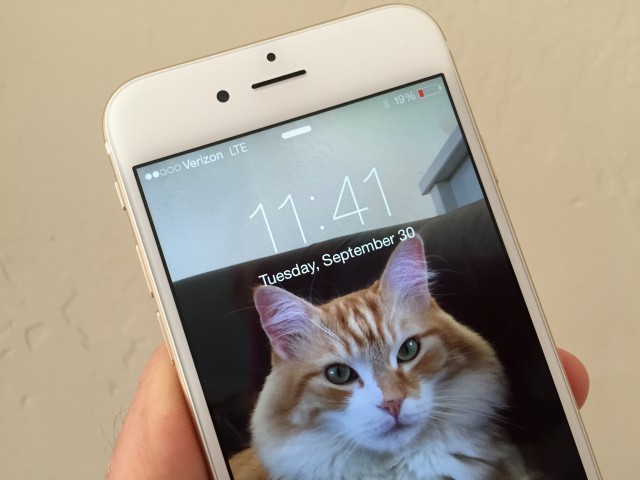
iPhone 6: an honest review
I preordered Apple's new smartphone on September 12, and it wasn't easy. Few months back, I went "Microsoft All-In" for the summer, purchasing the Nokia Lumia Icon on contract from Verizon. So I didn't qualify for the discounted, upgrade price. But when there's a will, there's a way -- and a generous family member helps make something special happen.
My iPhone 6 review begins with such disclaimer. Like iPad Air, I paid for the device. Apple didn't send me a review unit, but I did ask, and I am not on the preferred list of writers who get early access to "iDevices" and who presumably are more likely to rave. Such qualification is necessary, because iPhone 6 is an exceptionally satisfying handset, and I don't want to be mislabeled fanboy for stating such. That's a brash conclusion coming from someone abandoning a competing smartphone with better specs and satisfying user experience.

The Ryder Cup is the most technologically advanced golf event ever
This year's Ryder Cup in Scotland is one of the most technologically advanced golfing events, thanks to the introduction of Radio Frequency Identification Technology (RFIT).
Spectators receive a special wristband with their tickets which allows them to take part in various activities around the course, such as the BMW car display, the Ryder Cup Experience with Standard Life Investments and the 'Walk the Course' competition from Active Scotland.

Microsoft lights up Seattle music festival with experimental dance Cube
http://youtu.be/1jzHcXZFJMw
Microsoft has created a four-foot high interactive art installation for Seattle's Decibel music and arts festival.
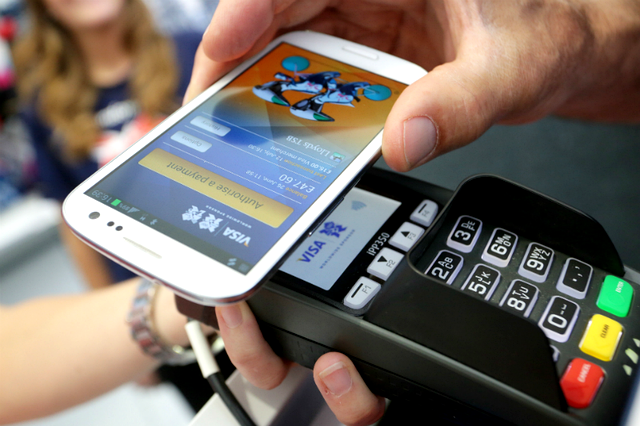
How to thwart contactless pickpockets
Pickpockets targeting contactless payments are set to multiply following the decision by Transport for London to roll out the technology to London Underground stations and Bitdefender has outlined a number of precautions to take.
The company has detailed the different types of attacks that could take place including skimming, eavesdropping, hacked terminals, replay attacks, and cross-contamination.

Intel set to release a wireless charging bowl later this year
Intel’s wireless charging bowl is on track to be released by the end of the year with the company still tight-lipped on how much the revolutionary device will end up costing.
CEO Brian Krzanich confirmed as much during a speech at MakerCon in New York when he said that the device will be "on the market right around the end of this year," according to CNET.

Virtual reality is coming to the workplace and it may be sooner than you think
Not so very long ago virtual reality was the stuff of science fiction but it's increasingly emerging into the real world.
A new infographic produced by collaboration specialist PGi explores the current state of virtual reality and the possibility that it will soon be appearing in the world of work.

Panic over! Twitpic is given a stay of execution after a buyer is found
Twitpic will no longer close on 25 September as the photo sharing service has found a buyer. There's not yet any word on who is behind the acquisition, but the takeaway news is that photos should be safe as Twitpic will live to fight another day.
Just a couple of weeks ago, founder Noah Everett posted the news that Twitpic was to close following something of a legal tussle with Twitter. But things have taken a turn for the better. After users scrabbled to download their images to ensure they were safe, it now transpires that the service is not going anywhere.

Why the football Premier League needs to go digital
The use of technology within the sporting world is extensive. Players on the pitch or court, or in the pool, make the most of sports science in their diets and training. Strength and conditioning equipment is state-of-the-art, with some of the biggest names in professional sport investing huge sums of money in training facilities.
Even the kit worn by athletes uses technological innovations to provide every advantage possible. For teams, an inch or a split second can prove vital and kit needs to reflect this.