
How to disable Smart Compose predictive text suggestions in Gmail
If you're a Gmail user, you've probably noticed a new feature in the web version recently. Building on the Smart Reply feature that makes it possible to insert stock responses with a click, Google has been rolling out a predictive text component called Smart Compose.
The idea is simple, and will be familiar to users of the Gboard keyboard on Android. As you type a message, Gmail guesses what you might be trying to say and offers to complete your sentences for you. In theory this sounds helpful, but many people find it irritating and invasive -- and very possibly a privacy concern when you consider that it means your messages have to be analyzed. Here's how to disable Smart Compose.

How to voice-control your Android phone using the Voice Access app
Digital assistants are becoming increasingly popular as people become used to the idea of controlling electronic devices by speaking to them. With Android, Google has supported limited voice control for a while with "OK, Google", but with the release of the Voice Access app you can now do much, much more.
The problem with uttering "OK, Google" at your phone is that there are fairly severe limitations on what you can do -- there are only a small number of supported actions. But with Voice Access you can use your voice to dictate and edit text, and interact with anything that appear on the screen. Here's how to get started.
Block more Google tracking with the latest Privacy Badger extension
We live in an age where privacy is simultaneously highly valued and under increasing attack -- and nowhere is this truer than online. The EFF (Electronic Frontier Foundation) has been fighting the corner for web users for some time, and with the latest version of its Privacy Badger extension it is helping people fight back against Google.
The latest update to the extension -- which is available for Chrome and Opera on the desktop, and Firefox on both the desktop and Android -- introduces new blocks on "link tracking" in Google web search, Hangouts and the Docs suite
Sans Forgetica: the font that could help you remember
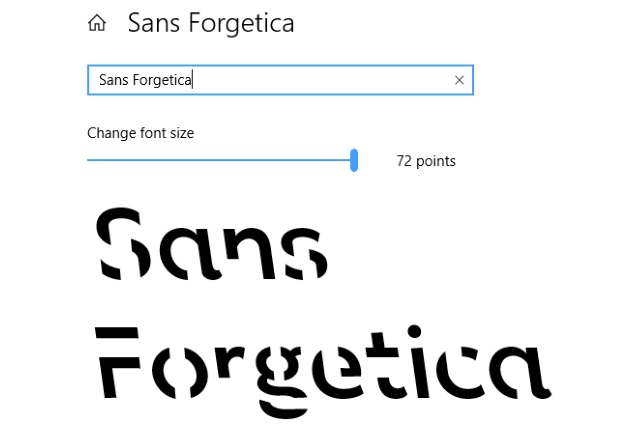
Researchers from Australia's RMIT University have created a font which they say could help you to retain more data.
Sans Forgetica is the result of work involving typographic design specialists and psychologists, and it has been designed specifically to make it easier to remember written information. The font has purposefully been made slightly difficult to read, using a reverse slant and gaps in letters to exploit the "desirable difficulty" as a memory aid.
Google Assistant gets a revamp and new features
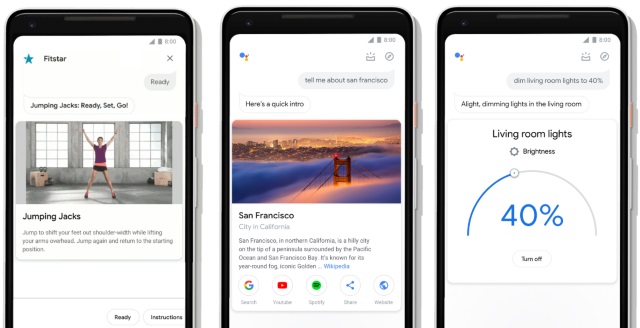
Having introduced a new Voice Access app to allow for full voice control of Android phones, Google has also redesigned Google Assistant on both iOS and Android.
The revamp makes the app a more visual experience, with Google acknowledging that while the Assistant is a voice-activated tool, touch is also a key component. With the redesign, Google hopes that bigger visuals and new controls will make it easier and faster to get things done with a combination of voice and touch.

Google launches new .page TLD
Google has announced the availability of a new TLD (top-level domain) from its own Google Registry. Joining the likes of .com and .org comes .page which is described as "a new opportunity for anyone to build an online presence".
With security in mind, Google says that all .page websites require an SSL certificate. For businesses and individuals, the race is now on to grab the domain they want before it is snapped up by someone else.
Google's new Voice Access app lets you control your Android phone with your voice
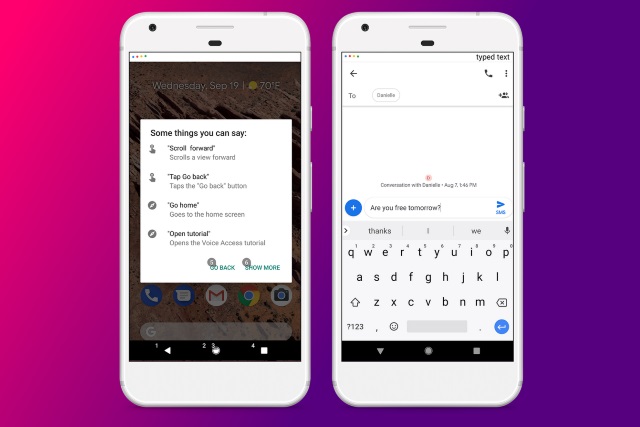
Google has a new app that allows for full control of an Android phone with your voice -- Voice Access. While it has been possible to perform simple actions such as switching apps and writing messages, the ability to interact with on-screen elements is something that has been missing.
Pitched as an accessibility tool, Voice Access fills in many gaps in Android's voice control system, making it possible to navigate apps, edit text and much more.

How to access Google's secret text adventure game
Google is well known for hiding Easter eggs in its software and tools, and a new little treat has just been discovered. Hidden in Google Chrome's developer console is a text adventure game.
While this is not exactly The Hitchhiker's Guide to the Galaxy, and it's unlikely to draw you away from Fortnite or Assassin's Creed, the game is a simple delight like Chrome's jumping dinosaur. Here's how to access it.
Google is trying to make Chrome extensions safer with new Chrome Web Store review process and permission controls
Extensions are a great way to increase the capabilities of your web browser, but they can also be the source of problems. Malicious extensions can be a serious headache, and this is something that Chrome users know more than most. Now Google is looking to improve security.
The company has already promised that with Chrome 70 it is going to give users more privacy controls, and today it announced that this version of the browser will also introduce permission controls extensions. On top of this Google is introducing a new review process for extensions submitted to the Chrome Web Store, as well as placing a ban on extensions with obfuscated code.
Major Google Maps update brings real-time public transport updates, music control, and more
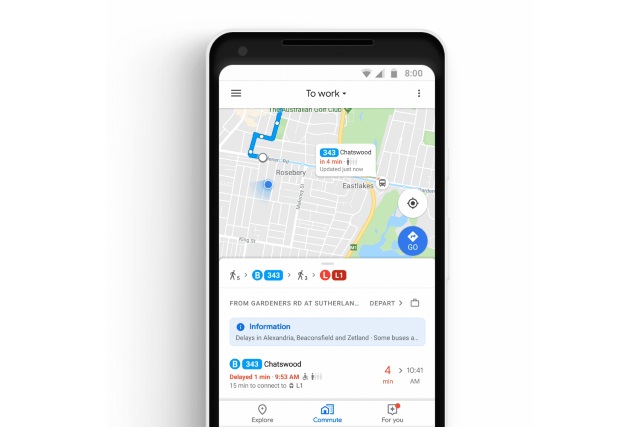
Google is pushing out a big update to its Google Maps app with the aim of making your daily commute easier. One of the biggest additions is support for mixed-mode commutes -- those journeys that involve multiple modes of transport -- and to help with this, there's also real-time information about the location of buses and trains.
But it doesn't end there. Google Maps now also supports Spotify, Apple Music, and Google Play Music podcast and music playback to help keep you entertained while you travel.
Google Maps now has a voting option to help plan group events
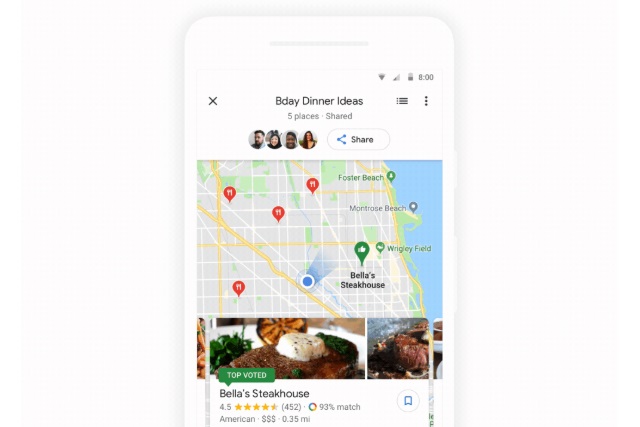
Both the iOS and Android versions of Google Maps have received an update that will be welcomed by anyone who has ever struggled to arrange a meet-up place, or a dining location with a group of friends.
A new voting function makes it easy to gauge opinion and see which location is most popular without having to resort to endless messages, or arguments in group chat. It's a simple idea, but one that can help avoid many heated arguments and allow you to reach a decision faster.

After complaints, Google is going to give users more privacy controls in Chrome 70
With the release of Chrome 70, Google is set to address two recent privacy concerns with its browser. Users have been unhappy with Chrome 69 forcibly signing them into the browser when they sign into a Google website, and there have also been concerns about the handling of cookies.
Due for release in the middle of October, the next version of the web browser will enable users to disable the controversial sign-in feature, as well as changing the way Chrome handles the clearing of auth cookies.

Users balk as Chrome 69 forcibly signs them into the browser
Chrome users have reacted angrily after the discovery of a new forced sign-in for the web browser. In short, the change means that when you sign into a Google service -- such as Gmail -- you are also automatically signed into this account within Chrome itself.
While a handful of people have welcomed the new sign-in activity, there is a very vocal number who are extremely unhappy. In addition to the perceived privacy concerns, what has particularly upset people is the fact that they are being signed into Chrome without being told about it.

Fake bank apps found on Google Play store
Cybersecurity company ESET has discovered six fake banking and personal finance apps on the Android store. The apps had been installed more than 1,000 times total before being taken down by Google.
ESET believes all of the apps are the work of a single attacker. They have impersonated six banks from New Zealand, Australia, the United Kingdom, Switzerland and Poland, and the Austrian cryptocurrency exchange Bitpanda.
Chrome OS 69 rolls out with Linux app support and new Material Theme
Google is in the process of rolling out Chrome OS 69 to the stable channel, giving more users the chance to enjoy the new Material Theme and take advantage of new features such as support for Linux apps.
The updated look will be familiar to Android users -- rounded corners abound -- and there are numerous other changes and additions including a new Night Light mode, better dictation options, and an updated Files app.