
Free security analytics helps fight remote worker threats
We've seen many companies offering free software during the current crisis. Now security and risk analytics company Gurucul is launching two free services to help organizations protect themselves against cyberattacks that target their remote workers and third-party identities.
These deliver the Gurucul Unified Security and Risk Analytics platform as a cloud service with pre-configured and tuned algorithms that can detect unusual and high risk behavior patterns exhibited by remote workers as well as third party identities and devices.

IT leaders still keen to innovate and invest despite uncertainty
Research into the buying intentions of IT decision makers in the UK has revealed that, despite many organizations (55 percent) putting their buying on hold, 38 percent are still reviewing their digital needs and progressing buying decisions.
The study of 100 top IT decision makers, conducted earlier this month by data-driven consultancy Resonance, finds 67 percent of those actively seeking solutions have increased their urgency to implement them.

Looking ahead to the cybersecurity challenges of 2022
Just in case you didn't have enough to worry about at the moment, the Information Security Forum has published its Threat Horizon 2022 report, looking ahead to the cyber challenges of the next two years.
Balancing today's realities with forecasts that push the limits of thinking, the report highlights nine major threats, broken down into three themes, that organizations can expect to face as a result of developments in technology.

'Fraud guides' account for almost half of material for sale on dark web markets
Digital risk protection company Terbium Labs has released a trend report on the stolen and fraudulent data of three of the largest multi-good dark web marketplaces, which finds that fraud guides account for 49 percent of the data being sold.
Personal data lags some way behind at at 15.6 percent, followed by non-financial accounts and credentials (12.2 percent), financial accounts and credentials (8.2 percent), fraud tools and templates (eight percent) and payment cards (seven percent).

New tools help automate container security
Containerization is increasingly popular, but its adoption presents challenges when it comes to vulnerability management and protection.
DevOps security specialist NeuVector is launching new features for its platform aimed at enterprise teams.

Hackers are selling two serious Zoom zero-day vulnerabilities for $500,000
Both the Windows and macOS versions of Zoom have critical, unpatched security vulnerabilities that could be exploited by hackers to target users and spy on calls and meetings.
Security experts say -- despite not having seen the actual code for the exploits -- that the Windows version of Zoom is affected by an RCE (Remote Code Execution) described as being "perfect for industrial espionage". The zero-days have been offered for sale for $500,000.

F-Secure launches protection and response service to protect remote workers
With a sudden shift to remote working many companies are faced with lowering quality controls and making short term tactical fixes to support their remote workforce, increasing their exposure to threats and cyberattacks.
Security specialist F-Secure has launched a new offering based on its award-winning managed detection and response (MDR) service, F-Secure Countercept.

Kaspersky launches new tool to control shadow IT
With many more people working from home currently the risks to business data from the use of potentially insecure applications is increased.
Kaspersky is launching a new version of its Endpoint Security Cloud, which will enable businesses to control the unauthorized use of potentially insecure applications and sites by employees whilst working from home.

Microsoft fixes multiple actively exploited zero-day vulnerabilities as part of Patch Tuesday
Microsoft's monthly Patch Tuesday security updates are always important, but the ones released this week are particularly important. Not only do the fixes address numerous zero-day vulnerabilities, but the security flaws they fix were being actively exploited.
In all, Microsoft has plugged 113 CVE-numbered vulnerabilities this month. 17 of these are marked as being critical, and 96 as important.

Why critical infrastructure businesses shouldn't wait for a cyber crisis to push for cultural change [Q&A]
Cybersecurity is important to any enterprise, but it's especially key to those that are delivering critical infrastructure.
But recent research from Nozomi Networks shows that often the development of a holistic security approach is being driven by events such as security breaches.

Mirai botnet 20x more likely to be found on home networks than corporate ones
With greater numbers than ever working remotely due to the coronavirus crisis, there's increased focus on the security risks posed by home networks.
New research from BitSight, based on analysis of over more than 41,000 organizations, reveals that networks used to work from home are 3.5 times more likely to have malware present than the traditional corporate network.

Hundreds of thousands of stolen Zoom accounts for sale on hacker forums for next to nothing
Problems for Zoom and users of the videoconferencing software seem just about unending. Following on from the revelation that a number of account credentials were available on the dark web, a new report shows that in fact there are credentials for hundreds of thousands of accounts available on hacking forums.
In all, over half a million account details have been found available -- some sold for fractions of a penny, and others made available completely free of charge.
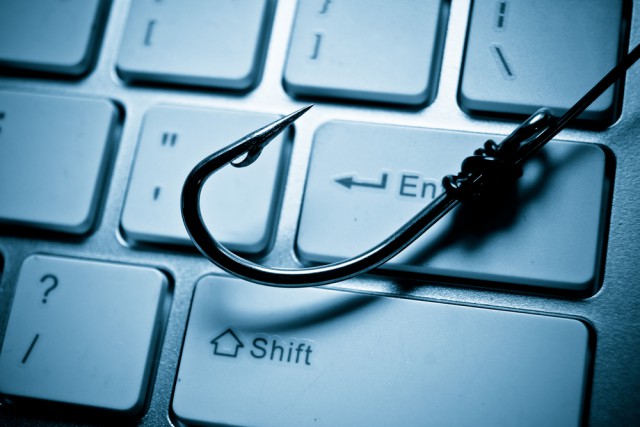
Apple is the brand most imitated in phishing attacks
A new study from Check Point Research highlights the brands which are most frequently imitated by criminals in attempts to steal individuals' personal information or payment credentials.
The Brand Phishing Report for the first quarter of this year shows Apple was the brand most frequently imitated, up from seventh place in the final quarter of 2019.

Zoom will soon let some users choose which countries their data is routed through
As part of its continuing efforts to regain trust following a series of privacy and security scandals, Zoom has announced that it is introducing the option for users to choose which countries their data is routed through.
The move comes after concerns were voiced at Zoom's admission that some US calls were being routed through China. The new option will allow users to opt in or out of specific data center regions; unfortunately, this feature will not be made available to everyone.

Cloudflare ditches Google's reCAPTCHA because of privacy concerns and costs
Cloudflare has moved away from using Google's reCAPTCHA, opting instead for the independent hCaptcha bot detector.
The company explains the reasons behind the change, citing not only the fact that Google would now like to charge Cloudflare for what used to be a free service, but also the privacy concerns that stem from anything to do with Google.