
New solution offers network intrusion detection for containers
Security-as-a-service provider Alert Logic is using the AWS Cloud Summit to launch an industry first network intrusion detection system (IDS) for containers.
It’s available in Alert Logic Cloud Defender and Threat Manager solutions and is able to inspect network traffic for malicious activity targeting containers, providing organizations with faster detection of compromises and reduced risk of attacks to cloud workloads on Amazon Web Services.

McAfee launches new enterprise security portfolio
As businesses move more of their systems into the cloud the protection they require to keep them safe needs to be more flexible.
Cybersecurity specialist McAfee is responding to this challenge with the launch of McAfee MVISION, a portfolio of products which strengthens the device as a control point in security architectures, delivers simplified management, stronger Windows security, behavior analytics, and threat defense for Android and iOS devices.

This is how prioritization can save us from the shortage of cybersecurity professionals
It is no secret that the technology sector has a labor problem. As demand for new products and services continues to rise, we are simply not producing enough qualified developers to keep up. Just ask any company where their greatest pain point is and they will have hiring somewhere towards the top of that list.
This shortage is felt especially acutely when it comes to security professionals that understand both how code is written, and how to keep it secure. A 2018 report from the Enterprise Strategy Group (ESG) found that 51 percent of respondents reported shortages of cybersecurity skills as an area of concern. These concerns have been on the rise in recent years, spiking from a reported 23 percent in 2014 citing cybersecurity skills as a problem, up to the latest 51 percent statistic from this year.

Malwarebytes arrives on iOS to keep your iPhone safe from snoopers and scammers
Malwarebytes already offers a decent security app for Android, but the company has never had a version for iOS -- until now.
While iPhone and iPad users are less at risk from malware than their Android counterparts, thanks to Apple’s walled-garden, they aren’t necessarily completely safe -- the threat of spam calls, scam websites, fraudulent texts and bad ads remains.

Smartphone apps may be secretly screenshotting you
With every new privacy scandal that erupts across the digital landscape, we smartphone users and digital nomads must ask ourselves the same question: Have we reached diminishing returns on the usefulness of modern technology? It seems sometimes like every new convenience arrives with a litany of security concerns attached.
The latest news to strike a blow to our expectations of digital privacy is that smartphone apps appear to have been taking screenshots of users' devices and records of their keystrokes without their knowledge.

Cylance unveils Smart Antivirus for consumers
Traditional signature-based antivirus solutions struggle to cope with the pace of change in today's malware world. But while enterprises have had access to sophisticated machine learning solutions for a while these have largely been denied to consumers.
Now though Cylance is launching an AI-based antivirus solution aimed at the domestic internet user.

AI solution delivers accurate voice authentication
There's growing interest in biometric security solutions as passwords are increasingly seen as outmoded and at risk from phishing and other attacks.
Biometric solutions provider ID R&D is launching a new version of its voice biometric security solution, IDVoice. Enhancements to the product allow it to deliver what is claimed to be the industry's fastest and most accurate text-independent biometric verification.

Chrome's RAM usage is higher than ever as Google introduces Site Isolation to fight Spectre
Google's Chrome browser may be popular, but you'll find a lot of its users complain about high memory usage. With Chrome 67, things just got even worse.
If you've noticed that Chrome on the desktop is using more RAM, you're not imagining it. Google has enabled a Site Isolation feature in Windows, Mac, Linux and Chrome OS to help mitigate against the Spectre vulnerability -- and it's a bit memory-hungry.

New Spectre 1.1 and Spectre 1.2 CPU vulnerabilities exposed
It seems that the Spectre and Meltdown vulnerabilities saga is never-ending, and now there are two new related CPU flaws to add to the mix. Dubbed Spectre 1.1 and Spectre 1.2, the vulnerabilities (CVE-2018-3693) exploit speculative execution and can modify data and bypass sandboxes.
Two security researchers have disclosed details of the new vulnerabilities, both of which have the potential to leak sensitive data. By tinkering with the speculative execution processes of Intel and ARM CPUs, it would be possible to use malicious code to extract information such as passwords and crypto keys.

Timehop admits its security breach was worse than first thought
The security breach suffered by Timehop on July 4 was much more serious than the company first thought. In an update to its original announcement, the company has revealed that while the number of account affected by the breach -- 21 million -- has not changed, the range of personal data accessed by hackers is much broader.
Timehop has released an updated timeline of events, having initially felt forced by new GDPR rules to publish some details of the breach before all information had been gathered. The company says that it is also unsure of where it stands with GDPR, and is working with specialists and EU authorities to ensure compliance.

Arch Linux AUR packages found to be laced with malware
Three Arch Linux packages have been pulled from AUR (Arch User Repository) after they were discovered to contain malware. The PDF viewer acroread and two other packages that are yet to be named were taken over by a malicious user after they were abandoned by their original authors.
A user by the name of xeactor took ownership of acroread and tweaked the source code of the package, lacing it with malware. In this particular instance there were no major consequences, but it highlights the security issues associated with user-submitted software.

New solution provides adaptive authentication for Windows and Mac
Once a user is logged on, they typically have access to a wealth of sensitive applications and systems. Strong authentication at the front door therefore helps boost the overall security of the entire system.
A new adaptive authentication system developed by identity automation specialist SecureAuth Corp + Core Security, is available for Windows and Mac systems enabling adaptive and multi-factor authentication for users logging into servers, desktops, and laptops.

Malware infections drop during World Cup matches -- Result!
Even if you’re not a soccer/football fan, it probably hasn't escaped your notice that there's a World Cup going on in Russia at the moment.
We expect big sporting events to be exploited to launch phishing and malware campaigns but researchers at Enigma Software have spotted an interesting new phenomenon -- malware infections actually drop on match days.

Cybersecurity: It's about time
The sprawling and complex set of subjects we call cyber security can all be tied to one fundamental concept -- time. The time it takes a cyberattack to penetrate, the time from initial compromise to lateral movement across the network, the time it takes for an attack to be detected, to be analyzed, to be responded to and remediated.
Time is one of seven base quantities in the International System of Units upon which all other measures are constructed. No surprise then that it’s the single most important factor in cybersecurity program success.
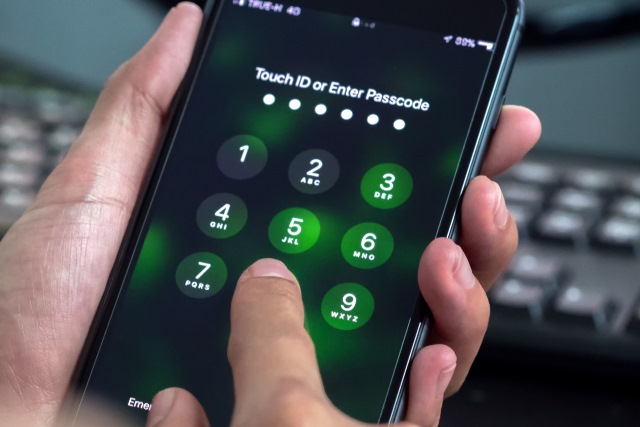
Apple releases iOS 11.4.1 with passcode cracking blocker -- that can be easily bypassed with an accessory it sells
Apple is working away on iOS 12 at the moment, but it's still pushing out updates for iOS 11. As promised just a few weeks ago, a new update aims to block the use of iPhone passcode cracking tools, such as those used by law enforcement. But the patch has already been found to be flawed.
The latest update to iOS introduces a new USB Restricted Mode which is supposed to prevent the Lightning port of an iPhone or iPad being used to transfer data an hour after the device is locked. However, security researchers discovered that it is possible to bypass this security feature by plugging in an "untrusted USB accessory" -- and Apple sells such a device for just $39.