



Security software is causing Firefox users to lose saved passwords
Firefox users are reporting that their saved passwords have been lost, with the problem seemingly caused by antivirus software rather than being an issue with Firefox itself.
Antivirus software such as Avast and AVG appears to be corrupting the file in which Firefox stores passwords, rendering it unreadable. Thankfully, passwords can be recovered, but -- for the time being --- they will be corrupted again when you restart your computer.
Hacker hits Symantec and accesses passwords
Security firm Symantec was attacked by a hacker back in February, but the company did not reveal details of the incident.
The attack has been brought to light by Guardian Australia which has seen some of the data extracted by hackers. This comprises not only passwords, but what is thought to be a list of Symantec clients -- including government agencies. But Symantec is downplaying the data breach, dismissing it as a "minor incident".

Chrome 76 makes it easier to get around paywalls
Google is busy working away on Chrome 76, and the beta version of the browser includes a change that will please anyone looking to bypass paywalls and view articles for free.
Many people switch to Incognito Mode, aware that this makes it possible to access paywalled articles on sites such as the New York Times. Many sites offer a number of free articles to non-paying visitors, and using this mode makes it impossible to determine whether you have reached your free article limit or not. As such, some sites blocked access to anyone using Incognito Mode -- but Chrome 76 has a trick up its sleeve.

CERN is moving away from expensive Microsoft software and embracing open source
CERN -- the European Organization for Nuclear Research best known for its particle smashing Large Hadron Collider -- has decided to eschew Microsoft in favor of open source software.
For many years, CERN benefited from hefty discounts on Microsoft products, but this is coming to an end. Rather than paying hugely increased licensing fees, the organization is instead implementing its own Microsoft Alternatives project, known as MAlt. CERN says it is "taking back control using open software".

Rowhammer-based RAMBleed exploit lets hackers steal data from memory
Security researchers have revealed an exploit that can be used by hackers to steal data from DRAM, even if ECC protection is in place. RAMBleed is a Rowhammer-based attack that can also be used to alter data and increase privilege levels.
Taking advantage of the design of modern memory chips, a Rowhamer attack works by "hammering" the physical rows of data in quick succession causing bit-flipping in neighboring rows. RAMBleed takes this in a different direction, using a similar technique to access data stored in physical memory.

Facebook will pay you to gather information from you
That Facebook gathers personal information from its users should come as no surprise -- it could be argued that it is the social network's raison d' être. Following numerous privacy scandals, and the controversial (and since-closed) Research and Onavo programs, Facebook is now ready to be open about its data collection, and is even willing to pay people for this.
The new "Study from Facebook" app gives Facebook users the chance to volunteer to share information about their app usage -- and get paid for divulging this information. Sound good to you?
Firefox unveils new-look logo and introduces new parent brand
Firefox has revealed its redesigned branding, including a new icon for its web browser, as well an introducing the logo for the new Firefox parent brand, some 18 months in the pipeline.
As well as a new look, the icon features an updated color palette which is not just about aesthetics, but also accessibility. There's also a new, modern typeface, as well as what's being described as a "new shape system".

VLC 3.0.7 includes more security fixes than ever thanks to the European Commission
Version 3.0.7 of VLC has been released, and while it may seem like a minor x.x.x update, it includes more security fixes than any other previous release -- including two high security issues.
Jean-Baptiste Kemp, the president of VLC-maker VideoLAN, says the number of fixes included in this version is due to the EU-FOSSA bug bounty program, funded by the European Commission.

US Customs and Border Protection says photos of thousands of travelers were stolen in a data breach
Hackers have stolen the photographs of travellers entering and leaving the US, as well as photos of their license plates, US Customs and Border Protection (CBP) has said.
The cyberattack was carried out on the network of a federal subcontractor, and the images were taken as part of a "malicious cyberattack". Although the hack attack has only just been revealed publicly, CBP first learned of it on May 31.
Microsoft reveals Project Scarlett, its powerful next-gen Xbox console with 8K graphics coming in 2020
At E3, Microsoft has revealed details of its next-generation Xbox, dubbed Project Scarlett, which is scheduled for release in late 2020.
It's not yet known what the follow-up to the Xbox One will be called, but among the launch titles is Halo Infinite. As for the console hardware, Project Scarlett will feature an AMD Zen 2 chip, Radeon RDNA graphics architecture, GDDR6 memory, SSD, and support for 120 fps, 8K graphics along with real-time ray tracing.
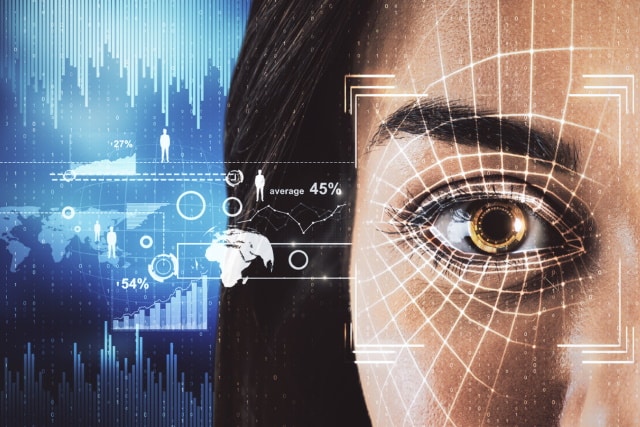
Microsoft takes down huge MS-Celeb-1M facial recognition database
Microsoft has deleted a database containing around 10 million photographs that was being used to train facial recognition systems.
Known as MS-Celeb-1M, the database was created in 2016, and originally contained photos of celebrities. Over time, however, images of writers, journalists and others crept in, and ultimately 100,000 individuals were to be found in it. Microsoft has not made much noise about the deleted content, but has said that the database was wiped as the person maintaining it was no longer a company employee.
Apple explains what the closure of iTunes means for you and your music
At WWDC this week, Apple not only unveiled the new Mac Pro and an insanely expensive monitor stand, but also confirmed that iTunes is going away -- for Mac users, at least.
This did not come entirely as a surprise, but it has left iTunes users wondering just how the transition to the new Apple Music app will work, and what will happen to their music, playlists, credit and so on. Now Apple has explained how the whole process will work.

Google's streaming game service, Stadia, launches in November with an impressive line-up of games
Google's much-anticipated cloud gaming service, Stadia, is due to launch in November. The company has revealed the launch date, as well as details of pricing and the games you can expect to play -- including Baldur's Gate III.
In all, there are over 30 games confirmed for Stadia, and Google is ramping up the hype by giving gamers the chance to pre-order right now. Anyone placing an order for the Stadia Founder's Edition can enjoy a number of benefits including a limited edition controller and three months of Stadia Pro, the subscription option that gives access to some games.

YouTube clamps down on hate speech by banning supremacism, Holocaust denial and more
YouTube's on-going battle against hate speech on its platform continues, and the site has just announced new policies that it hopes will help to further curb the problem.
As part of its new rules, YouTube is now taking a tougher stance against discriminatory material, banning supremacist videos such as those that promote Nazism. Also banned are videos that seek to spread misinformation by denying that "well-documented violent events", such as the Sandy Hook Elementary shooting, ever occurred. Holocaust denial is also banned.

BlueKeep Windows vulnerability is so serious, even the NSA wants you to patch your system
It's around three weeks since Microsoft first urged Windows users to patch their systems against the BlueKeep (CVE-2019-0708) vulnerability. Concerned that not enough people were taking notice, the company then issued a further warning stressing the importance of installing a patch.
Now the NSA has got involved, joining Microsoft in begging users to secure their Windows XP and Windows 7 computers. The agency says that is "concerned that malicious cyber actors will use the vulnerability in ransomware and exploit kits containing other known exploits, increasing capabilities against other unpatched systems".



