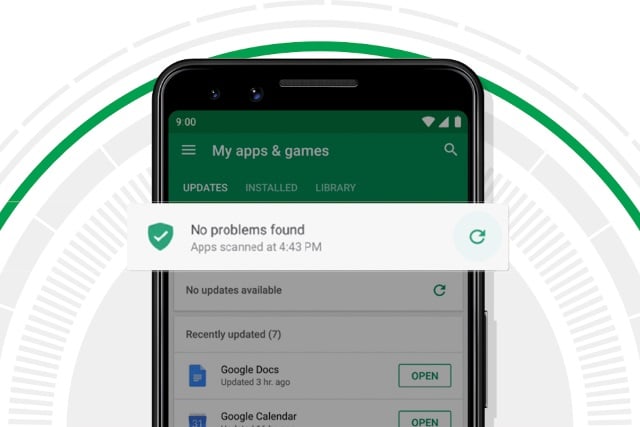
Google publishes its Android Security & Privacy 2018 Year in Review
Google has published its fifth Android Security & Privacy Year in Review, this time looking back at 2018. While the report draws attention to some of the security and privacy improvements the company has made, it is not just about Google blowing its own trumpet.
The report shows that payouts made through Google rewards programs -- payments made to outside researchers and individuals for bringing security issues to the company's attention -- reached $3 million in 2018. Google also says that in the fourth quarter of the year, 84 percent more devices received a security update than in the same quarter in 2017.

Canceled: Apple's AirPower wireless charging mat will not be released
Apple has confirmed that its long-awaited wireless AirPower charging mat is not going to be released. The company says quality issues are to blame for the decision.
The product was originally announced back in 2017 and was destined to be a convenient way to wirelessly charge iPhones, Apple Watches and AirPods. Its release had been repeatedly pushed back, but now it has been canceled completely

Russia orders NordVPN, ExpressVPN, HideMyAss and other VPNs to block numerous sites
VPNs are frequently used by people to increase security, improve privacy, to browse the internet as if in another country, and to bypass restrictions put in place by ISPs and governments. Aware of this, authorities in Russia have ordered ten big-name VPNs to block access to various sites banned in the country.
Among those to have been contacted by the authorities are NordVPN, ExpressVPN, IPVanish, HideMyAss and TorGuard. At least one of these VPN providers has decided to pull out of Russia.

UK watchdog says Huawei poses a national security risk
In its fifth annual report, the UK's Huawei oversight board says that the Chinese firm poses a threat to national security. It reached the conclusion after discovering that the company has made "no material progress" in addressing the security flaws highlighted in last year's report.
But while the report was damning of Huawei, saying it found additional "significant technical issues in Huawei’s engineering processes leading to new risks in the UK telecommunications networks", the board stopped short of calling for a ban on Huawei's involvement in 5G in the UK.
Facebook explicitly bans white nationalism and white separatism
The "praise, support and representation" of both white nationalism and white separatism are to be explicitly banned on Facebook and Instagram. The new policies will be enforced as of next week.
Facebook announced the change in policy as it and other social networks face increasing pressure to do more to counter hate speech. It also comes in the wake of the Christchurch, New Zealand mosque shooting, footage of which was shared on the platform.

See the Samsung Galaxy Fold hinge in action in an official stress-test video
Aside from 5G, it seems that the next big movement in the world of smartphones is going to be folding devices. Both Samsung and Huawei have announced foldables in recent weeks, with each adopting different designs.
As smartphones with folding screens are a new category of device, users understandably have questions about them. What are they like to use? Is the crease visible? Will the screen hold up to continued folding and unfolding? In a new video, Samsung shows how its Galaxy Fold is stress-tested to ensure that it can withstand 200,000 openings and closings.
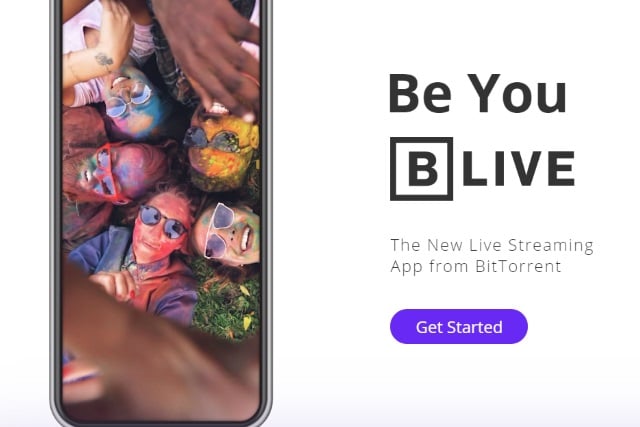
BitTorrent Inc announces BitTorrent Live, a social streaming platform that's not based on BitTorrent
BitTorrent Inc has announced plans to launch a new social media platform for live streaming. It will be called BitTorrent Live and -- at least initially -- it will be centralized rather than decentralized, meaning that it is not based on the BitTorrent protocol or other P2P technology.
The first beta version is expected to launch in the coming quarter, and it will compete with the likes of Facebook Live. BitTorrent Live will enable users to stream content to mobile devices, or broadcast live, and will include social media elements.

Almost half of industrial computers hit by malicious cyber activity in 2018
Kaspersky has released the results of an astonishing study that found that almost half of world's Industrial Control System (ICS) computers was subjected to malicious cyber activity last year.
While malware and cyber attacks have been a problem for some time, there is particular concern about the rising numbers of ICS computers being affected. In the case of downtime for such systems, there is the risk of material losses and production downtime at industrial facilities.

Check to see if your computer was targeted by the ASUS ShadowHammer malware
Yesterday we reported about a warning from Kaspersky that the ASUS Live Update Utility had been hacked to deliver ShadowHammer backdoor malware. ASUS has now released a patch to secure systems, and Kaspersky has released a tool that you can use to check whether you have been affected by the malware.
It's important that ASUS users install the patch -- described as a "critical" update by the company -- to secure their systems, but it's also a good idea to use Kaspersky's utility to see whether your computer has been infected with ShadowHammer.

Warning: Don't change your Twitter birthday to 2007
Many things go viral online these days -- funny cat videos, memes, stupid "challenges", and all manner of helpful hints and tips. Something that's doing the rounds at the moment encourages Twitter users to change their birthday to a date in 2007.
This might sound like a strange thing to do, but there is the promise of secret new color schemes or rainbow mode being unlocked to lure people in. There are also claims that changing your birthday will get your account verified and earn you a prestigious blue tick. It is -- of course -- not true, but this is not stopping Twitter users from trying it... and regretting it.

Article 13: EU approves controversial copyright law despite massive opposition
The European parliament has voted in favor of major changes to copyright law, including two highly controversial clauses -- article 11 and article 13.
Known respectively as the "link tax" and the "upload filter", these two clauses have generated a great deal of interest from internet users and the technology industry alike. In particular, article 13 has proved especially controversial, holding websites responsible for material uploaded without a licence -- something critics say could only be adhered to with content filters.

ASUS Live Update Utility hacked to deliver ShadowHammer backdoor malware to a million systems
Kaspersky Lab reports that the software update system used by ASUS was hijacked by hackers and used to deliver a backdoor-laden piece of malware to users. The company estimates that around a million users may have been affected by what it describes as "one of the biggest supply-chain incidents ever".
Back in January, the security firm discovered that a threat actor interfered with the ASUS Live Update Utility, adding a backdoor to it. Signed with an official ASUS certificate and carefully crafted to be precisely the same size as the official tool, the malware -- dubbed ShadowHammer -- went unnoticed for some time.

Download yourself a free copy of The Elder Scrolls III: Morrowind right now!
There are some gaming franchises that have some serious staying power, and Elder Scrolls is one with longevity. The series has been around for an incredible 25 years now, and gaming behemoth Bethesda has a treat for you to help celebrate.
To mark the quarter-century landmark, the company is giving away free copies of The Elder Scrolls III: Morrowind to anyone who fancies delving into the world of Tamriel. The special offer was only meant to be available yesterday, 25 March (to coincide with the anniversary of the birth of Elder Scrolls), but now Bethesda has extended the giveaway until the end of the month -- but you still need to act fast!

Leaked: first look at Chromium-based Microsoft Edge
We have known for a little while that Microsoft is planning to release a Chromium-based version of its Edge browser, and a new leak gives us our first glimpse at it. With Chromium at its core, it is perhaps no surprise that this version of Edge bears more than a passing resemblance to Google Chrome.
The leak also confirms much of what we thought we already knew about the upcoming browser -- support for Chrome extensions, a dark mode, synchronization of favorites, and more

AT&T's 5G E is slower than some 4G connections
If you see a 5G indicator in your phone's status bar, you know you've got a fast connection, right? Think again. The technology world may be eagerly anticipating the capabilities of 5G, but in the US AT&T has simply jumped on the hype bandwagon as a marketing tool.
A new study into the speed of the company's 5G E service found that it is actually slower than 4G offerings from its rivals. Despite the name suggesting a futuristic service with speeds to match, AT&T is actually delivering sub-par performance.