
Evernote invites Windows and Mac users to try the new beta
Taking notes and making lists is something almost everyone does, and lists can become almost compulsive. For the task you need a good tool. Preferably one that works everywhere -- yes, paper covers that, but this is the technology era.
Evernote is one of the most popular alternatives to paper, as it runs on just about any platform, be it a computer or mobile device. While it all works well together -- create a shopping list on your PC, have it appear on your phone while you're in the store -- the company wanted to clean things up and modernize a bit. It has been working on an update and it's now ready for beta testing by Windows and Mac users.

BlueData simplifies big data infrastructure deployments
The complexity of the systems needed to handle it is often a major barrier to companies setting up big data projects.
A new release from big data platform BlueData aims to simplify things by offering a turnkey, purpose-built big data infrastructure solution for enterprises to accelerate their deployment times.

IObit Driver Booster 3 keeps your drivers up-to-date
IObit has released IObit Driver Booster 3, the latest edition of its one-stop driver updater for Windows XP and later.
A larger database -- 200,000 drivers and counting -- means the program can handle even more hardware.

A Windows 10 'virus' crippled my Internet connection (and I want it back!)
Ah! The joys of living on a tropical island. The sun. The sand. The surf... ing the web with high latency on a clogged Internet connection while paying through the nose for capped bandwidth. Yes, it truly is "paradise" -- unless, of course, you’re a seasoned Industry Analyst trying to get some work done over said connection. Which is why the latest bit of Windows malware to grace the PCs of my bandwidth-hungry teenagers has me absolutely livid.
Dubbed the "Massive Payload Virus" (MPV) by experts, this malicious code is designed specifically to cripple metered Internet connections by plastering any fully-activated Windows 7 or 8 system with gigabytes (over 3GB per PC, in my case) of data. The enormous download (which also appears to be code of some kind) is then spooled into a single, cleverly named folder in the PC’s root directory, where it lies dormant until triggered by an as yet undetermined external event.

People trust governments with their data, but not private companies
Here’s a plot twist: despite everything that’s been going on with governments spying on other governments and people, despite countries looking to ban encrypted communications apps and generally fighting against encrypted communications, people still trust the government with their data more than private service providers.
Those are the results of a survey made by secure Swiss-based data center provider Artmotion. It surveyed more than 1000 citizens in the US, Europe, Russia and Australia.

Google gives great WiFi with OnHub [review]
One word describes Google's wireless router: Fantastic! That should be enough said, but one of my colleagues asked me how much OnHub costs. He bristled at $199.99, calling it too much. So, okay, let's do a real review that explains the magic that Google and partner TP-LINK accomplish with this remarkable router. But I warn you now: Buying one, even for two C notes, isn't easy. This thing is out of stock most everywhere, as it has been for weeks.
Simply stated: OnHub is the best router ever to anchor my home network. Beauty, simplicity, availability, and extensibility are On Hub's defining characteristics. Sold in blue or black enclosures, the thing is gorgeous, and it feels as solid as it looks. Setup and maintenance are frightening for their ease. The usable wireless range far exceeds the Apple AirPort Extreme router that OnHub replaces in my home. The network device packs protocols and other features you won't need now but will want later on.
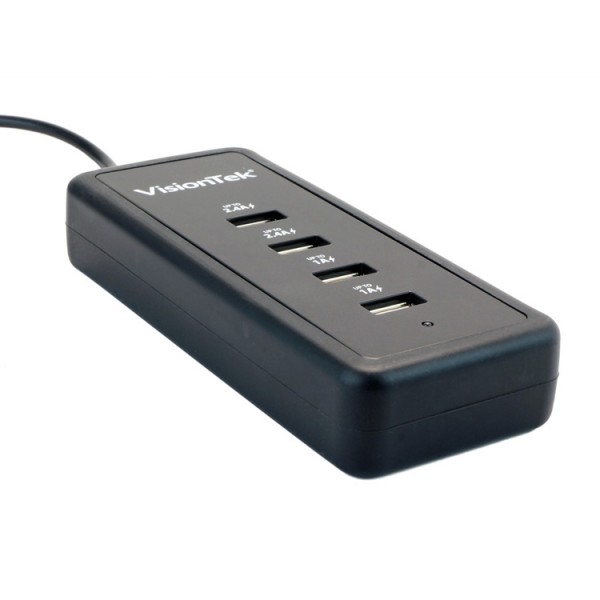
VisionTek High Power 40W Five Port USB Car Charger [Review]
Smartphone battery life has improved over the years, but it is still largely deficient. For many consumers, it is still impossible to make it through a full day without needing a charge.
Luckily, for those of us with cars, we can charge it while traveling. The problem? Most chargers will only accommodate one phone at a time. Yeah, some can handle two, or even three, but what if your family is larger than a trio? Ahh, well, that is where VisionTek's 40W Five Port USB Car Charger comes in. Yes, it offers five USB ports with simultaneous charging. Should you buy it?

Facebook and other social networks no longer have to reveal terrorist discussions to US government
Government snooping into online activity is something that has long appalled privacy groups around the world. In something of a victory for those concerned about privacy and government meddling, the US Senate has killed plans that would have required social networks to tell the government about any users talking about terrorism-related topics.
The change of heart is a win not only for social network users, but also the social networks themselves who will no longer be required to police content more than they already do. The policy had been criticized for being vague, placing undue pressure on companies, and limiting freedom of speech.

India drops insane encryption policy
The Indian government has performed a U-turn on a proposed encryption policy. Draft papers showed that the plan was to require people to store non-encryption versions of any data they have encrypted.
The draft policy was an all-encompassing one, and this led to a vocal backlash from users of social networks and messaging tools. The Indian government was forced to backtrack somewhat, making it clear that social media would be exempt and indicating that there is still a great deal of work to be done on the policy.

Amazon set to slash price of Prime membership for one day only
Amazon Prime is a good deal to begin with, bringing two day free shipping, video streaming of movies and TV shows, as well as original content, music streaming and even a Kindle lending library for those books you've been meaning to read.
For all of that you pay an annual fee of $99, which is not considered high by many users, given the benefits. However, some people still are afraid of the price because it's all at once -- they can't space it out in small monthly fees as the likes of Netflix offer. It doesn't mean it's bad, it's just bad perception for some customers.
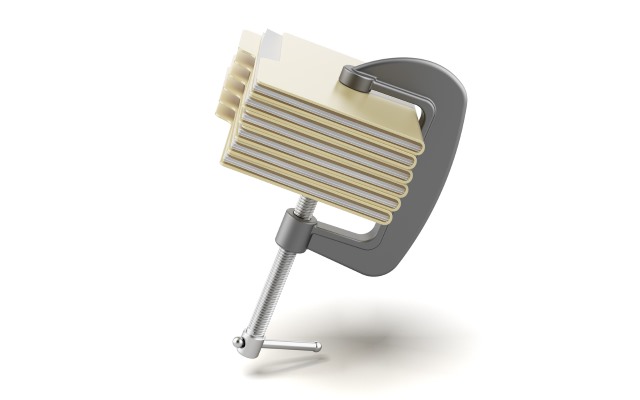
Google launches Brotli, a new open source compression algorithm to speed up the web
As websites and online services become ever more demanding, the need for compression increases exponentially. Fans of Silicon Valley will be aware of the Pied Piper compression algorithm, and now Google has a more efficient one of its own.
Brotli is open source and is an entirely new data format that offers 20-26 percent greater compression than Zopfli, another compression algorithm from Google. Just like Zopfli, Brotli has been designed with the internet in mind, with the simple aim of making web pages load faster.
Google adds new unfriendly features to Gmail
One person's spam is another's feast, depending on who is giver or receiver. That's one way to read new capabilities coming to Gmail on Android and the web. The first, available starting today on PCs and arriving on Android devices over the next week, lets users block designated email addresses. Google describes "block", but the feature is more of an easy-and-quick filter that dumps unfriendly senders into the spam folder.
For either platform, you click the dropdown options menu to the right of the email address, and block appears as an option. Unsubscribe already is available from personal computers but is new to Android. For example, in the desktop browser, marking listserver messages as spam solicits the user to unsubscribe. The feature also will roll out over the next week to Android.

Griffin Guide Cable Management System stops wires from falling behind furniture
Has this ever happened to you? You go to charge your iPhone or Android device and your cable has fallen behind your desk or dresser. You then have to get on your knees and reach behind the furniture to try and fish it out. It is totally annoying and inconvenient -- especially when you just want to get to bed.
Well, Griffin wants to end this maddening experience. Its Guide Cable Management System will keep everything in place, meaning you never have to search behind your furniture for a fallen cable again. Hallelujah.

Apple sweeps aside App Store malware mess
In the aftermath of the big App Store security breach, today Apple reminds developers where they should obtain Xcode. It's not rocket science—from sanctioned distribution sources. I received an email this morning from the company, dispatched to members of its developer program.
To recap: As the new week dawned, Apple rushed to remove content from its Chinese App Store loaded with XcodeGhost malware. Developers using a counterfeit version of Xcode caused the first, major, widespread security crisis for the seven year-old App Store.

UK businesses warned of growing cyber risk
We reported back in July on the UK government's plans to help small businesses boost their cyber security. Today enterprises across the country are being urged to protect themselves by taking up the government's Cyber Essentials scheme.
Whilst £1 in every £5 earned by UK businesses now comes from the Internet, cyber attacks are considered a serious threat. The latest figures reveal that 74 percent of small businesses and 90 percent of major businesses have had a cyber breach of some sort in the last year.