
Apple, two publishers resist ebook settlement
The Justice Department is nearing a settlement with publishers over allegations of ebook pricing, but finalizing the deal is proving problematic as Apple and two publishers are balking at the terms of the deal. Amazon will be permitted to once again discount ebooks to its customers as a result.
Penguin Group and Macmillian have joined Apple in resisting the settlement, the Wall Street Journal reports. The deal voids the contracts Apple signed with publishers in 2010, and permits a return to "wholesale pricing", where the retailer determines the price.
Sex offender? No online gaming for you!
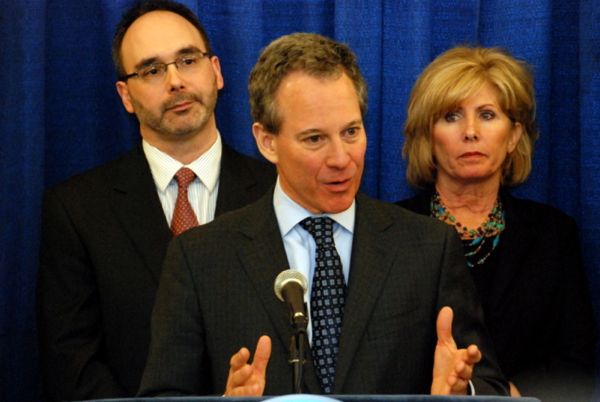
The state of New York has pulled more than 3,500 registered sex offenders from various online gaming platforms, Attorney General Eric T. Schneiderman announced on Thursday. The initiative, supported in part by Microsoft, Apple, Blizzard Entertainment, Electronic Arts, Disney Interactive Media Group, Warner Brothers and Sony, is called "Operation: Game Over."
New York State's law requires convicted sex offenders to register all of their online identities with the state, be they email addresses, screen names, or whatever. "Operation: Game Over," however, is the first time the New York law has been applied to online video games.
Taposé gives iPad split personality
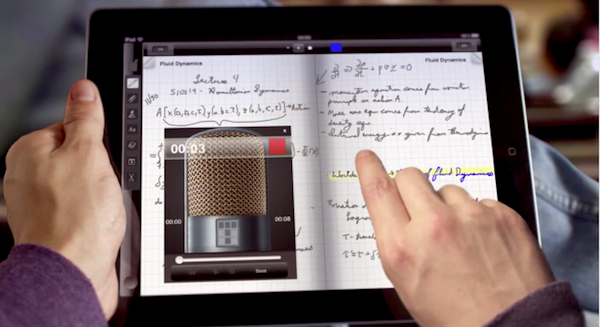
Much has been made of Taposé in recent days, with a great detail of attention being focused on the new iPad app being based on the failed Microsoft Courier project. But it is important to look at this as a piece of software in its own right.
Taken at face value, this is an app that could easily been seen as trying to be all things to all people, but the simple fact: it is a fully-featured tool. Packing notes, maps, word processor, web browser, drawing tools and much more, this is an app that can turn its hand to many tasks.
When your PC monitoring apps are up to no good, there's Bad Application
There are plenty of PC monitoring programs that aim to keep an eye on your running processes, and carry out some actions if things seem to be going wrong (PC Lasso is an excellent example). Testing these tools can be a problem, though, as you can’t safely make regular programs hang or lock up on demand.
But then that’s where Bad Application comes in.

5 ways my small business benefits from the cloud
We have talked a lot about cloud computing recently here on the pages of BetaNews. That's not surprising since it is one of the fastest growing segments of the tech industry today. Missing, however: A more personal story on how we're using the cloud in our day-to-day business.
I run a small freelance writing and media consulting business out of my home, Oz Media Inc. While being my own boss is fun, it also requires me to be owner, CEO, CFO, IT administrator, and employee. It's a company of one. Cloud computing has definitely paid off and made running my business a lot easier, and here's why.

Are you a Mac zombie?
Sometimes when dealing with the so-called Mac faithful -- diehard users who relentlessly demean and attack anyone (reporters, particularly) who doesn't share their unquestioning enthusiasm -- I think of the "Walking Dead"; TV show or comic, it's your choice. Nothing stops their relentless, mindless walk. As if there weren't zombies enough, cybercriminals have unleashed another kind that is much worse.
Late last week, I started following progress of a new Trojan injected via rogue Java applet. Flashback is a variant of older malware and Apple issued a patch, so I chose not to write about it. Whoa, that was a mistake. Yesterday, Russian security firm Dr. Web claimed that more than 600,000 Macs are infected and part of a sophisticated botnet. Cybercriminals have amassed a sizable army of zombie Macs. Let me take a moment to welcome Mac users to zombieland -- a place many Windows users have lived for years.

PhotoBox! comes to Android, the 'Lightroom for Facebook'
Mobile app developer WeaverMobile USA announced on Thursday that its formerly iOS-exclusive photography management app PhotoBox! has launched on Android.
The application can be thought of as "Lightroom for Facebook," giving users the ability to find, manage, add effects to, and share photos posted to Facebook, as well as perform batch uploads and downloads, to tag/untag, like/unlike, and comment. It provides a pretty robust toolkit for editing photos, adding filters, drawing, and adding text.
Samsung Galaxy Nexus and Nokia Lumia 900 is a fair comparison
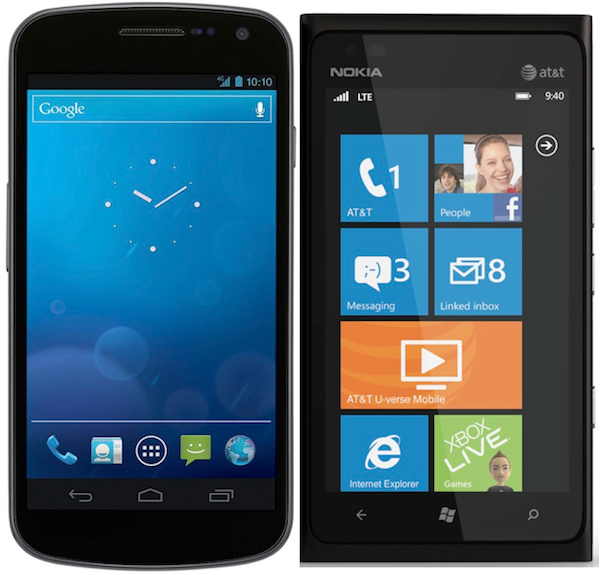
Discussion Counterpoint. Colleague Tim Conneally and I got into a heated debate about smartphone comparisons this morning. He has the Nokia Lumia 900 Windows Phone for review (and I -- whaaaaa -- don't). I suggested Tim do a comparison with Google-branded Galaxy Nexus, which we both have. He refused. Tim was quite adamant about it, too. His out-and-out refusal clearly taps into strong feelings about how products are compared.
We bantered back and forth over group chat, with neither of our positions changing. "Buyers make these product comparisons all the time", I expressed late in our debate. "I can see we won't agree. If I had the Lumia 900, I would compare them". But I don't, and Tim won't. So I suggested: "Let's ask the readers...something like: 'Would you like the Samsung Galaxy Nexus and Nokia Lumia 900 compared?'"

Stop comparing unlike objects. RIGHT. NOW.
Discussion Point. Joe Wilcox asked me to write an article comparing the Nokia Lumia 900 to the Samsung Galaxy Nexus. I refused. Here is why. Read Joe's response.
Anyone who knows about marketing should readily understand market segmentation: it is a way of isolating customers/users/consumers by type. It could be geographically, it could be demographically, it could be psychographically, or it could be through some other defining characteristic.
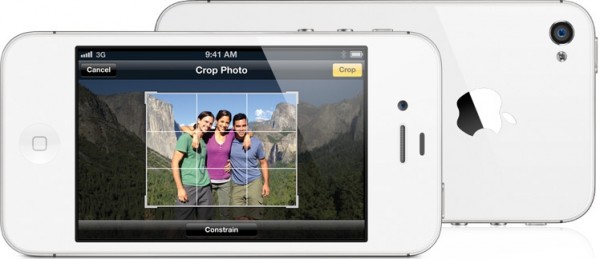
iPhone to appear on three more regional carriers April 20
Where can you get the iPhone other than AT&T, Verizon, and Sprint? Plenty of places, as long as you're not on T-Mobile.
A host of regional wireless carriers announced Wednesday that they will carry the iPhone in a move that may surprise some industry watchers. This includes Waynesboro, Va.-based nTelos, Green Bay, Wisc.-based Cellcom, and Anchorage, Alaska's Alaska Communications. The regionals will offer the iPhone 4 and 4S at a $50 discount to the major carriers, and join southern US regional carrier C Spire, who has offered the iPhone since October of last year.
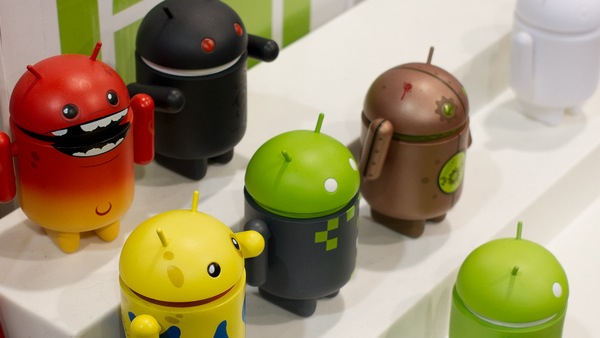
Uh-oh, iPhone fanboys
iPhone Idolators, please meet the Android Army. Now retreat! Android's share of the US smartphone market topped 50 percent in February, according to comScore. iOS gained share but trails considerably -- by like 20 points. You can have your iPhone, but many more Americans take Android. I'm waiting. What's your smarty-pants response to that, Apple apologists?
The findings butt against those from Nielsen -- a life raft of apology for those insisting iPhone will rule the world. Last week, Nielsen reported a huge surge in the number of new purchasers choosing iPhones compared to Android. For the three months ending in February, 48 percent of Americans who recently bought a smartphone, chose Android -- 43 percent iPhone, according to Nielsen. A year earlier, 27 percent of new acquirers chose Android versus 10 percent for iPhone.
Some proof as to why I think the Nokia Lumia 900 camera is 'special' [slideshow]
[portfolio_slideshow id=67058]
One of the qualities of the Nokia Lumia 900 that I singled out in my favorable review of the device was its camera, which I described as "special." In the slideshow above, I've included the photos I snapped that helped me arrive at that conclusion.
Recompose photos with Seam Carving GUI
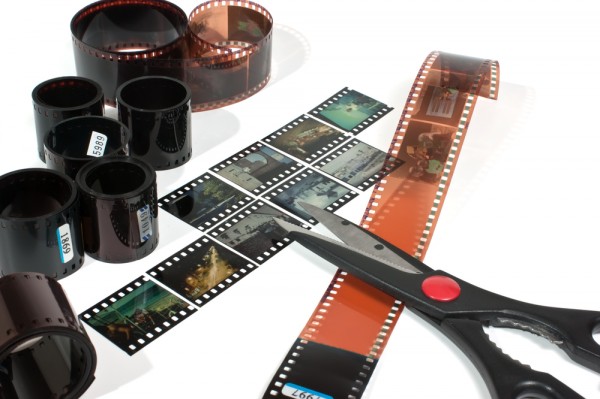
If you’re unhappy with the composition of a photo then your first instinct may be to crop it, removing areas without important visual content to help the viewer concentrate on whatever is left. But this can only go so far. And if there’s plenty of content at the edge of the photo then you may hardly be able to crop the image at all.
Content-aware image resizing (CAIR) provides another, more intelligent way to reframe your shot. Essentially it allows you to define content you’d like to remove from a photo, wherever it might be, and can then strip it out (hopefully without leaving any trace). And as a result the image will shrink in size, sometimes dramatically, but you still retain the core content. (If you’re not sure what we mean then the relevant Wikipedia page has some sample images which should make everything clear.)
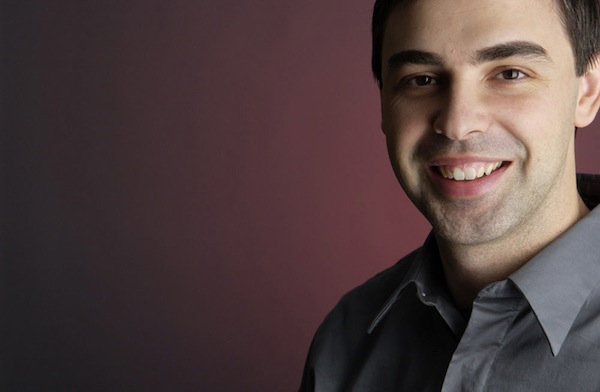
How do you rate Larry Page's first year as Google CEO?
On April 4, 2011, Larry Page returned as Google's chief executive after a decade's repast. In his first year back on the job, Google has dramatically changed. I planned to write a massive reflective story, but thought it'd be better if you did. A story with your assessment of Page and Google will be more interesting, and revealing, about the company and perceptions about it. I'll collect your comments here and put them together into a follow-up post. To get you started, I'll do a quickie review of Google over the last 12 months and call out a few highlights.
At the start of 2011, I called it the "year of Google", and it was. Much credit belongs to Page as he axed services not core to the Google lifestyle, acquired Motorola Mobility and refocused the company on rapid iteration. Just look how far Android and Chrome advanced over the last 12 months or how quickly Google+ went from conception to 100 million-plus users. If 2011 wasn't the year of Larry Page, 2012 will be. But will you like it, or what he has done to Google?
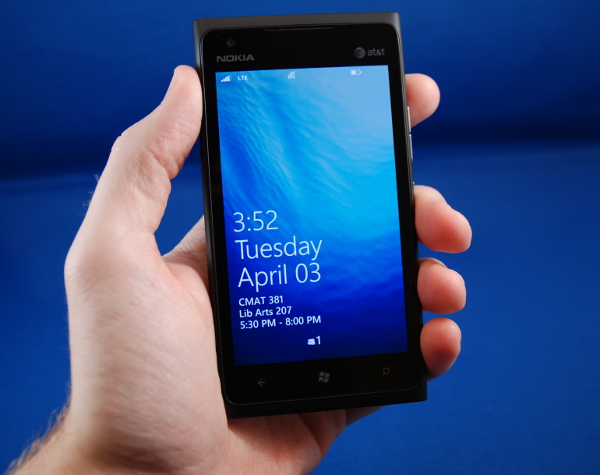
Review: Nokia Lumia 900 unquestionably raises Windows Phone to a higher level
This could be the easiest review I've ever written: The Nokia Lumia 900 is absolutely top-notch hardware at an affordable price, and it has everything it takes to be a giant success.
Last week, we established that 60% of BetaNews readers want this phone, and you know what? After one week with this device, I can conclusively say that our readers' desire to own the Lumia 900 is completely warranted.