
Europe outspends U.S. and Japan on consumer electronics
ALICANTE, Spain -- For as long as I've been a tech journalist -- and it's been a long time -- I always thought of the United States as the single biggest market for consumer electronics, followed by Japan with China rapidly rising in the ranks.
My oh my, have I been wrong. In fact, the biggest market is Europe. Last year, it accounted for 29 percent of the $913 billion worldwide market for "technical consumer products," a designation that also allows for counting appliances that are becoming smart and connected, too. Turns out we Yanks finished second, accounting for 21 percent of all goods sold. Third place went to China, with 12 percent share.

First community-run Sirius XM stations announced
One of the conditions put into the 2008 merger of satellite radio companies Sirius and XM by the Federal Communications Commission was that the merged company had to allow unaffiliated third parties to lease channels on a long-term basis (.PDF here). On Monday, nearly four years after the merger was first announced, the FCC announced the condition has been implemented at Sirius XM, and listed the first third-party lessees.
The first stations involved in the program are by no means commercial in nature and instead are geared toward providing programming for a very specific audience:

Samsung: We'll hook Europeans on our TVs by giving them a 3D channel
ALICANTE, Spain -- 3D TVs aren't ready for prime time, so to speak. They'll let you watch Avatar at home in all its epic Cameron-esque glory. But you gotta wear glasses, and there isn't much programming. As a result, TV makers have found themselves ahead -- way ahead -- of market demand. It's that old chicken and egg conundrum: Which comes first, the applications or devices/platform?
The 3D device/platform is there, from the likes of Samsung or Sony but where's the content where you really need it -- in the living room during prime time? Then there are those godawful glasses. Thankfully, no one needs see them in the comfort of your cozy chair, unlike the crowded theater.

Yahoo Buzz's closure on April 21 almost goes unnoticed
Yahoo's experiment with social news will end this week, but almost nobody noticed its demise. A message was posted to the Yahoo Buzz website back on April 4 stating the company's plans to close the site, but it wasn't until Monday morning that news sites picked up on the news.
"As of [April 21], you will be unable to access the Yahoo! Buzz site. This was a hard decision," the company wrote. "However this will help us focus on our core strengths and new innovations. We appreciate your patronage." The shift seems to further suggest that Internet users are increasingly moving away from the fad that was social news.

Tip: Organize your ebooks with Calibre 0.7.56
The digital revolution continues apace, and if you fancy the idea of reading books on your computer or other digital device (such as your iPad or dedicated ebook reader), then Calibre is a must-have tool. It exists to organize, convert and even transfer your ebook collection to and from your ebook reader.
That's not all it does: you can use it to download RSS feeds and convert them into a format for reading on your eBook reader. You can even configure it as a web server, allowing you to access your books from any Internet-connected browser.
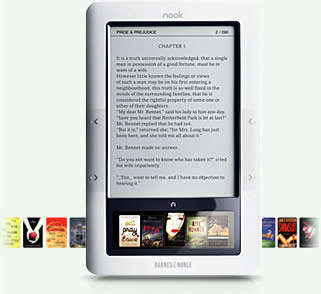
Patent that took down Barnes and Noble's Nook revealed
Monday, California-based technology company Spring Design announced that it had been granted the patent for multiple-screen technology that resulted in a lawsuit with Barnes and Noble over the Nook e-reader last year.
Spring Design debuted its Alex dual-screen e-reader literally one day before Barnes and Noble announced its Nook e-reader in 2009. Both devices utilized a similar LCD and E-Paper design and had similar Android-based architectures. Naturally, a lawsuit was not far behind.

Dual Monitor Tools 1.8 -- for when one screen isn't enough
The open-source Dual Monitor Tools collection, designed to help those with multiple monitor setups, has been updated to version 1.8. As the name implies, it's a collection of five separate tools, each of which runs independently to provide additional functionality for multiple monitor setups. No installation is required, each tool runs directly from its program executable. All five tools have been updated for this new release, with additional functionality, performance enhancements and bug fixes the order of the day.
The Swap Screen tool, which is designed to simplify the task of moving windows and applications between monitor displays, has a couple of feature enhancements. You can now move the active window to any of 10 user-defined areas on another display, plus there's an option to allow sticky or locked cursors to return freely to the primary display. The program has also been tweaked to reduce memory allocations.

Google Video to shut down, search will stay
Google over the weekend shut down its Google Video service, sending an e-mail to all users that had uploaded content to the service stating playback of hosted content will end on April 29. The move will affect only videos hosted by Google, not the popular video search engine.
The company launched the effort in 2005, aiming to make it similar in concept to YouTube. However, its value to Google came into question the following year when it acquired the company it aimed to compete with for $1.6 billion. Google Video has not accepted new uploads since 2009, when it decided to focus on the search side of things.

Oracle hands OpenOffice to open-source community, gives up commercial sales
On Friday, Oracle announced that it will discontinue commercial development of the OpenOffice suite, handing it back to the open-source community for future development. The news has been anticipated for some time, ever since The Document Foundation was set up to try and prevent a single company dominating the development of OpenOffice, a response to Oracle's purchase of Sun Microsystems, which previously owned the open-source project.
The news coincides with the announcement that rival office package, LibreOffice, which branched off from OpenOffice six months ago, has announced the launch of a beta version 3.4.
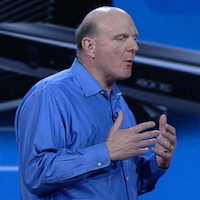
Steve Ballmer has restored my confidence in his leadership
Surprisingly, it only took 10 months. I just figured we were done.
As a long-time supporter of Microsoft's CEO, my June 2010 commentary "I have lost confidence in Steve Ballmer's leadership" came as a surprise. At the time, Windows Mobile was a train wreck; iPad launched to huge success, leaving Microsoft clueless; and Apple's market capitalization exceeded Microsoft's.

Microsoft launches Office 365 public beta
Early on Monday, Microsoft announced the availability of the full public beta of Office 365, Redmond's cloud-based enterprise productivity suite that puts Office, SharePoint Online, Exchange Online, and Lync Online into a single subscription package.
It's been just about six months since Microsoft rolled out the first limited beta of Office 365, and now the company is releasing the public beta just about six months before the product's anticipated final launch.

Will tablet makers choose Android 2.x over Honeycomb to get the right selling price?
ALICANTE, Spain -- How much are you really willing to pay for a tablet? It's a question Betanews has asked readers before, and the majority disapprove of $500-plus -- even $400 -- as simply too much. How would you like to pay something less than $500? It's the price, at least according to yet a third Taiwanese company that's just made its way into the exploding tablet market with an eye to laying claim to a "sweet spot," that will motivate you to say "Yeah" and make a purchase.
Along the way to presenting its line to about 300 journalists and bloggers gathered here for a preview of Berlin's IFA consumer products trade show in September, one of HannStar Ltd.'s officials offered candid insight into why it and other companies haven't been rushing to embrace Android 3.0, aka Honeycomb, a version of the operating system especially for tablets: It drives up product costs, and hence selling prices, too much.

Innovation that results in fewer lawyers? It's coming, says Planet Data CEO
Every industry that deals with traditional "content" of any sort will feel the icy touch of technology on its profits at some point. But what will be the next industry to be shaken by the growth of information technology? It could be law. More specifically, it could be legal discovery.
The music industry after more than a decade in decline still hasn't found its bearings in the post-Napster age, the newspaper industry has collapsed without the support of ad revenue, and the streaming video model threatens to completely disrupt the established profit models for television and cinema.

Obama presses for global, more secure authentication standard
The Obama administration on Friday asked the private sector to work on developing a standard for authentication, saying passwords are not secure enough and were not helping in preventing identity theft. The system could viably be used to not only verify identities online, but off as well it says.
Officials say the benefits of the President's so-called National Strategy for Trusted Identities in Cyberspace are two-fold: as well as offering a more secure authentication process, it would also ensure ultra-sensitive information such as financial or health records would only be accessible by that person.

Who is cutting cable for Hulu, Netflix and OTA?
I started the week by asking "Would you cut cable for Netflix?" I end it with your responses to the question.
This all started with a report from Convergence Consulting Group stating that, since 2008, 1 million U.S. household cut cable's cord and switched to over-the-air broadcasts and online streaming. The consultancy expects the number to reach 2 million by year's end. I've been thinking about doing the same -- and summer, when reruns replace many first-run programs -- is looking like the right time. Perhaps even sooner. And what do you say?