
IE10: Don't cry for me, Windows Vista
Signaling that Microsoft is ready to move beyond one of its more forgettable releases, the next version of Internet Explorer that debuted at the MIX11 conference in Las Vegas earlier this week will not run on the Windows Vista operating system.
The move may be a surprise considering Vista as an operating system is a little over four years old. Support for Windows XP, launched in 2001, only ended with IE9 as the company claimed the operating system lacked the technologies necessary to operate the browser.

Tip: Use Microsoft Safety Scanner as back line of your security offense
Microsoft has released a portable standalone security tool designed specifically to scan for and remove viruses, spyware and other threats. Microsoft Safety Scanner comes in both 32-bit and 64-bit versions for PCs running Windows XP or later.
The download package weighs in at a hefty 70MB, largely due to the fact it includes all the virus definitions it needs. Once downloaded, the tool will work for 10 days before expiring, forcing the user to download a fresh version with the latest updates included.

Nintendo developing HD console, may debut at E3
Nintendo is said to be preparing a new console for a late 2012 launch in a bit to regain the momentum it had with the Wii console, gaming news site Game Informer reported Friday. Sources said that the company plans to unveil the system at the E3 gaming conference in June of this year if not sooner.
The next generation console would be able to play games in high definition, although it was not clear whether Nintendo plans to simply match its competitors or try to surpass them. Either way, the move looks aimed at regaining ground it has lost as of late due to the Wii's limitations.

Norton 2012 security software may be beta, but it's polished and free (for now)
The first sighting of next year's security suites is something we still associate with the autumn, along with cooler weather, shorter daylight hours and the uncomfortable realization that Christmas isn't so very far away. Symantec seems determined to change that, though, and even though it's only a few months since Norton AntiVirus and Internet Security 2011 were released, the 2012 product range has released to public beta today.
These are clearly very early versions, then, but if wasn't for the word "BETA" on their consoles then you'd find it difficult to tell, at least initially. Installation is as quick and easy as ever: you don't even have to reboot once the process is over. The core Norton Internet Security 2012 process required only a little under 14MB of RAM (Private Working Set) on our test PC, so they're not exactly demanding. If the suite is missing any features, then it's hard to tell: you get on-demand antivirus scanning, strong real-time protection, a very configurable firewall, phishing protection, password management, accurate spam filtering and a whole lot more.
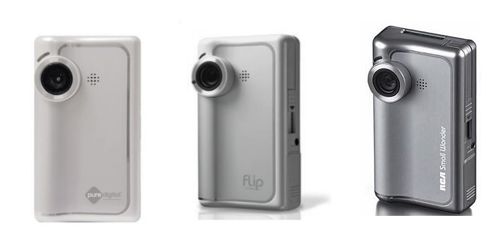
Cisco may be killing off Flip, but Pocket Camcorders have come full circle
Two years after acquiring Pure Digital and its Flip camcorder line for $590 million, Cisco this week announced it is terminating the product line and laying off all 550 employees in the division, a shocking announcement for fans of the iconic pocket camcorder brand.
Flip was responsible for nothing less than inventing the pocket camcorder form factor that dozens of consumer electronics companies now produce.
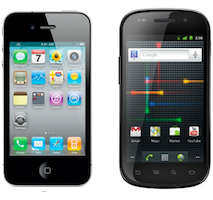
Can iPhone do better? Android activations are 31.5M per quarter
This afternoon, Google announced first quarter results, ending March 31. The search and information giant reported $8.58 billion in revenue, up 27 percent year of year. Operating income was $2.8 billion and net income $2.3 billion, or $7.04 a share. Google missed analysts projections -- consensus was $8.11 per share -- but Android could just overshadow the Street's and shareholders' disappointment. Say, Apple, watch your back.
It seems like whenever some Google executive opens his or her mouth to talk about Android activations, the number goes up yet again. During today's earnings: 350,000 activations per day, which works out to about 31.5 million over 90 days. Now compare to Apple. Analyst consensus is 16.64 million iPhones shipped during first calendar quarter, which for Apple was 90 days long. That works out to 188,889 activations per day.
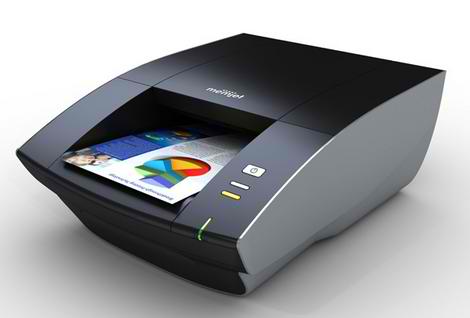
Ahead of global launch, more companies pick up Memjet's super fast printer design
Memjet, the super high speed inkjet printer design company announced a manufacturing partnership with Lomond for the Russian and Eastern European markets at the Consumer Electronics and Photo Expo in Moscow on Thursday.
When we last saw Memjet and its impressive 70 page per minute inkjet printer in January, the company had just three partners who had committed to producing Memjet printers in China, Taiwan, and India (Lenovo, Kpowerscience, WEP.)

Is web browser development moving too fast?
The entrance ramp to what was once called the Information Superhighway is lined with new web browsers. No sooner than a major new version is announced, out pops an alpha or beta of its successors. Google set the pace, releasing 10 Chrome versions since December 2008. Now Microsoft and Mozilla are ramping up development cycles. But is that really a good thing?
Let me put it another way: Is your Web experience all that much better today on your primary browser than it was two years ago? Three? What about upgrades? Do you like the frequency of them? Do they shatter your plugins? Please answer in comments, with some specifics.

Two new Internet privacy bills enter Congress: How they differ
Over the course of the last two days, two new privacy bills were introduced to Congress: one on Tuesday to the Senate, and one on Wednesday to the House. Though they both seek to establish some standard of privacy for consumers, they have some chief differences between them.
Senators John Kerry (D-Mass.) and John McCain (R-Ariz.) introduced The Kerry-McCain Commercial Privacy Bill of Rights Act of 2011 to the Senate on Tuesday of this week. This bill lists a number of "rights" that the private citizen has, and splits responsibilities between the federal government and state authorities and provides a "safe harbor" clause for companies participating in the collection of data.

Feds take down Coreflood botnet, infected two million computers
The Justice Department said Wednesday that with the help of Microsoft, it and the FBI were able to take down a botnet that had infected nearly two million computers. Controlled by a program called "Coreflood," the virus was stealing personal information including financial data from infected users, and had been operating for close to a decade.
Five control servers and 29 domain names were seized in raids, and charges have been filed against 13 "John Doe" defendants for wire fraud, bank fraud and illegal interception of electronic communications. "John Doe" suits are filed when the plaintiff has not yet identified the defendant in the case, but in this case the defendants are believed to be foreign nationals.
Solve IE8, IE9 problems with Internet Explorer 10 troubleshooting tool
Even by the standards of alpha browsers, Internet Explorer 10's Platform Preview is rather lacking in features. There's no toolbar, no sidebar, no security, no real configuration options, and it's little more than a window for browsing Microsoft's latest HTML5 demos.
Of course it's a brand new project, so that's no real surprise. If you look beyond the basics, it turns out that IE10 does have one very practical feature in its diagnostics tool, a handy stand-alone troubleshooting tool that you can use to diagnose IE 8 and IE9 issues on any Windows 7 PC.

Mozilla releases public Firefox Aurora beta
The Mozilla Foundation has released a new alpha build of its open-source browser. Firefox Aurora, currently at version 5.0a2, is designed to represent the first public glimpse of future versions of Firefox in an early, unstable form.
The release of Aurora coincides with Mozilla's announcement of its new rapid release development cycle, which brings it into line with rival browsers like Google's Chrome. Having taken two years to deliver Firefox 4, Mozilla aims to release versions 5, 6 and 7 by the end of the year.

iPad kills first quarter 2011 PC growth
Can we now finally agree that iPad is in fact cannibalizing PC sales? Seriously so? There is plenty of debate, not a lot of consensus and a whole lot of resistance from Betanews readers. It's time to end the denial, and preliminary Q1 2011 PC shipments from Gartner and IDC are reason enough.
Globally, PC shipments fell 3.2 percent year over year during first quarter, according to IDC, while Gartner put the decline at a less anemic 1.1 percent. Gartner had predicted 3 percent growth, while IDC expected 1.5 percent growth. Manufacturers shipped 84.3 million PCs in the quarter, according to Gartner, and 80.6 million by IDC's estimate.

These guys are crazy to say Microsoft is tablet DOA through 2015
The strangest thing happened today. Not one, not two, but three stories showed up in my RSS feeds making the same cockeyed assertion -- that Gartner's recent media tablet forecast shows the analyst firm doesn't see Microsoft releasing a tablet/tablet OS anytime soon and certainly not by 2015. Someone is seriously confused.
The first of these stories posted on April 11. It's a report by Larry Dignan at ZDNet's Between the Lines blog: "Gartner: Microsoft will still be a tablet no-show in 2015." As it happens, I don't subscribe to the blog's feed, which is major reason I didn't see the post sooner. The story showed up in a news alert for keyword "Microsoft" overnight.
T-Mobile's 'new' unlimited plan, now with more throttling
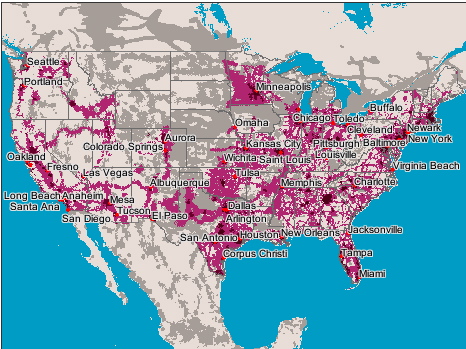
Despite being in the midst of a $39 billion merger with AT&T, T-Mobile is still moving forward with business as usual. The carrier announced Thursday a new cheaper unlimited plan, however with some important caveats, including throttling for heavy data users.
The plan will cost $79.99 per month, and included unlimited voice, data, and text and picture messaging. On average, the carrier says subscribers will save up to $350 yearly when compared to competitors' plans. Customers will only have a limited time to to sign up for the new plan, although an end date was not provided. Both new and existing customers will be eligible.